Logic for Economists (Coursera)

Logic for Economists (Coursera)

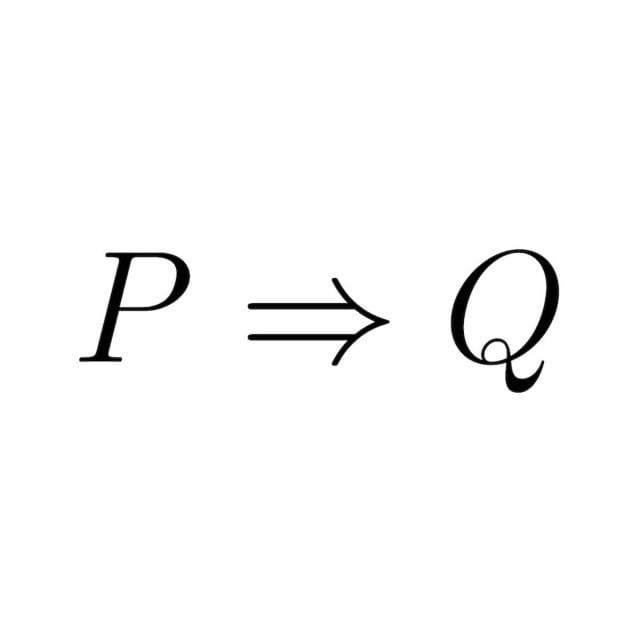
This course provides a very brief introduction to basic mathematical concepts like propositional and predicate logic, set theory, the number system, and proof techniques.

Class Deals by MOOC List - Click here and see Coursera's Active Discounts, Deals, and Promo Codes.

At the end of the course, students will be able to:
(1) detect the logical structure behind simple puzzles
(2) be able to manipulate logical expressions
(3) explain the connection between logic and set theory
(4) explain the differences between natural, integer, rational, real and complex numbers
(5) recognise different basic proof techniques

Syllabus

WEEK 1
Introduction
Overview and motivation of the topics to be treated in the course
Propositional logic
Logical propositions and the rules that govern them.
Predicate logic, set theory, and functions
Logical statements that depend on a variable.

WEEK 2
Numbers
Proofs
Final test

Go to Class
MOOC List is learner-supported. When you buy through links on our site, we may earn an affiliate commission.

Related Courses

Conceptos y Herramientas para la Física Universitaria (Coursera) Coursera
Tecnológico de Monterrey

Conceptos y Herramientas para la Física Universitaria (Coursera)

Este curso provee al estudiante con conceptos y herramientas matemáticas para modelar problemas en física, que al aplicar podrá enfrentar con éxito los cursos de física universitarios. Así pues, la filosofía de este curso consiste en cubrir temas conceptuales relativos a la Física y desarrollar tu capacidad de aprender y aplicarlos en tu vida profesional.

Jun 22nd 2026
5-12 Weeks
Mathematics for Engineers: The Capstone Course (Coursera) Coursera
The Hong Kong University of Science and Technology - HKUST

Mathematics for Engineers: The Capstone Course (Coursera)

Mathematics for Engineers: The Capstone Course provides a capstone project for students who are completing the Mathematics for Engineers specialization. Students will first learn some basic concepts in computational fluid dynamics, and then apply these concepts to compute the fluid flow around a cylinder. Access to MATLAB online and the MATLAB grader is given to all students who enroll.

Jun 29th 2026
3 Weeks
Álgebra Básica (Coursera) Coursera
Universidad Nacional Autónoma de México

Álgebra Básica (Coursera)

Galileo dijo: "El Universo está escrito en lenguaje matemático y los caracteres son triángulos, círculos y otras figuras geométricas, sin las que es humanamente imposible entender una sola palabra". Para entender el Universo, es necesario plantear leyes que expliquen su comportamiento, como pueden ser las leyes de la gravedad, la propagación del calor, el electromagnetismo, la reproducción celular, el crecimiento poblacional, la propagación de las enfermedades, la variación de los precios de las acciones en la bolsa de valores, el comportamiento de las masas ante un conflicto, etcétera.

Jun 29th 2026
5-12 Weeks
Calculus through Data & Modeling: Applying Differentiation (Coursera) Coursera
Johns Hopkins University

Calculus through Data & Modeling: Applying Differentiation (Coursera)

As rates of change, derivatives give us information about the shape of a graph. In this course, we will apply the derivative to find linear approximations for single-variable and multi-variable functions. This gives us a straightforward way to estimate functions that may be complicated or difficult to evaluate. We will also use the derivative to locate the maximum and minimum values of a function. These optimization techniques are important for all fields, including the natural sciences and data analysis. The topics in this course lend themselves to many real-world applications, such as machine learning, minimizing costs or maximizing profits.

Jun 29th 2026
5-12 Weeks
Mathematical Biostatistics Boot Camp 1 (Coursera) Coursera
Johns Hopkins University

Mathematical Biostatistics Boot Camp 1 (Coursera)

This class presents the fundamental probability and statistical concepts used in elementary data analysis. It will be taught at an introductory level for students with junior or senior college-level mathematical training including a working knowledge of calculus. A small amount of linear algebra and programming are useful for the class, but not required.

Jun 22nd 2026
4 Weeks
Vector Calculus for Engineers (Coursera) Coursera
The Hong Kong University of Science and Technology - HKUST

Vector Calculus for Engineers (Coursera)

Vector Calculus for Engineers covers both basic theory and applications. In the first week we learn about scalar and vector fields, in the second week about differentiating fields, in the third week about multidimensional integration and curvilinear coordinate systems. The fourth week covers line and surface integrals, and the fifth week covers the fundamental theorems of vector calculus, including the gradient theorem, the divergence theorem and Stokes’ theorem. These theorems are needed in core engineering subjects such as Electromagnetism and Fluid Mechanics.

Jun 29th 2026
5-12 Weeks
Precalculus: Relations and Functions (Coursera) Coursera
Johns Hopkins University

Precalculus: Relations and Functions (Coursera)

This course helps to build the foundational material to use mathematics as a tool to model, understand, and interpret the world around us. This is done through studying functions, their properties, and applications to data analysis. Concepts of precalculus provide the set of tools for the beginning student to begin their scientific career, preparing them for future science and calculus courses. This course is designed for all students, not just those interested in further mathematics courses.

Jun 29th 2026
4 Weeks
Data Science as a Field (Coursera) Coursera
University of Colorado Boulder

Data Science as a Field (Coursera)

This course provides a general introduction to the field of Data Science. It has been designed for aspiring data scientists, content experts who work with data scientists, or anyone interested in learning about what Data Science is and what it’s used for. Weekly topics include an overview of the skills needed to be a data scientist; the process and pitfalls involved in data science; and the practice of data science in the professional and academic world. This course is part of CU Boulder’s Master’s of Science in Data Science and was collaboratively designed by both academics and industry professionals to provide learners with an insider’s perspective on this exciting, evolving, and increasingly vital discipline.

Jun 22nd 2026
4 Weeks
Calculus through Data & Modeling: Differentiation Rules (Coursera) Coursera
Johns Hopkins University

Calculus through Data & Modeling: Differentiation Rules (Coursera)

Calculus through Data & Modeling: Differentiation Rules continues the study of differentiable calculus by developing new rules for finding derivatives without having to use the limit definition directly. These differentiation rules will enable the calculation of rates of change with relative ease the derivatives of polynomials, rational functions, algebraic functions, exponential and logarithmic functions, and trigonometric and inverse trigonometric functions.

Jun 29th 2026
5-12 Weeks
Calculus for Machine Learning and Data Science (Coursera) Coursera
DeepLearning.AI

Calculus for Machine Learning and Data Science (Coursera)

After completing this course, learners will be able to: analytically optimize different types of functions commonly used in machine learning using properties of derivatives and gradients; approximately optimize different types of functions commonly used in machine learning using first-order (gradient descent) and second-order (Newton’s method) iterative methods; visually interpret differentiation of different types of functions commonly used in machine learning; perform gradient descent in neural networks with different activation and cost functions.

Jun 29th 2026
3 Weeks
Matrix Algebra for Engineers (Coursera) Coursera
The Hong Kong University of Science and Technology - HKUST

Matrix Algebra for Engineers (Coursera)

This course is all about matrices, and concisely covers the linear algebra that an engineer should know. The mathematics in this course is presented at the level of an advanced high school student, but typically students should take this course after completing a university-level single variable calculus course. There are no derivatives or integrals in this course, but students are expected to have attained a sufficient level of mathematical maturity. Nevertheless, anyone who wants to learn the basics of matrix algebra is welcome to join.

Jun 22nd 2026
4 Weeks