Algal Blooms and Proliferations (Coursera)

Algal Blooms and Proliferations (Coursera)

This course is intended to provide information to the general public who may be curious after seeing a TV clip or read a news article about harmful algal bloom. It will cover 13 of the known toxins associated with harmful algae, their impacts on human and animal health, and how we detect those toxins and their associated algae.

Class Deals by MOOC List - Click here and see Coursera's Active Discounts, Deals, and Promo Codes.

Harmful and nuisance algae are a global phenomenon. They are found in marine and freshwater systems. They can impact human and animal health, the food supply, the water supply, and tourism.
Lastly, this course will discuss the different techniques used for mitigating the presence of harmful algae, their impact on water bodies and recreation, as well as how they might be in your food. It is intended to follow up our first three courses: Introduction to algae, Algal biotechnology, and Introduction to seaweeds.
This course was produced by the Algae Technology Educational Consortium and UC San Diego with funding from the Algae Foundation, the National Renewable Energy Lab, and the U.S. Department of Energy.

Syllabus

Introduction to Algal Blooms
This section will provide a brief introduction to the course as well as background information on algal blooms and proliferations.

Algal Toxins
This section will cover 13 different kinds of algal toxins, the algae that are responsible for their production, and their impacts on human and animal health.

Monitoring and Mitigation
Algal blooms are cosmopolitan and increasing in presence globally. This section will cover methods for monitoring and mitigating blooms.

Expanded Impacts of Harmful Algae
This last section includes how algae impact more than just our waterbodies, from our food to the economy.
Go to Class
MOOC List is learner-supported. When you buy through links on our site, we may earn an affiliate commission.

Related Courses

Case Studies in Personalized Medicine (Coursera) Coursera
Vanderbilt University

Case Studies in Personalized Medicine (Coursera)

Learn how advances in biomedicine hold the potential to revolutionize drug development, drug treatments, and disease prevention: where are we now, and what does the future hold? This course will present short primers in genetics and mechanisms underlying variability in drug responses. A series of case studies will be used to illustrate principles of how genetics are being brought to bear on refining diagnoses and on personalizing treatment in rare and common diseases. The ethical and operational issues around how to implement large scale genomic sequencing in clinical practice will be addressed.

Aug 17th 2026
5-12 Weeks
Epidemiology: The Basic Science of Public Health (Coursera) Coursera
University of North Carolina

Epidemiology: The Basic Science of Public Health (Coursera)

Often called “the cornerstone” of public health, epidemiology is the study of the distribution and determinants of diseases, health conditions, or events among populations and the application of that study to control health problems. By applying the concepts learned in this course to current public health problems and issues, students will understand the practice of epidemiology as it relates to real life and makes for a better appreciation of public health programs and policies. This course explores public health issues like cardiovascular and infectious diseases – both locally and globally – through the lens of epidemiology.

Aug 17th 2026
5-12 Weeks
Cell Biology: Mitochondria (edX) EdX
HarvardX,Harvard University

Cell Biology: Mitochondria (edX)

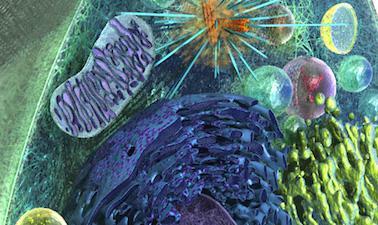
A human-centered approach to the fundamentals of cell biology with a focus on the power plants of the cell - mitochondria. The cell is a powerful case study to help us explore the functional logic of living systems. All organisms, from single-celled algae to complex multicellular organisms like us, are made up of cells. In this course, you will learn the how and why of biology by exploring the function of the molecular components of cells, and how these cellular components are organized in a complex hierarchy.

Self Paced
Self-Paced
Clinical Kidney, Pancreas and Islet Transplantation (Coursera) Coursera
Leiden University,Leiden University Medical Center

Clinical Kidney, Pancreas and Islet Transplantation (Coursera)

Kidney transplantation is a major advance of modern medicine which provides high-quality of life for patients with end-stage renal disease. What used to be an experimental, risky, and very limited treatment option more than 50 years ago is now routinely performed in many countries worldwide. The number of renal transplants is expected to rise sharply in the next decade since the proportion of patients with end stage renal disease is increasing.

Aug 17th 2026
4 Weeks
Data Management for Clinical Research (Coursera) Coursera
Vanderbilt University

Data Management for Clinical Research (Coursera)

This course presents critical concepts and practical methods to support planning, collection, storage, and dissemination of data in clinical research. Understanding and implementing solid data management principles is critical for any scientific domain. Regardless of your current (or anticipated) role in the research enterprise, a strong working knowledge and skill set in data management principles and practice will increase your productivity and improve your science. Our goal is to use these modules to help you learn and practice this skill set.

Aug 17th 2026
5-12 Weeks
HPV-Associated Oral and Throat Cancer: What You Need to Know (Coursera) Coursera
Icahn School of Medicine at Mount Sinai

HPV-Associated Oral and Throat Cancer: What You Need to Know (Coursera)

This course, offered by the Department of Otolaryngology – Head and Neck Surgery at the Icahn School of Medicine at Mount Sinai, is designed to inform primary care physicians and otolaryngologists (general and head and neck surgeons), as well as medical students, residents, nurses, physician assistants, medical assistants, about HPV-associated oral and throat cancers. It is also applicable to individuals who wish to broaden their knowledge and vernacular about this disease process, especially those who may have been diagnosed with HPV and/or HPV-associated oropharyngeal cancers.

Aug 17th 2026
5-12 Weeks
Sleep: Neurobiology, Medicine, and Society (Coursera) Coursera
University of Michigan

Sleep: Neurobiology, Medicine, and Society (Coursera)

The objective of this course is to give students the most up-to-date information on the biological, personal, and societal relevance of sleep. Personal relevance is emphasized by the fact that the single best predictor of daytime performance is the quality of the previous night's sleep. The brain actively generates sleep, and the first section of the course is an overview of the neurobiological basis of sleep control.

Aug 17th 2026
5-12 Weeks
Stories of Infection (Coursera) Coursera
Stanford University

Stories of Infection (Coursera)

This course introduces learners to a variety of infectious diseases using a patient-centered, story-based approach. Through illustrated, short videos, learners will follow the course of each patient’s illness, from initial presentation to resolution. Integrating the relevant microbiology, pathophysiology and immunology, this course aims to engage and entice the learner towards future studies in microbiology, immunology and infectious diseases.

Aug 17th 2026
5-12 Weeks
Epidemics (Coursera) Coursera
University of Hong Kong

Epidemics (Coursera)

“If history is our guide, we can assume that the battle between the intellect and will of the human species and the extraordinary adaptability of microbes will be never-ending.” Despite all the remarkable technological breakthroughs that we have made over the past few decades, the threat from infectious diseases has significantly accelerated. In this course, we will learn why this is the case by looking at the fundamental scientific principles underlying epidemics and the public health actions behind their prevention and control in the 21st century.

Aug 17th 2026
5-12 Weeks
Genome Sequencing (Bioinformatics II) (Coursera) Coursera
University of California, San Diego

Genome Sequencing (Bioinformatics II) (Coursera)

You may have heard a lot about genome sequencing and its potential to usher in an era of personalized medicine, but what does it mean to sequence a genome? Biologists still cannot read the nucleotides of an entire genome as you would read a book from beginning to end. However, they can read short pieces of DNA. In this course, we will see how graph theory can be used to assemble genomes from these short pieces. We will further learn about brute force algorithms and apply them to sequencing mini-proteins called antibiotics.

Aug 17th 2026
5-12 Weeks
Disease Screening in Public Health (Coursera) Coursera
University of Geneva

Disease Screening in Public Health (Coursera)

Current and future public health is characterized by the increase of chronic and degenerative diseases, corresponding to the worldwide ageing of the population. The increasing prevalence of these conditions together with the long incubation period of the chronic diseases and the restless technological innovations, offer new opportunities to develop strategies for early diagnosis.

Aug 17th 2026
5-12 Weeks
Schizophrenia (Coursera) Coursera
Wesleyan University

Schizophrenia (Coursera)

The main goal of this class are to gain an introductory exposure to the nature of the psychiatric disorder known as schizophrenia as revealed by the scientific method. We will discuss a broad range of findings from the scientific investigation of biological and psychological factors related to schizophrenia and its treatment.

Aug 17th 2026
5-12 Weeks