Introdução ao Controle de Sistemas (Coursera)

Introdução ao Controle de Sistemas (Coursera)

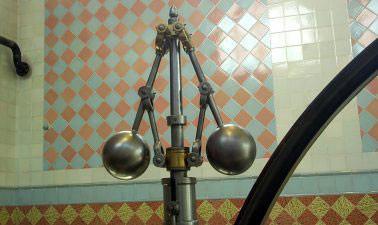
Este curso apresenta os principais conceitos do controle de sistemas e mostra suas vantagens e importância para a sociedade moderna. Você vai entender o que é o controle de sistemas e como o controle com realimentação funciona, e passará a perceber a sua presença em diversas situações em seu dia-a-dia, na natureza, no corpo humano e em diversos dispositivos, desde os mais simples até os mais complexos.

Class Deals by MOOC List - Click here and see Coursera's Active Discounts, Deals, and Promo Codes.

Você vai perceber a necessidade de modelos teóricos para a análise e o projeto do controle de sistemas e aprenderá como verificar se um sistema atende a determinados requisitos de desempenho. Você também aprenderá como projetar um controle simples de modo a obter o melhor desempenho possível de um sistema de controle. Este é apenas o primeiro passo em direção a um vasto campo do conhecimento e lhe dará a base e a segurança necessárias para avançar em seus estudos no maravilhoso mundo do controle de sistemas.

Syllabus

WEEK 1
A necessidade de modelos teóricos
O que é Sistema? Exemplos de Sistemas. O que é Controle? Análise e Projeto. Controle em Malha Aberta e em Malha Fechada. Exemplo de Controle com Realimentação. Modelos Matemáticos.

WEEK 2
A Função de Transferência
Transformada de Laplace. Função de Transferência, Calculando a saída do sistema.

WEEK 3
Estabilidade e Erro em Regime
Estabilidade. Critério de Routh-Hurwitz. Vantagens da Realimentação. Erro em Regime.

WEEK 4
Resposta ao Degrau e Projeto Proporcional
Resposta ao Degrau. Requisitos da Resposta ao Degrau. Parametrização de Sistema de Segunda Ordem. Projeto de Controle Proporcional.

Go to Class
MOOC List is learner-supported. When you buy through links on our site, we may earn an affiliate commission.

Related Courses

Modelling and simulation of mechanical systems (Coursera) Coursera
University of Naples Federico II

Modelling and simulation of mechanical systems (Coursera)

The course provides the principles of modelling and simulation of modern mechatronic systems, which are mechanical systems integrated with several types of sensors and actuators. The aim of the course is to show different methodologies to improve the potential of mechanical systems by transforming them into mechatronic systems based on virtual models. In particular, the lessons will be focused on case studies in three engineering fields: robotics, controlled electro-hydraulic actuators and smart devices.

Jun 8th 2026
3 Weeks
Diode - pn Junction and Metal Semiconductor Contact (Coursera) Coursera
University of Colorado Boulder

Diode - pn Junction and Metal Semiconductor Contact (Coursera)

This course presents in-depth discussion and analysis of pn junction and metal-semiconductor contacts including equilibrium behavior, current and capacitance responses under bias, breakdown, non-rectifying behavior, and surface effect. You'll work through sophisticated analysis and application to electronic devices.

Jun 14th 2026
4 Weeks
Dynamics and Control (edX) EdX
Universitat Politècnica de València,UPValenciaX

Dynamics and Control (edX)

This is an interactive course about the basic concepts of Systems, Control and their impact in all the human activities. First, the basic concepts of systems, dynamics, structure and control are introduced. Then, looking at many examples in Nature and human made devices, we will realize that the dynamic behavior of most systems can be modified by adding a control system. Later we will see how knowing how to evaluate the dynamic behavior of a system and measure its performance will provide the tools to design new controlled systems fulfilling some requirements.

Self Paced
Self-Paced
Dynamic Systems & Controls (saylor.org) Saylor Academy
Saylor.org

Dynamic Systems & Controls (saylor.org)

The study of dynamic systems focuses on the behavior of physical systems as well as the physics of individual components and the interactions between them. Control systems are designed to enable dynamic systems to respond in a specific manner. In this course, we will learn about the mathematical modeling, analysis, and control of physical systems that are in rest, in motion, or acted upon by a force.

Legacy Course
Self-Paced
Organizational Design: Creating Competitive Advantage (edX) EdX
Indian Institute of Management, Bangalore,IIMBx

Organizational Design: Creating Competitive Advantage (edX)

Learn how to design control systems, decision-making processes and a culture that enables value creation and the development of sustainable competitive advantage. In order to sustain themselves, organizations need to compete for scarce resources both in input and output markets. Because of this organizations need to create some kind of competitive advantage.

This course is archived
5-12 Weeks
Materials Science: 10 Things Every Engineer Should Know (Coursera) Coursera
University of California, Davis

Materials Science: 10 Things Every Engineer Should Know (Coursera)

We explore “10 things” that range from the menu of materials available to engineers in their profession to the many mechanical and electrical properties of materials important to their use in various engineering fields. We also discuss the principles behind the manufacturing of those materials. By the end of the course, you will be able to: recognize the important aspects of the materials used in modern engineering applications; explain the underlying principle of materials science: “structure leads to properties,”; identify the role of thermally activated processes in many of these important “things” – as illustrated by the Arrhenius relationship; relate each of these topics to issues that have arisen (or potentially could arise) in your life and work.

Jun 8th 2026
5-12 Weeks
Digital Manufacturing & Design (Coursera) Coursera
University at Buffalo,The State University of New York

Digital Manufacturing & Design (Coursera)

This course will expose you to the transformation taking place, throughout the world, in the way that products are being designed and manufactured. The transformation is happening through digital manufacturing and design (DM&D) – a shift from paper-based processes to digital processes in the manufacturing industry. By the end of this course, you’ll understand what DMD is and how it is impacting careers, practices and processes in companies both large and small.

Jun 8th 2026
2 Weeks
Control automático: La tecnología invisible (Coursera) Coursera
Universidad Nacional Autónoma de México

Control automático: La tecnología invisible (Coursera)

A lo largo de la historia, el ser humano se ha empeñado en construir dispositivos que le hagan más cómodo su día a día. Además, siempre ha estado interesado en que éstos lleven a cabo la tarea por sí mismos, sin necesidad de una supervisión continua. En nuestros días, muchos dispositivos llevan a cabo tareas como por arte de magia; pareciera que piensan o que adivinan nuestros deseos, que nunca se pueden equivocar o que su precisión y velocidad no puede ser superada. Los sistemas de control son una parte crucial de este funcionamiento.

Jun 8th 2026
3 Weeks
Photovoltaic solar energy (Coursera) Coursera
École Polytechnique

Photovoltaic solar energy (Coursera)

The course is an introduction to the photovoltaic (PV) applications in the general mix energetic context dominated by climate warming mitigation. The various uses of solar energy are firstly presented before a short description of the principle of the direct solar photon conversion into electricity (PV). The various PV technologies are reviewed in the current context dominated by crystalline silicon cells. The perspectives of the various technologies are then analysed in terms of R&D investments.

Jun 8th 2026
3 Weeks