EdX

2D and 3D Modalities for Diagnostic Imaging in Dental Medicine (edX)

2D and 3D Modalities for Diagnostic Imaging in Dental Medicine (edX)

Learn 2D and 3D modalities for diagnostic imaging in dental medicine: current concepts, novel developments, challenges, and possibilities. This course will cover the basic principles of usage and interpretation of radiographic imaging modalities in two and three dimensions for diagnostic imaging of the dento-maxillofacial region, covering the major disciplines in dental medicine.

Class Deals by MOOC List - Click here and see EdX's Active Discounts, Deals, and Promo Codes.

Current guidelines, consensus, limitations, and potential future developments in dento-maxillofacial radiology (DMFR) for extra- and intraoral imaging modalities will be presented and critically discussed, including the issues related to radiation dose protection. The present MOOC has been designed to improve foundation knowledge but also to promote higher-order thinking skills such as collaboration, critical thinking, and problem-solving for experienced clinicians in various fields of dental medicine. The scientific leadership team and coordination of the MOOC will be based at HKU, Faculty of Dentistry. This course will feature an interdisciplinary team of renowned clinicians in their respective fields to discuss current guidelines, consensus, trends, and limitations in DMFR.

What you'll learn
Upon completion of the courses, learners will be competent in:

  • Describing the indications and limitations of 2D extra-/intraoral imaging modalities
  • Describing indications and limitations of 3D imaging
  • Recognizing the anatomy and pathology in the radiological images
  • Identifying the principles in radiation protection including low dose protocols

Syllabus

Module 1 / Week 1 - Image modalities in dento-maxillofacial radiology and aspects of radiation dose protection
1.1 – 2D and 3D imaging including extra-/ intraoral imaging – general indications and limitations
l Describe the types, indications and limitations of 2D dental imaging
l Describe the types, indications and limitations of 3D dental imaging
l Understand the selection of patients for dental radiographic examinations
1.2 - Radiation optimization
l Explain the differences between analogue and digital image receptors
l Illustrate the different digital image receptors
l Highlight the key concepts for radiation, radiation dose, radiation dose related risks
l Introduce the various acronyms and the concept behind them

Module 2 / Week 2: Basic image modalities in dental medicine subspecialities
2.1 – Operative dentistry
l Describe the diagnostic relevance of radiographs for operative dentistry
l Understand the diagnostic accuracy of different imaging types in detecting caries
2.2 – Periodontology
l Describe the diagnostic relevance of radiographs for periodontology.
l Understand the role of DMFR in diagnosis and management of complex periodontitis
2.3 – Periapical radiograph, occlusal radiograph, panoramic radiograph – indications and limitations for children in general
l Introduce the common indications and limitations of Intraoral and panoramic radiographs for children.
l Guideline on taking x-rays for children by American Academy of Pediatric Dentistry
2.4 – Cephalometric imaging – Indications and limitations for the orthodontist
l Introduce the indications and limitations of cephalometric analysis
l Introduce the basic landmarks and steps for cephalometric analysis
2.5 – Minor oral surgery
l Introduce the diagnostic imaging for Impacted teeth/third molars.

Module 3 / Week 3: Advance image modalities and Future technologies in dentistry
3.1 Introduction - CBCT
l Introduction of CBCT
3.2 Focus on CBCT
l Explain how the dose can be reduced during CBCT scan and introduce the research group of DIMITRA.
l Appreciate that CBCT radiation dose can be reduced for child patients
3.3 – Ultrasonography
l Introduce how ultrasonography can be used in dentistry
3.4 – MRI
l Introduce how MRI can be used in dentistry.
l Summarize the MRI use in dentistry
Go to Class
MOOC List is learner-supported. When you buy through links on our site, we may earn an affiliate commission.

Related Courses

Understanding Nuclear Energy (edX) EdX
Delft University of Technology,DelftX

Understanding Nuclear Energy (edX)

Learn the science and technology behind nuclear energy and the special features of this energy source. In this nuclear energy course, we will tackle provocative questions such as: Is nuclear energy a good substitute for fossil fuels to reduce our CO2 emission or not?; Can nuclear reactors operate safely without any harm to the public and environment?; How much nuclear waste is produced and how long does it need to be stored safely?; How can we make nuclear energy clean and more sustainable?; How much are nuclear energy costs?

Self Paced
Self-Paced
Recovering the Humankind's Past and Saving the Universal Heritage (Coursera) Coursera
Sapienza University of Rome

Recovering the Humankind's Past and Saving the Universal Heritage (Coursera)

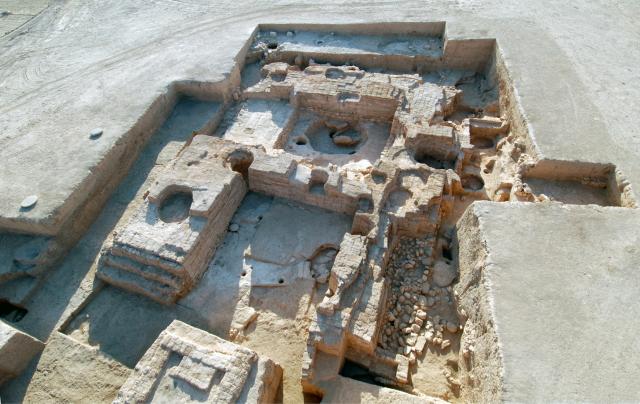
Archaeology has as its objective the recovery and revival of humankind past, and as its aim the rescue and preservation of cultural heritage. Archaeology is, among human sciences, the discipline with the strongest importance for the rediscovery, but also for the preservation and protection of cultural heritage, as Humankind’s universal patrimony. You will be introduced to the way we ourselves reflect on and are engaged with the study of human past: from the practical and material recovery of ancient traces in the field to the study and interpretation. On the other hand, the discovery of human past implies the correct conservation and presentation for both experts and general public: the study and protection of the past we share every day prevent from any possible destruction, misuse, abuse and thus cancellation of human memory.

Oct 19th 2026
5-12 Weeks
Dentistry 101 (Coursera) Coursera
University of Michigan

Dentistry 101 (Coursera)

Dentistry 101 is an introduction to the exciting and diverse field of dentistry through the lens of its many practitioners. If you’re interested in exploring dentistry as a profession, or if you’re ready to pursue a career in it and want to prepare yourself for dental school and the profession that lies ahead, Dentistry 101 will help you better envision the paths you can take.

Oct 7th 2026
4 Weeks
Dentistry & Human Life (edX) EdX
Seoul National University,SNUx

Dentistry & Human Life (edX)

An introductory lecture on dentistry as a science and life culture. Have fun learning about the history, story, and science of dentistry that are closely related to our lives. The course “Dentistry and Human Life” is composed of 8 introductory lectures on dentistry. The Dentistry is the discipline of convergence applications, often summarized as art and science. In this course, you can learn basic but diverse perspectives of dentistry as a science and life cultures.

Self Paced
Self-Paced
Mouth Care Matters (FutureLearn) FutureLearn
University of Manchester

Mouth Care Matters (FutureLearn)

Learn from experts how to provide someone with good mouthcare, whether in the health and social sectors or in a domestic setting. Discover the importance of good mouth health. From dentists, health and social workers, to carers, many people are tasked with looking after the mouth health of people unable to undertake it themselves. On this course, you will learn the basics of good mouth health, including tooth decay, gum disease, and toothbrushes. You’ll explore how to assess the state of someone else’s mouth, and how to clean it properly.

Self Paced
5-12 Weeks
Discovering Science: Atmospheric Chemistry (FutureLearn) FutureLearn
University of Leeds

Discovering Science: Atmospheric Chemistry (FutureLearn)

What can we learn about Earth, and other planets in and beyond our solar system, by studying their atmospheres? Learn about the role that radiation and greenhouse gases play in our understanding of atmospheric chemistry. As levels of CO2 in the atmosphere increase, you will discover the solutions scientists are exploring to reduce levels. And discover how missions to other planets and moons in our solar system are revealing extraordinarily diverse atmospheres.

Self Paced
2 Weeks
Fundamentals of Audio and Music Engineering: Part 1 Musical Sound & Electronics (Coursera) Coursera
University of Rochester

Fundamentals of Audio and Music Engineering: Part 1 Musical Sound & Electronics (Coursera)

In this course students learn the basic concepts of acoustics and electronics and how they can applied to understand musical sound and make music with electronic instruments. Topics include: sound waves, musical sound, basic electronics, and applications of these basic principles in amplifiers and speaker design.

Oct 26th 2026
5-12 Weeks
Basic 3D Modeling using Blender (edX) EdX
IIT Bombay,IITBombayX

Basic 3D Modeling using Blender (edX)

Learn basic 3D modeling skills, including modeling, texturing, and lighting, using free and open source tool: Blender. Animation is an emerging medium of communication, especially in education and entertainment domains. More and more learners are aspiring to make a career in animation. However, the animation training is expensive. One of the reasons is the high cost of proprietary software used for animation.

No sessions available
4 Weeks
Game Design and Development 3: 3D Shooter (Coursera) Coursera
Michigan State University

Game Design and Development 3: 3D Shooter (Coursera)

If you love games and want to learn how to make them, then this course is your third step down that path. In this course you will learn the fundamentals of game design, including an understanding of level design, game balancing, prototyping, and playtesting, as well as game asset creation techniques. You will continue developing video games using industry standard game development tools, including the Unity 2020 game engine. At the end of the course you will have completed a 3D First-Person Shooter game, and will be able to leverage an array of game development techniques to create your own basic games.

Oct 12th 2026
4 Weeks
Introduction to Acoustics (Part 2) (Coursera) Coursera
Korea Advanced Institute of Science and Technology - KAIST

Introduction to Acoustics (Part 2) (Coursera)

Learners might have learned the basic concepts of the acoustics from the ‘Introduction to Acoustics (Part 1).’ Now it is time to apply to the real situation and develop their own acoustical application. Learners will analyze the radiation, scattering, and diffraction phenomenon with the Kirchhoff –Helmholtz Equation. Then learners will design their own reverberation room or ducts that fulfill the condition they have set up.

Oct 5th 2026
5-12 Weeks
Developing AR/VR/MR/XR Apps with WebXR, Unity & Unreal (Coursera) Coursera
University of Michigan

Developing AR/VR/MR/XR Apps with WebXR, Unity & Unreal (Coursera)

This third course in the XR for Everybody specialization is geared toward the technical development of XR experiences. The course provides learners with a more technical mental model of XR technologies and the tools to approach XR development with confidence. It walks through the stages of development for both VR and AR projects, introducing the main XR development platforms as well as the key methods and tools. This third course also helps learners infer advanced XR requirements from physical/digital prototypes and teaches them how to differentiate major technical concerns, estimate development costs, and plan research necessary to advance XR.

Oct 12th 2026
4 Weeks
Introduction to Biomedical Imaging (edX) EdX
University of Queensland,UQx

Introduction to Biomedical Imaging (edX)

Discover how biomedical imaging technologies are complementary and what information they provide to health professionals. Imaging technologies form a significant component of the health budgets of all developed economies, and most people need advanced imaging such as MRIs, X-Rays and CT Scans (or CAT Scans) during their life. Many of us are aware of the misinformation sometimes offered in TV dramas, which either exaggerates the benefits or overemphasizes the risks.

Self Paced
Self-Paced