EdX

Worldviews - From Sustainability to Regeneration (edX)

Offered by ETH Zurich, ETHx,
Worldviews - From Sustainability to Regeneration (edX)

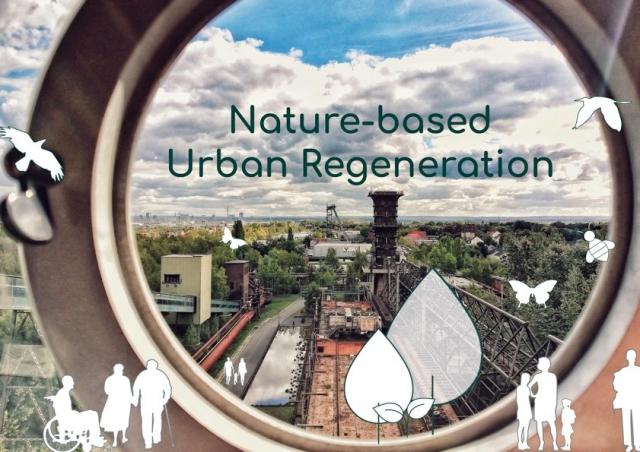
To deal with sets of environmental and social crises, we need a cultural and mental transformation. This MOOC is the first part of an interconnected series of four MOOCS which bring together science, design and transformative praxis as a fluid, intervention-based and synergistic process for addressing complex challenges. This is explored through broadening worldviews, reframing complexity, designing as nature, activating our minds through physical movement, and connecting with new communities.

Class Deals by MOOC List - Click here and see EdX's Active Discounts, Deals, and Promo Codes.

Climate change, biodiversity loss and pan-syndemics are some of today’s most pressing complex challenges. Much of our economies and societies are exhaustive, vulnerable, and unfair. Instead, we need to actively restore and regenerate ecosystems and their services while transforming our economies to become more circular and just. We require new knowledge systems and cultures leading to transformative action as the human impact on earth needs to be fundamentally redesigned.
Scientific knowledge and reasoning are the fundamental tools to guide policy and management decisions, especially in times of crises. But the limitations of reductionist science are evident due to the lack of widespread action in addressing today's highly complex challenges, which are self-emergent, unpredictable, span across nested scales, depend on societal behavioral transitions, and lack data.
Design disciplines offer creative ways of prototyping solutions in an iterative way. Design responds to a current problem by proposing a future pathway, through a feedback exchange from praxis. Designerly praxis can benefit from science, for example by directing interventions and leveraging relationships based on quantitative data. Neither the analytical and descriptive tools of science, nor the iterative process of design alone are adequate for addressing complex challenges. Combining both cultures and methods of reasoning as a fluid, intervention-based and synergistic process is beneficial for fostering the regenerative, transformative action that is urgently required.
Therefore, this MOOC series entitled “Designing Resilient Regenerative Systems” offers four consecutive MOOCs that aim to address these urgent and complex challenges. Participants are invited on a learning journey that includes emphasis on new holistic worldviews, concepts like regeneration and resilience, befriending complexity and uncertainty, methods and hybrid practices of science and design, connecting more with our inner self, and becoming bio-regional weavers within communities of transformational learning and praxis.
This first MOOC places global crises in context with local and regional examples for planetary health. Here participants build consciousness by questioning the dominant reductionist worldviews that drive our global societies and learn ways of rethinking our relationship with nature as a holistic approach of “interbeing,” which places humans as part of the broader web of life.

What you'll learn
This MOOC series is about creating positive impact in complex systems. It is about navigating complexity and uncertainty with new tools and practices, such as “organic emergence:” Complex systems are inherently dynamic and unpredictable: their properties are emergent. An organic way to engage with emergence is to trust in having the right tools and techniques to adaptively cope with sudden surprises or challenges, and to reveal hidden opportunities. **
In this first MOOC “Worldviews - from sustainability to regeneration” you become conscious about dominant and alternative worldviews. You learn the roots of sustainability and the pathway to regeneration. You acquire tools to reframe complexity and befriend uncertainty. You learn to reconnect with nature and to design as nature. You gain awareness through practices of physical and mental activation via self-compassion techniques and flow experiences in nature.
Exciting real-world illustrations will take you to Hemsedal Norway, Annecy France, Ostana Italy, and Mallorca Spain. This offers a comparative understanding of communities and regions undergoing sustainability transitions across different contexts, cultures, climates and geographies.
The prominent methods you will learn are systemic design and systems-oriented design, social network analysis, resilience assessment, life cycle and footprint analysis, circularity mapping, visual dialogue, cross-scale design, “view from above” perspectives, biomimicry, transdisciplinary research, real-world elaboration, and more.
**
The MOOCs’ didactics are designed to combine time and place independent virtual learning through pre-recorded conversations, both accessible as movies and audio files, readings, and practical engagement in nature. Virtual content stimulates physical and social interaction in the bio-region of the participants. Systemic Cycles takes the participant on a conscious exploration of place and regional supply chain actors on their bicycle, to playfully learn systemic design methods, to weave together local and regional networks and to explore the inner self through physical activity. An accompanying visual mapping process called Gigamapping acts as a designerly way to co-create your own learning journey and connect across the MOOC series to your final transformative design project. Your personal QUEST guides you through your learning journey. Weekly live tutorials in an online forum offer opportunities to discuss and brainstorm with teachers.

Syllabus

Week 1
Global crises and local solutions
The urgence for local action with regenerative cultures.
From sustainability to regeneration
Origins of sustainability. Regeneration as next societal goal.

Week 2
Reframing complexity
Embrace and befriend complexity.
Ways of knowing and reasoning
Extended worldviews, critical science, warm data.

Week 3
Design as nature
New design principles and practices.
Mind and movement
Physical and mental activation.
Go to Class
MOOC List is learner-supported. When you buy through links on our site, we may earn an affiliate commission.

Related Courses

Debt Sustainability Analysis (edX) EdX
International Monetary Fund - IMF,IMFx

Debt Sustainability Analysis (edX)

What are the tools to assess debt sustainability? How can countries effectively manage their sovereign debt? To answer these questions, this course combines theory with hands-on exercises. What causes a country’s debt to become unsustainable? How do we assess debt sustainability of public and external debt? How can countries manage their debt portfolio? This five-week online course aims to provide a comprehensive overview of debt sustainability analysis (DSA) and a medium-term debt management strategy framework adopted by the IMF and the World Bank.

No sessions available
5-12 Weeks
Sustainability Science - A Key Concept for Future Design (edX) EdX
The University of Tokyo,UTokyoX

Sustainability Science - A Key Concept for Future Design (edX)

Discover sustainability science by learning theoretical concepts and practical applications in Japan and around the world. Sustainability is indispensable for the future of humankind. Sustainability science has emerged as an effort to tackle the complex problems the world is facing today. Lecturers from different disciplines provide a holistic overview of key issues in sustainability including industrial pollution, an aging society, human-nature connection, urban planning, resilience, environmental governance, and education for sustainable development.

Self Paced
Self-Paced
Energías convencionales, limpias y su tecnología (edX) EdX
Tecnológico de Monterrey,TecdeMonterreyX

Energías convencionales, limpias y su tecnología (edX)

Describe las formas en que la energía se produce, transforma, utiliza y almacena, identificando retos y beneficios. El recurso energético está ligado al desarrollo, bienestar, sustentabilidad e independencia de las sociedades modernas. La utilización y administración adecuada de los diferentes recursos energéticos impactará tanto en el progreso futuro propio como en el poder económico.

Self Paced
Self-Paced
Landscape Governance: Collaborating Across Sectors and Scales (edX) EdX
Wageningen University,WageningenX

Landscape Governance: Collaborating Across Sectors and Scales (edX)

Find local solutions to global challenges by relying on collaboration and innovation. Get the knowledge and skills to design and implement effective landscape governance that harnesses the power of place to mobilise and unite stakeholders.

Self Paced
Self-Paced
Retos de la Agricultura y la Alimentación en el Siglo XXI (edX) EdX
Universitat Politècnica de València,UPValenciaX

Retos de la Agricultura y la Alimentación en el Siglo XXI (edX)

Reflexionaremos sobre agricultura y alimentación en un planeta que tiene que alimentar a una población creciente con recursos limitados. El planeta se enfrenta al reto de alimentar a una población creciente en un escenario de limitación de recursos, mercados agroalimentarios imperfectos, crisis de alimentos, y población rural vulnerable. El curso invita a una reflexión sobre las alternativas de la agricultura y la alimentación, vistas como solución a los desafíos socio-económicos y ambientales, con énfasis en el papel de la agricultura familiar y en modos de producción sostenibles, en el marco de cadenas de valor más equilibradas.

No sessions available
5-12 Weeks
Vernacular Architecture of Asia: Tradition, Modernity and Cultural Sustainability (edX) EdX
University of Hong Kong,HKUx

Vernacular Architecture of Asia: Tradition, Modernity and Cultural Sustainability (edX)

Learn about built environments in Asia and how we can better conserve and sustain vernacular architecture in the future. How do we deal with the challenges and threats to vernacular architecture and make sure that it is sustained in this modern urbanized world? This is the key question we will try to answer in this course.

No sessions available
5-12 Weeks
Planetary Boundaries (edX) EdX
SDGAcademyX,SDG Academy

Planetary Boundaries (edX)

Can our planet continue to support the current scope of human activity? A thriving global society relies on the stability of the Earth and its resilience across oceans, forests, waterways, biodiversity, the atmosphere and more. So how do we shape sustainability at a global scale? The boundaries set by the planet’s natural resources, the resilience of those resources, and the human activities that impact sustainability all come into play.

Self Paced
Self-Paced
Ressources naturelles et developpement durable (edX) EdX
LouvainX,Université Catholique de Louvain - UCL

Ressources naturelles et developpement durable (edX)

Analyse des defis de developpement durable lies a la ruee sur les ressources naturelles (terre, eau, ressources minieres, forets...). Quel lien existe-t-il entre l’exploitation des ressources naturelles (terre, eau, ressources minières, forêts, ...) et le développement durable ? Ce cours vous permettra de comprendre les opportunités mais aussi les défis que la présence de ressources naturelles offre, tant au niveau local que global.

No sessions available
5-12 Weeks
The Science and Practice of Sustainable Development (edX) EdX
University of Queensland,UQx

The Science and Practice of Sustainable Development (edX)

Learn the critical foundations of sustainable development and how to achieve the UN’s Sustainable Development Goals that are deeply interconnected in the field. This course introduces the origin and key concepts of sustainability and how to apply those to sustainable development practice. Sustainable development will be explored through theories and case studies from a range of Disciplines. You also will learn about planetary boundaries, urbanisation and growing inequality, to show how integral sustainable development is to our everyday existence.

Self Paced
Self-Paced
From Fossil Resources to Biomass: A Business and Economics Perspective (edX) EdX
Wageningen University,WageningenX

From Fossil Resources to Biomass: A Business and Economics Perspective (edX)

Learn about the basic consumer science, business, logistics, supply chain, and economic principles that are essential for a successful transition from fossil resources to renewable biomass resources in a biobased economy. Explore how to create a sustainable future by moving away from dependence on fossil to biomass resources for the production of food, chemicals, and energy-carriers. The key is using microorganisms and catalysts to create biobased products. In this course, you will focus on the end of the supply chain - - how to market and sell those products within a profitable business model.

Self Paced
Self-Paced
Sustainable Food Security: Food Access (edX) EdX
Wageningen University,WageningenX

Sustainable Food Security: Food Access (edX)

Learn the basics of food access decision-making. In other words, who decides what ends up on your plate. Spoiler alert: it’s not just you! Have you ever considered that you’re not the only one who decides what food ends up on your plate? In this environmental studies course, you’ll explore how key actors at household, local, national and international levels negotiate and make choices on access to food. You will understand why the choices you make have been predestined. And you will learn what it takes to provide access to a safe and nutritious food supply every day.

Self Paced
Self-Paced
Sustainability in Everyday Life (edX) EdX
Chalmers University of Technology,ChalmersX

Sustainability in Everyday Life (edX)

This course will arm you with the information and skills required to make more sustainable choices everyday! Daily headlines warn of new chemical dangers, species on the edge of extinction, global warming-- framing our planet as “at risk.” Some people stop listening, others get alarmed, while some others want to learn more in hopes of making a difference in the world.

No sessions available
5-12 Weeks