Wilderness First Aid - Environmental Emergencies (Coursera)

Wilderness First Aid - Environmental Emergencies (Coursera)

In this course, students will learn about environmental injuries, how to treat them, and what conditions require evacuation. This will include animal bites/stings, and temperature-related emergencies, such as those that are heat or cold-related, lightning, altitude, and drowning. Students will also learn about important aspects of camp hygiene, and what to do in the event that evacuation is needed.

Class Deals by MOOC List - Click here and see Coursera's Active Discounts, Deals, and Promo Codes.

Syllabus

WEEK 1
Camp Hygiene and Sanitation
In this module, we will talk about camp hygiene and sanitation. We will also discuss methods of water treatment to ensure that your water is safe to use and drink.

WEEK 2
Temperature Related Emergencies
In this module, we will talk about environmental emergencies, including those that are heat-related, and cold-related. We will discuss how to treat and prevent each type of emergency.

WEEK 3
Altitude and Lightning Related Emergencies
In this module, we will learn about lightning and altitude. This includes altitude-related emergencies, such as Acute Mountain Sickness (AMS), High Altitude Cerebral Edema (HACE) and High Altitude Pulmonary Edema (HAPE). With each condition, we will teach about prevention methods and treatment.We will also discuss what to do when you’re caught in a lightning storm, how to best prevent being struck by lightning, what to do in the event that you are injured by lightning.

WEEK 4
Drowning Related Emergencies
In this module, we will talk about drowning emergencies, how to prevent them, and what to do to rescue and treat someone who has been involved in a drowning emergency.

Go to Class
MOOC List is learner-supported. When you buy through links on our site, we may earn an affiliate commission.

Related Courses

Wilderness First Aid - Introduction (Coursera) Coursera
University of Colorado System

Wilderness First Aid - Introduction (Coursera)

In this course, students will learn the basics of wilderness medicine, including how it is a unique clinical environment, and concepts of scene safety. They will learn how to perform a basic assessment of a patient, including a physical exam, gather history data using the SAMPLE approach, and how to evaluate a patient for a potential spinal cord injury.

Oct 26th 2026
4 Weeks
Training and Learning Programs for Volunteer Community Health Workers (Coursera) Coursera
Johns Hopkins University

Training and Learning Programs for Volunteer Community Health Workers (Coursera)

Volunteer community health workers (CHWs) are a major strategy for increasing access to and coverage of basic health interventions. Our village health worker training course reviews the process of training and continuing education of CHWs as an important component of involving communities in their own health service delivery. Participants will be guided through the steps of planning training and continuing education activities for village volunteers. The course draws on real-life examples from community-directed onchocerciasis control, village health worker programs, community case management efforts, peer educators programs and patent medicine vendor training programs, to name a few.

Nov 9th 2026
5-12 Weeks
Achieving Sustainable Development (FutureLearn) FutureLearn
Trinity College Dublin

Achieving Sustainable Development (FutureLearn)

Explore the challenges of sustainable development. See the impact of UN Sustainable Development Goals on real people. Consider the impact that UN Sustainable Development Goals could have. Governments of the world have signed up to the Sustainable Development Goals (SDGs), a UN initiative for international development. They are targets for improving the world by 2030, including: health, environment, education, and security. But will they have an impact on the lives of people?

Self Paced
4 Weeks
Water: Addressing the Global Crisis (edX) EdX
SDGAcademyX,SDG Academy

Water: Addressing the Global Crisis (edX)

We are living in a water stressed world. It is a global crisis and therefore we must act now! What can we do to save the planet and ensure availability of water for all by 2030? Water isthe source of all life. Without it, neither humans nor nature will survive. Yet lack of access to water is a rapidly growing problem and one of the world’s gravest risks. It is a global crisis.

Self Paced
Self-Paced
Public Health in Humanitarian Crises 1 (Coursera) Coursera
Johns Hopkins University

Public Health in Humanitarian Crises 1 (Coursera)

This course, Public Health in Humanitarian Crises 1, introduces discussions about the public health approach to problems experienced by people affected by disasters, both natural and related to conflict. The course discusses the many changes which occur in people’s lives when they are uprooted by a disaster, ranging from changes in disease patterns, access to health care, livelihoods, shelter, sanitary conditions, nutritional status, etceteras. We will explore what humanitarian interventions could look like if we want to mitigate the effects of disasters. The course content is a mix of theoretical knowledge and many practical examples from recent disasters. We think this course is unique because it contains so many practical ‘real-life’ examples and is taught by instructors and guest lecturers who together have over 200 years of experience in this field.

Oct 26th 2026
5-12 Weeks
Planning & Design of Sanitation Systems and Technologies (Coursera) Coursera
École Polytechnique Fédérale de Lausanne

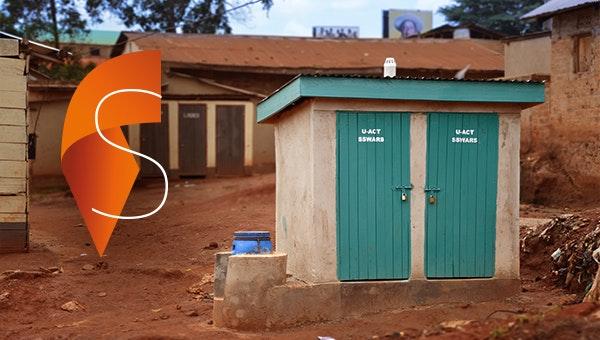
Planning & Design of Sanitation Systems and Technologies (Coursera)

Do you want to learn how to plan affordable and context-specific sanitation solutions? Do you want to be updated on the newest developments in urban sanitation planning and programming? Do you want to get insights about best practices examples of urban sanitation systems in low- and middle-income countries? If yes, this course is for you! This course provides you with an introduction to integrated sanitation planning, both on a citywide scale and for specific contexts such as informal settlements.

Nov 2nd 2026
5-12 Weeks
Water Supply and Sanitation Policy in Developing Countries Part 2: Developing Effective Interventions (Coursera) Coursera
University of Manchester

Water Supply and Sanitation Policy in Developing Countries Part 2: Developing Effective Interventions (Coursera)

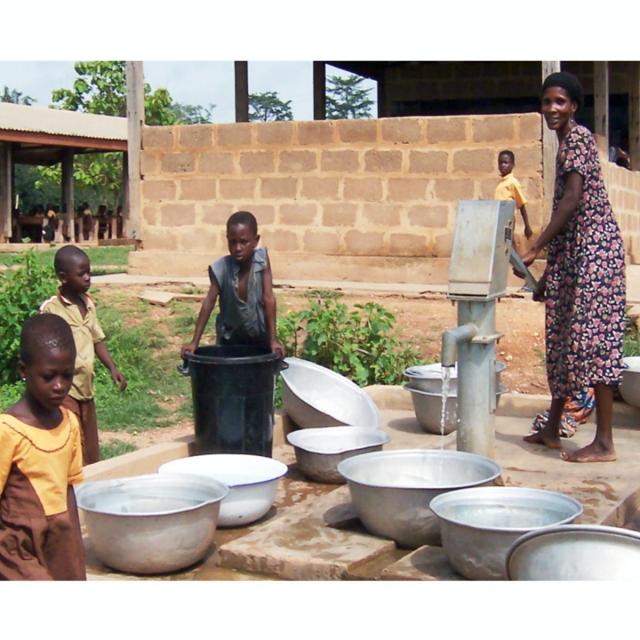
Water Supply and Sanitation Policy in Developing Countries Part 2 is our second MOOC in a two-part sequence, and looks at ‘Developing Effective Interventions’. Here we invite you to develop analytical skills and deep understanding about a complex, controversial policy problem – one with no simple, easy answers. About half a billion people on our planet still lack access to improved water supplies and about two billion do not have improved sanitation services, leading to an unknown but very large number of avoidable deaths each year from water-related diseases. Millions of dollars are spent on avoidable health care expenditures, and people – mostly women – spend many billions of hours carrying water from sources outside the home.

Oct 26th 2026
5-12 Weeks
A Life of Happiness and Fulfillment (Coursera) Coursera
Indian School of Business - ISB

A Life of Happiness and Fulfillment (Coursera)

What are the determinants of a happy and fulfilling life? This is surely one of life’s biggest questions, and a question that has interested many of our ancestors. Buddha famously gave up his kingdom in search of happiness. Several Greek philosophers (from Aristotle to Epicurus and Plato to Socrates) had their own views on what it takes to be happy. And of course, we all have our own theories about happiness too.

Nov 9th 2026
5-12 Weeks
Sleep: Neurobiology, Medicine, and Society (Coursera) Coursera
University of Michigan

Sleep: Neurobiology, Medicine, and Society (Coursera)

The objective of this course is to give students the most up-to-date information on the biological, personal, and societal relevance of sleep. Personal relevance is emphasized by the fact that the single best predictor of daytime performance is the quality of the previous night's sleep. The brain actively generates sleep, and the first section of the course is an overview of the neurobiological basis of sleep control.

Nov 9th 2026
5-12 Weeks