What Do Viruses Do And How Do We Control Them (Coursera)

What Do Viruses Do And How Do We Control Them (Coursera)

This course describes how viruses interact with their hosts to infect, replicate, spread and cause disease. It looks at what controls the specificity of viruses for different host species and for different tissues within a host, also how this can lead to outbreaks and pandemics. It seeks to show how virus evolution is driven by the pressures to replicate and spread. Finally, it looks at how we can find antivirals and use them to control infections, distinguishing therapeutic approaches to prophylaxis by vaccination.

Class Deals by MOOC List - Click here and see Coursera's Active Discounts, Deals, and Promo Codes.

On successful completion of the course, learners will be able to:

  1. Identify key interfaces of virus: host interaction
  2. Verify how transmission drives virus pathogenesis and shapes virus evolution
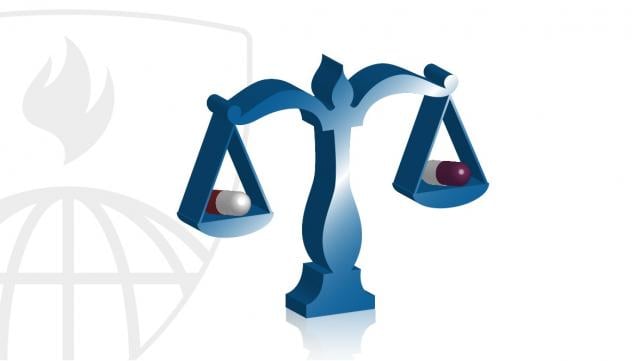
  3. Demonstrate an understanding of how virus control with anti-virals differs from protection with vaccines.

This is an intermediate series of courses intended for both clinical and non-clinical scientists who want to update their skills for work in clinical, academic, and pharmaceutical/bioscience industries, and is developed and delivered by experts working on viruses and novel vaccines.
To be successful in this series of courses, you should have basic knowledge in biology, genetics, microbiology or related fields.
This course is part of the Foundations in Virology and Vaccinology Specialization.

What you'll learn

  • Recognise how viruses cause infections
  • Recognise how vaccines prevent infections

Syllabus

Pathogenesis – why and how do viruses cause disease
Viruses can cause mild, chronic and severe illness and even death. The clinical effects of viruses might occur days or weeks and even months or years after the initial infection, even causing lifelong negative influences on life and livelihood. The impact is experienced by individuals, families, communities, workplaces, healthcare systems, and society. When we have outbreaks, epidemics and even pandemics of virus disease the effects can be devastating. In this module, we will look at viruses and focus on how they cause disease, and what factors affect pathogenesis and virulence.

Virus ‘lifestyles’ – why do some viruses cause short duration diseases and others cause cancer?
What are viruses doing inside host cells? How are they making copies of themselves? How are those copies getting out to infect other cells within us? And how are they getting out of us to infect others?  In this module, we will look at the replication strategies of different groups of viruses in humans, known as their ‘lifestyles’.

Tissue tropism and host range – why do viruses infect different animals and cause different diseases
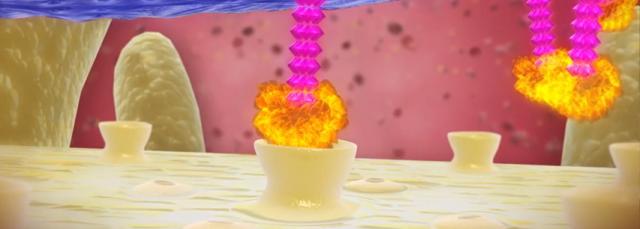
Viruses are truly parasitic microorganisms. We have seen repeatedly how receptors, on host cells, and attachment proteins, on viruses, affect which cells a virus can enter. Once inside the cell, viruses still need the cell to supply the energy and all the raw materials they need to replicate themselves, as well as the environment and much of the machinery.  In this module, we will explore the concepts of virus tissue and host range, and explore key questions around how viruses interact with host cells.

How and why do outbreaks and pandemics occur, and why do they often emerge from animals?
When outbreaks and pandemics start to happen, what do we hear about? It might be the symptoms. It will likely be the number of reported cases or fatalities. It might be what we are advised to do to avoid infection. And we also have a curiosity, or even a need, to find out where this virus came from. And in some cases, a major source of virus outbreaks has been other animals. In this module, we will look at virus threats from animals, known as ‘zoonotic infections’.

How can we prevent and/or control virus infections and outbreaks?
Antibiotics have kept us safe from bacterial infections all over the world. In situations and places that would previously have had significant mortality. However, they have their origins in, and deal with very different pathogens to antivirals. Simply because viruses have taken a completely different path and developed an incredibly effective strategy for causing viral infection in their host, making them much more difficult to treat. In this final module, we will look at the whole topic of how we prevent and control virus infections and outbreaks.
Go to Class
MOOC List is learner-supported. When you buy through links on our site, we may earn an affiliate commission.

Related Courses

Public Involvement in Research (Coursera) Coursera
Imperial College London

Public Involvement in Research (Coursera)

This course focuses on participatory approaches in research, known as 'public involvement' in the UK. You'll specifically, consider why citizens and patients would be involved in research and explore participatory approaches across and within the research cycle in more detail, diving into questions such as: What kinds of participation can be undertaken at each of the 7 stages of the cycle? How can you utilise participation in research? What examples of using participatory approaches exist in research?

Jun 10th 2026
4 Weeks
Viruses & How to Beat Them: Cells, Immunity, Vaccines (edX) EdX
Tel Aviv University,IsraelX

Viruses & How to Beat Them: Cells, Immunity, Vaccines (edX)

Learn how our immune system fights viral disease and make better vaccination decisions with a clearer understanding of Cells, Viruses, and Immunity. Have you ever wondered what viruses actually are? Have you been curious about the ways they invade our bodies, attack our cells and make us sick? Come and learn what viruses are made of and understand the mechanisms of how they hijack and take over our cells.

Self Paced
Self-Paced
How Vaccines Work (Coursera) Coursera
Imperial College London

How Vaccines Work (Coursera)

This course describes the underpinning science around vaccines and their development. It will look at the immunological underpinnings of how vaccines induce protection. It will also look at the epidemiological basis of how vaccines are rolled out. Finally it will explore how new vaccines are developed.

Jun 1st 2026
4 Weeks
Viruses & How to Beat Them I: Introduction to Cell Biology & Viruses (edX) EdX
Tel Aviv University,IsraelX

Viruses & How to Beat Them I: Introduction to Cell Biology & Viruses (edX)

Whereas cells are alive, viruses are not. Discover how living cells translate information coded in our genes into proteins and what happens when viruses hijack our cells and cause life threatening diseases. Have you ever wondered what viruses actually are? Have you been curious about the ways they invade our bodies, attack our cells and make us sick? Come and learn what viruses are made of and understand the mechanisms of how they hijack and take over our cells.

Self Paced
Self-Paced
Diagnóstico de HIV (TELELAB) TELELAB
Universidade Federal de Santa Catarina - UFSC

Diagnóstico de HIV (TELELAB)

O curso aborda a morfologia do vírus da imunodeficiência humana (HIV), sua multiplicação e a presença de marcadores sorológicos circulantes. Descreve os princípios metodológicos de métodos para o diagnóstico da infecção e explica os procedimentos para a coleta de material, realização dos testes, leitura e interpretação dos resultados. Apresenta as normas e os fluxogramas indicados pelo Ministério da Saúde para o diagnóstico da infecção.

Self Paced
Self-Paced
COVID-19 Critical Care: Understanding and Application (FutureLearn) FutureLearn
University of Edinburgh,Royal College of Physicians of Edinburgh

COVID-19 Critical Care: Understanding and Application (FutureLearn)

Learn the principles and practice of critical care to treat and care for critically ill patients during the COVID-19 pandemic. Learn to manage critical care patients whilst protecting yourself and your peers. “One of the essential qualities of the clinician is interest in humanity: the secret of the care of the patient is in caring for the patient” Francis W. Peabody, Harvard Medical School 1925. This 6-week course will teach you how to effectively care for critically ill patients during the COVID-19 pandemic.

Available now
5-12 Weeks
Infection Prevention and Control for Novel Coronavirus (OpenWHO) OpenWHO
World Health Organization

Infection Prevention and Control for Novel Coronavirus (OpenWHO)

This course provides information on what facilities should be doing to be prepared to respond to a case of an emerging respiratory virus such as the novel coronavirus, how to identify a case once it occurs, and how to properly implement IPC measures to ensure there is no further transmission to HCW or to other patients and others in the healthcare facility.

Self Paced
Self-Paced
Cyberthreats by Malware (openHPI) OpenHPI
Hasso-Plattner-Institut

Cyberthreats by Malware (openHPI)

In this course we will discuss a huge problem on the Internet: The spread of malware. The number of cyber attacks has increased again in 2020. New forms of malware have evolved, even more disruptive and more damaging. We will cover different types of malware, such as, viruses, worms, and trojans, talk about botnets and ransomware, and mention some countermeasures.

Self Paced
Self-Paced
COVID-19 Diagnostics and Testing (FutureLearn) FutureLearn
London School of Hygiene & Tropical Medicine,Foundation for Innovative New Diagnostics - FIND,African Society for Laboratory Medicine - ASLM

COVID-19 Diagnostics and Testing (FutureLearn)

Get the latest recommendations on COVID-19 diagnostics and testing, and how to improve testing capacity in low-income settings. Understand the key role diagnostics play in outbreak control. As the world struggles to contain the COVID-19 outbreak, healthcare infrastructure and testing capacity have emerged as major issues.

No sessions available
3 Weeks
ePROTECT Respiratory Infections (OpenWHO) OpenWHO
World Health Organization

ePROTECT Respiratory Infections (OpenWHO)

All personnel responding to outbreaks of Acute Respiratory Infections (ARIs) need to have the basic knowledge and skills to mount an effective response. They need to understand what ARIs are, how they are transmitted, how to assess the risk of infection and to understand basic hygiene measures to protect themselves. This learning package consists of 4 modules with videos and downloadable presentations.

Self Paced
Self-Paced
Diagnóstico de Hepatites Virais (TELELAB) TELELAB
Universidade Federal de Santa Catarina - UFSC

Diagnóstico de Hepatites Virais (TELELAB)

O Curso descreve os vírus causadores de Hepatites e desenvolve conteúdo sobre as infecções causadas pelos vírus dos tipos B e C. Aborda os princípios metodológicos dos testes para o diagnóstico da infecção, os marcadores sorológicos, a realização, leitura e interpretação dos resultados dos testes.

Self Paced
Self-Paced