Using clinical health data for better healthcare (Coursera)

Using clinical health data for better healthcare (Coursera)

Digital health is rapidly being realised as the future of healthcare. While this is placing emphasis on the input of quality health data in digital records and systems, the delivery of safe and quality healthcare relies not only on the input of data, but also the ability to access and derive meaning from data to generate evidence, inform decision making and drive better health outcomes.

Class Deals by MOOC List - Click here and see Coursera's Active Discounts, Deals, and Promo Codes.

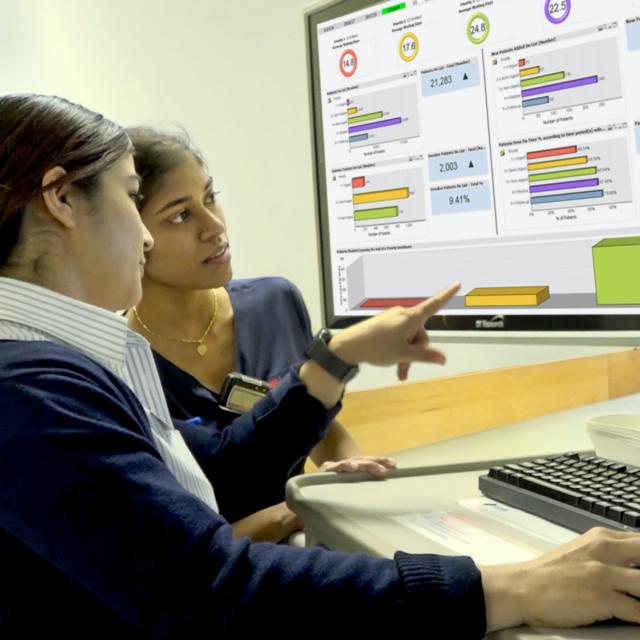
This course provides insight into the use of healthcare data, including an overview of best practices and the practical realities of obtaining useful information from digital health systems via the understanding of the fundamental concepts of health data analytics.
Learners will understand why data quality is essential in modern healthcare, as they are guided through various stages of the data life cycle, starting with the generation of quality health data, through to discovering patterns and extracting knowledge from health data using common methodologies and tools in the basic analysis, visualisation and communication of health data. In doing so, learners explore current healthcare delivery contexts, and future and emerging digital health data systems and applications that are rapidly becoming tomorrow’s reality.
On completion of this course, you will be able to:

  1. Identify digital health technologies, health data sources, and the evolving roles of health workforce in digital health environments
  2. Understand key health data concepts and terminology, including the significance of data integrity and stakeholder roles in the data life cycle
  3. Use health data and basic data analysis to inform and improve decision making and practice.
  4. Apply effective methods of communication of health data to facilitate safe and quality care.

During this course, you will interact with learning content contributed by:
• Digital Health Cooperative Research Centre
• Australian Digital Health Agency
• eHealth NSW
• Sydney Local Health District
• The NSW Ministry of Health
• Health Education and Training Institute
• Clinical Excellence Commission
• Chris O’Brien Lifehouse
• Monash Partners / Australian Health Research Alliance
• Australian Research Data Commons
• Justice Health & Forensic Mental Health Network
• South Eastern Sydney Local Health District
• Western Sydney Local Health District
• Westmead Breast Cancer Institute
• Agency for Clinical Innovation
• Western NSW Local Health District
• Sydney Children’s Hospital Network

Syllabus

WEEK 1
An introduction to digital health
This module explores current digital health environments, identifying the many uses of digital health technologies and health data sources. We look at the evolving roles of the health workforce in digital health environments, considering roles and responsibilities. The importance of data analytics for decision making and healthcare outcomes is introduced.
Note: Materials used are for learning purposes and content may not reflect your organisation’s policies. When working with data, make sure you act within the guidelines and policies of your organisation.


WEEK 2
Everyone plays a role in health data
In this module, we review key health data concepts and terminology. We emphasise the importance of data integrity and the benefits and consequences of high or low quality data. We look at the data life cycle and the roles and responsibilities of all stakeholders in the provision of quality healthcare. There are some case studies illustrating the consequences of poor quality data and we also look at the fundamentals of digital health legislation and policy. Note: Materials used are for learning purposes and content may not reflect your organisation’s policies. When working with data, make sure you act within the guidelines and policies of your organisation.
WEEK 3
Interpret health data - turn information into new insights
In this module, we look at the use of health data and basic data analysis to inform and improve decision making and practice. We explore some common methods and tools used in the analysis of health data. There is an opportunity to develop a data query and to practice working with data. Note: Materials used are for learning purposes and content may not reflect your organisation’s policies. When working with data, make sure you act within the guidelines and policies of your organisation.

WEEK 4
Share and integrate data into practice
In the final module, we look at the various modes of communication appropriate for sharing the results produced by data analysis. We consider how effective communication of digital health data contributes to greater consumer engagement and well-being as well as more effective, evidence-based decision making within the healthcare system. Note: Materials used are for learning purposes and content may not reflect your organisation’s policies. When working with data, make sure you act within the guidelines and policies of your organisation.
Go to Class
MOOC List is learner-supported. When you buy through links on our site, we may earn an affiliate commission.

Related Courses

Community Awareness Course: Sexuality and Disability (Coursera) Coursera
University of Minnesota

Community Awareness Course: Sexuality and Disability (Coursera)

This community awareness course from the University of Minnesota Program on Human Sexuality will provide you with a solid introduction to human sexuality for those living with disabilities. Often there are assumptions that the disabled or differently abled people are not sexual, do not have sexual needs, or cannot be involved sexually. In this professionally produced one-hour course, you'll learn about the basics of disabilities and human sexuality.

Aug 10th 2026
5-12 Weeks
Diabetes - the Essential Facts (Coursera) Coursera
University of Copenhagen

Diabetes - the Essential Facts (Coursera)

Across the world more than 420 million people are living with diabetes. Two thirds of these have not yet been diagnosed. When discovered late or managed incorrectly, diabetes can damage your heart, blood vessels, eyes, kidneys, and nerves, leading to disability and premature death. In fact, more people are dying of diabetes related diseases than of diseases as HIV/AIDS, malaria and tuberculosis combined. This course will provide you with an introduction to the most recent research in the field of prevention and treatment of diabetes as well as a broader understanding of the situation in different communities, rich and poor, across the world, where diabetes threatens public health.

Aug 16th 2026
3 Weeks
Healthcare Data Management and Information Systems (Coursera) Coursera
Northeastern University

Healthcare Data Management and Information Systems (Coursera)

This course is the continuation of the Health Informatics for Healthcare Professionals course. If you have not yet taken the introductory course, it is recommend that you complete that course prior to this course. The foundational knowledge from the introduction is carried through in this deeper dive into informatics in healthcare.

Aug 17th 2026
4 Weeks
Interprofessional Healthcare Informatics (Coursera) Coursera
University of Minnesota

Interprofessional Healthcare Informatics (Coursera)

Interprofessional Healthcare Informatics is a graduate-level, hands-on interactive exploration of real informatics tools and techniques offered by the University of Minnesota and the University of Minnesota's National Center for Interprofessional Practice and Education. We will be incorporating technology-enabled educational innovations to bring the subject matter to life. Over the 10 modules, we will create a vital online learning community and a working healthcare informatics network.

Aug 17th 2026
5-12 Weeks
Data Augmented Technology Assisted Medical Decision Making (Coursera) Coursera
University of Michigan

Data Augmented Technology Assisted Medical Decision Making (Coursera)

Artificial intelligence (AI) and machine learning (ML) have the potential to increase diagnostic accuracy, decrease diagnostic errors, and improve patient outcomes. The Data Augmented, Technology Assisted Medical Decision Making (DATA-MD) course will teach you how to use AI to augment your diagnostic decision-making.

Aug 17th 2026
4 Weeks
Foundations of Healthcare Systems Engineering (Coursera) Coursera
Johns Hopkins University

Foundations of Healthcare Systems Engineering (Coursera)

Through dynamic video lectures and practical application questions, you will learn about the Foundations of Healthcare Systems Engineering. In this course you will learn about the current lack of synchronized, efficient, and integrated healthcare systems, which are some of the drivers for improvements to healthcare delivery.

Aug 10th 2026
4 Weeks
Stories of Infection (Coursera) Coursera
Stanford University

Stories of Infection (Coursera)

This course introduces learners to a variety of infectious diseases using a patient-centered, story-based approach. Through illustrated, short videos, learners will follow the course of each patient’s illness, from initial presentation to resolution. Integrating the relevant microbiology, pathophysiology and immunology, this course aims to engage and entice the learner towards future studies in microbiology, immunology and infectious diseases.

Aug 17th 2026
5-12 Weeks
Strategies for Senior Housing Communities during COVID-19 (Coursera) Coursera
Johns Hopkins University

Strategies for Senior Housing Communities during COVID-19 (Coursera)

SARS-CoV-2, the virus that causes COVID-19, poses a high risk for senior housing communities and the people who live and work there. The COVID-19 response has largely focused on nursing homes, leaving independent living communities serving older adults in the United States with fragmented guidance on how to respond to COVID-19 challenges. This course provides comprehensive instruction and resources for property owners and managers, senior housing staff, service coordinators and providers, community housing leaders, and other senior housing stakeholders to build upon their emergency preparedness and response strategies related to COVID-19. The course lectures, interviews, and assignments are largely geared toward federally-subsidized, multifamily senior housing providers, but the material is relevant for all senior housing providers. **Free enrollment available until December 31, 2021. Valid for one enrollment per person.**

Aug 17th 2026
1 Week
Violence Against Healthcare (Coursera) Coursera
University of Geneva

Violence Against Healthcare (Coursera)

At the global level, there are many countries marked by violence affecting health care. The 'Health care in danger' project aims to establish practical measures and recommendations that can be implemented on the ground by policy-makers, humanitarian organizations and health professionals. In view of the multiplicity of actors and latitudes concerned, it is essential to be able to make available the tools needed to make informed decisions, guide behaviour in high-risk areas and provide everyone the means to create and optimize the dialogue between humanitarian professionals and health on the one hand and relevant authorities or other armed actors.

Aug 10th 2026
5-12 Weeks