Understanding the COVID-19 Vaccine (OpenClass)

Understanding the COVID-19 Vaccine (OpenClass)

Welcome to "Understanding the COVID-19 Vaccine" -- a free OpenClass which aims to educate the general public on the COVID-19 vaccine to allow people to make an informed decision.

Before diving into the course material, let's set the stage for the course so you know what to expect:
How long will the course take?
This is a mini OpenClass aimed at the general public. Rather than teaching an in-depth, jargon-filled analysis of the pharmaceutical processes that go into developing vaccines, this course provides a general overview of how the COVID-19 vaccine works so anyone without a background in pharmacy can make informed decisions.
As such, this course is short and sweet. Straight to the point. Learners should expect to spend 1-2 hours to complete the course.
What does this course entail?
This course entails one presentation broken down into five sections:
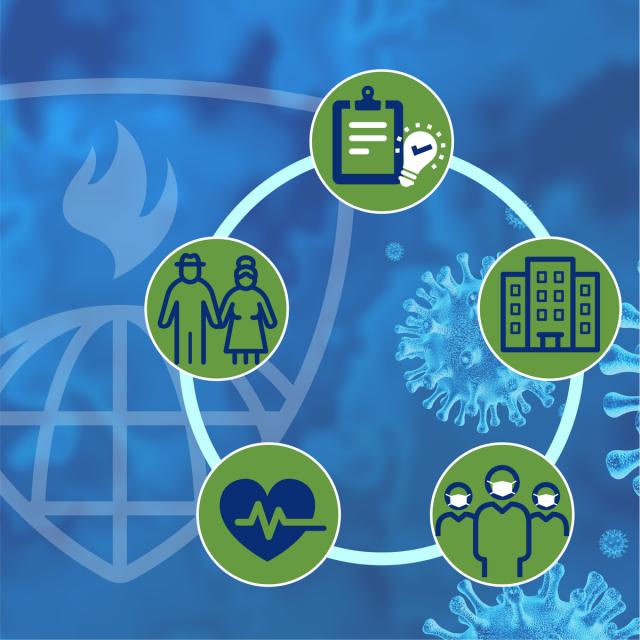
Background of viruses and the human immune system Overview of the COVID-19 vaccine The relationship between DNA and mRNA COVID-19 vaccine trials Kids, variants, and side effects
For each section, learners are first presented with the slides to skim through to prepare them for the video explanation by Dr. Novatt. Reviewing learning content before it is presented is a learning strategy known as "priming" and is proven to significantly improve knowledge retention.


Go to Class
MOOC List is learner-supported. When you buy through links on our site, we may earn an affiliate commission.

Related Courses

Epidemics (Coursera) Coursera
University of Hong Kong

Epidemics (Coursera)

“If history is our guide, we can assume that the battle between the intellect and will of the human species and the extraordinary adaptability of microbes will be never-ending.” Despite all the remarkable technological breakthroughs that we have made over the past few decades, the threat from infectious diseases has significantly accelerated. In this course, we will learn why this is the case by looking at the fundamental scientific principles underlying epidemics and the public health actions behind their prevention and control in the 21st century.

Sep 14th 2026
5-12 Weeks
Disease Screening in Public Health (Coursera) Coursera
University of Geneva

Disease Screening in Public Health (Coursera)

Current and future public health is characterized by the increase of chronic and degenerative diseases, corresponding to the worldwide ageing of the population. The increasing prevalence of these conditions together with the long incubation period of the chronic diseases and the restless technological innovations, offer new opportunities to develop strategies for early diagnosis.

Sep 14th 2026
5-12 Weeks
One Health, One Medicine: A Sustainable Approach (SGU) Other Providers
St. George’s University, Grenada

One Health, One Medicine: A Sustainable Approach (SGU)

This course will expose you to relevant areas of One Health One Medicine with special emphasis on Sustainability issues. Global health burden, determinants of health, strategies towards promoting health and applications towards a sustainable approach for the health of humans, animals and the environment will be covered.

No sessions available
4 Weeks
Designing a multidimensional poverty index (UNDP) Other Providers
University of Oxford,United Nations Development Programme - UNDP,Oxford Poverty and Human Development Initiative - OPHI

Designing a multidimensional poverty index (UNDP)

To leave no one behind for a COVID-19 recovery, it is time to develop poverty metrics beyond income. UNDP and University of Oxford are offering a FREE Massive Open Online Course "Designing a Multidimensional Poverty Index" in English, French, and Spanish on Learning for Nature. Starting 22 February, this six-week course will provide you with the tools to monitor, analyze, and report progress in reducing multidimensional poverty for a COVID-19 recovery in your country.

No sessions available
5-12 Weeks
Value-Based Care: Reimbursement Models (Coursera) Coursera
University of Houston

Value-Based Care: Reimbursement Models (Coursera)

This course is designed to help you build high-level knowledge of the current medical coding and payment mechanisms of most U.S. healthcare services, referred to as fee-for-service. You will explore why the fee-for-service model has contributed to higher costs in the U.S. healthcare system without clearly improving health outcomes. You will examine the importance of coding to reflect chronic conditions and other diagnoses accurately and how value-based care and payments utilize these measures and data. As you learn about a model to replace fee-for-service, you’ll encounter a range of payment options considered to be value-based that utilize a framework from the Health Care Payment Learning and Action Network (HCP-LAN). To build on those options, you will learn how risk-adjustment, quality scores, and patient satisfaction measures are critical parts of value-based care and payment contracts. In the summative assignment, you will demonstrate your knowledge by comparing fee-for-service and value-based contracts, using specific examples to explain and justify the importance of documentation and coding, and identifying ways that risk-adjustment and patient satisfaction are incorporated into value-based care contracts.

Sep 14th 2026
3 Weeks
Strategies for Senior Housing Communities during COVID-19 (Coursera) Coursera
Johns Hopkins University

Strategies for Senior Housing Communities during COVID-19 (Coursera)

SARS-CoV-2, the virus that causes COVID-19, poses a high risk for senior housing communities and the people who live and work there. The COVID-19 response has largely focused on nursing homes, leaving independent living communities serving older adults in the United States with fragmented guidance on how to respond to COVID-19 challenges. This course provides comprehensive instruction and resources for property owners and managers, senior housing staff, service coordinators and providers, community housing leaders, and other senior housing stakeholders to build upon their emergency preparedness and response strategies related to COVID-19. The course lectures, interviews, and assignments are largely geared toward federally-subsidized, multifamily senior housing providers, but the material is relevant for all senior housing providers. **Free enrollment available until December 31, 2021. Valid for one enrollment per person.**

Sep 14th 2026
1 Week
Managing Supply Chain Disruption During COVID-19 (Coursera) Coursera
University of Illinois at Urbana-Champaign

Managing Supply Chain Disruption During COVID-19 (Coursera)

In this course, you will learn about why and how supply chains become susceptible to a disruption. We will examine this by discussing supply side and demand side issues, primary supply chain flows, complexity, risk management and a combination of solid theoretical supply chain perspectives and current real-world stories. You will learn about the structural, relational and operational factors that come into play during a supply chain disruption and the mechanisms for the effective management of these factors.

Sep 14th 2026
4 Weeks
Understanding Multiple Sclerosis (MS) (University of Tasmania) Other Providers
University of Tasmania

Understanding Multiple Sclerosis (MS) (University of Tasmania)

'Understanding Multiple Sclerosis (MS)' is a free online course that aims to improve understanding and awareness of MS. Developed by the Menzies Institute for Research in partnership with Multiple Sclerosis Limited, the content is delivered by 27 experts in the field including neurologists, researchers, clinicians, allied health practitioners, carers and people living with Multiple Sclerosis.

Sep 12th 2022
5-12 Weeks
Population Health: Syndemics (Coursera) Coursera
Leiden University

Population Health: Syndemics (Coursera)

Do you wish to contribute to breaking cycles of ill-health in disadvantaged populations? And explore co-occurrence of diseases, such as substance abuse, infectious and chronic disease, and the relation with social factors (disparities)? Are you disappointed in the poor effectiveness of interventions for combined social and medical problems? Then this syndemics course might provide you with some answers.

Sep 14th 2026
4 Weeks
Fundamentals for Implementing a Hypertension Program (Coursera) Coursera
Johns Hopkins University

Fundamentals for Implementing a Hypertension Program (Coursera)

This course provides the fundamental knowledge necessary for program managers and implementors in a hypertension control program, especially in resource-limited settings. The course is interactive and includes useful tips relevant to different settings. The course should be also relevant to physicians, nurses, pharmacists, community health workers, and others who are interested in learning about hypertension diagnosis and management.

Sep 21st 2026
5-12 Weeks
In the footsteps of Zika… approaching the unknown (Coursera) Coursera
University of Geneva

In the footsteps of Zika… approaching the unknown (Coursera)

Welcome to this on-demand MOOC “In the footsteps of Zika… approaching the unknown”. This MOOC has been produced by Université de Genève Institut Pasteur, Université Paris Descartes and Centre Virchow-Villermé. With the help of the intervention of faculty members and international experts, we will explore together the recent Zika phenomenon, a previously rare benign virus that recently turned unexpectedly into the limelight when on the 1st of February 2016 it was declared by the WHO as a Public Health Emergency of International Concern.

Sep 21st 2026
5-12 Weeks