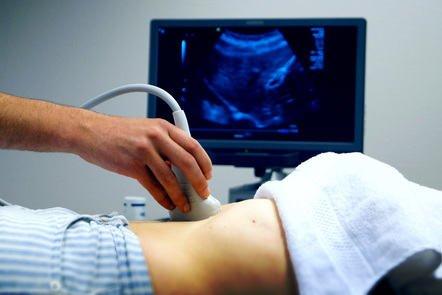
Ultrasound Imaging: What Is Inside? (FutureLearn)

Offered by University of Twente,
Ultrasound Imaging: What Is Inside? (FutureLearn)

What is an ultrasound scan, and how do they work? Discover the science of ultrasound and understand its clinical uses. Discover how ultrasound imaging works. With this ultrasound imaging course, you’ll explore some of the main principles behind this fascinating technology. Starting with an ultrasound definition and working your way through the science behind the process, you’ll learn about the clinical applications of an ultrasound scan.

Class Deals by MOOC List - Click here and see FutureLearn's Active Discounts, Deals, and Promo Codes.

Whether you’re simply curious about how the process works, considering sonographer training, or hoping to improve your existing clinical knowledge, this is the course for you.

Learn about the uses of ultrasound
How does ultrasound imaging work? And what is an ultrasound scan? You’ll explore these questions and more as you progress through the course syllabus.
You’ll also examine the current developments in technology, and the new possibilities in ultrasound imaging are arising that may improve diagnostics.

Understand ultrasound imaging from three perspectives
Ultrasound can only be correctly performed and improved when users have a profound knowledge of the underlying technology. With that in mind, this free online course is based on three major perspectives:

  1. Medical perspective: In Week 1 we will examine the versatile use of ultrasound imaging for medical purposes.
  2. Technical perspective: In Weeks 2 to 4 we will explain the underlying technology of ultrasound imaging.
  3. Technical medical perspective: In Weeks 5 and 6 we will apply your newly acquired technical background knowledge of ultrasound to make better images.

Develop your clinical knowledge and patient care
Whether you’re wondering how to learn ultrasound or how to become a sonographer, this course can provide some of the foundations you’ll need. Once completed, you’ll have a good understanding of the technology of ultrasound imaging, and you can apply this knowledge in examples of ultrasound use in the clinic.

Syllabus

Week 1: Ultrasound in medical practice
Week 2: The technology behind ultrasound - Part one
Week 3: The technology behind ultrasound - Part two
Week 4: The technology behind ultrasound - Part three
Week 5: Technical medicine of ultrasound - The first cases
Week 6: Technical medicine of ultrasound - The final cases

What will you achieve?
By the end of the course, you'll be able to...

  • Identify and comprehend the versatile use of clinical ultrasound imaging.
  • Explain how medical images are created with ultrasound.
  • Apply technical background knowledge of ultrasound to improve patient care.

Who is the course for?
This course is aimed at everyone interested in ultrasound imaging, its technological background, and its application in clinical practice. Medical students and professionals working with ultrasound might find this course useful as well. Participants are expected to have a pre-university level in mathematics and physics.
Participants with the expected starting level will need about 3 hours per week for the course. If you have already more knowledge or experience about the technical aspects or medical use of ultrasound imaging, you may need less time to complete the course.
In this course, you will investigate ultrasound imaging in-depth and explore the different possibilities from an ultrasound device. However, it is not necessary to have an ultrasound device available.
Go to Class
MOOC List is learner-supported. When you buy through links on our site, we may earn an affiliate commission.

Related Courses

Good Brain, Bad Brain: Parkinson's Disease (FutureLearn) FutureLearn
University of Birmingham

Good Brain, Bad Brain: Parkinson's Disease (FutureLearn)

Learn the fundamentals of Parkinson's disease with this online course. What causes it and what we can do to treat it? This online course is aimed at anyone who wants to find out the fundamentals of Parkinson’s disease. We will look at how Parkinson’s disease affects people; what causes it; what we can do to try to ameliorate the symptoms of Parkinson’s; and what we don’t yet know about it.

No sessions available
3 Weeks
Dysphagia: Swallowing Difficulties and Medicines (FutureLearn) FutureLearn
University of East Anglia

Dysphagia: Swallowing Difficulties and Medicines (FutureLearn)

This course will enhance the knowledge of any person involved in the administration of medicines to patients with dysphagia. The course offers an opportunity to network with other learners and with the creators of the course through discussions, graphs and social networking features and to share knowledge with other learners and professionals.

Self Paced
5-12 Weeks
Major Depression in the Population: A Public Health Approach (Coursera) Coursera
Johns Hopkins University

Major Depression in the Population: A Public Health Approach (Coursera)

Public Mental Health is the application of the principles of medicine and social science to prevent the occurrence of mental and behavioral disorders and to promote mental health of the population. This course illustrates the principles of public health applied to depressive disorder, including principles of epidemiology, transcultural psychiatry, health services research, and prevention. It is predicted that by 2020 depressive disorder will be the most important cause of disease burden in the entire world! Every human being suffers from feeling depressed at some point or other, but only about one fifth of the population will experience an episode of depressive disorder over the course of their lives.

Oct 26th 2026
5-12 Weeks
Pioneers of Medicine and Medical Breakthroughs in Taiwan (Coursera) Coursera
National Taiwan University

Pioneers of Medicine and Medical Breakthroughs in Taiwan (Coursera)

Through ages, doctors and scientists have worked hard to fight against different diseases, but it is not easy to find the effective way to deal with them. However, it is a lot faster and easier to approach new problems nowadays with the help of past experience and modern technology. In this course, we are going to show you some common diseases and its current management. At the same time, we will also show you how modern medicine has developed and what breakthroughs are specially made in Taiwan.

Oct 26th 2026
5-12 Weeks
Cancer in the 21st Century - the Genomic Revolution (FutureLearn) FutureLearn
University of Glasgow

Cancer in the 21st Century - the Genomic Revolution (FutureLearn)

Discover how modern genetics has revolutionised approaches to the detection and treatment of cancer. Cancer Research UK estimates that 1 in 2 people in the UK will be diagnosed with cancer during their lifetime. It is a disease that impacts on most people’s lives at some stage. So understanding cancer, and the development of new treatments, is of intrinsic interest to us all.

No sessions available
5-12 Weeks
Nanotechnology for Health: Innovative Designs for Medical Diagnosis (FutureLearn) FutureLearn
University of Twente

Nanotechnology for Health: Innovative Designs for Medical Diagnosis (FutureLearn)

Discover how types of nanotechnology can be used for exciting new opportunities in healthcare. Explore the use and implications of nanotechnology in medicine. Nanotechnology is used to control and manipulate nanometer-sized matter with nanometer precision. This can be atoms, molecules, or larger biological structures such as DNA or living cells. On this course, you’ll explore the potential of nanotechnology products in medical applications, to create new devices that can be used to diagnose a disease or monitor a medical treatment.

Available now
4 Weeks
Medicines Adherence: Understanding and Changing Patient Behaviour (FutureLearn) FutureLearn
King's College London

Medicines Adherence: Understanding and Changing Patient Behaviour (FutureLearn)

Initiate and support behaviour change in patients with medicines adherence problems – not taking their medicines as prescribed. This course has been designed by psychologists and clinicians at King’s College London for people interested in medicines adherence. Using evidenced-and theory-based techniques, you will deepen your awareness and understanding of current practical and theoretical issues around medicines adherence.

No sessions available
2 Weeks
Reversing Diabetes: Fact or Fiction? (FutureLearn) FutureLearn
University of Leicester

Reversing Diabetes: Fact or Fiction? (FutureLearn)

Can diabetes be reversed? Explore research on the success of weight loss treatments in reversing and preventing type 2 diabetes. Join the debate around weight loss and type 2 diabetes remission. There is a growing prevalence of diseases which can be directly linked to our modern lifestyle and diet. Research into preventing and reversing type 2 diabetes is now heavily focused on obesity and weight loss.

May 30th 2022
3 Weeks
Clinical Terminology for International and U.S. Students (Coursera) Coursera
University of Pittsburgh

Clinical Terminology for International and U.S. Students (Coursera)

Understanding the clinical terms and abbreviations commonly used in U.S. hospitals is challenging. Adaptation to clinical language can be difficult for U.S. students entering the clinical area and even more so for international students whose primary language is not English. This course is designed to help both groups of students understand the terms and abbreviations commonly encountered during the first three months of clinical work on a U.S. hospital unit.

Oct 26th 2026
5-12 Weeks
A Journey Through Transfer Medicine (FutureLearn) FutureLearn
University College London

A Journey Through Transfer Medicine (FutureLearn)

Understanding the complexity and diversity of transfer medicine for critically ill patients across a global landscape. Discover how to keep critically ill patients safe during transfer. Across the world, thousands of critically ill patients are transferred within hospitals and between locations, yet there is little formal training available.

Self Paced
4 Weeks
Tackling Antibiotic Resistance: What Should Dentists Do? (FutureLearn) FutureLearn
British Society for Antimicrobial Chemotherapy - BSAC,FDI World Dental Federation

Tackling Antibiotic Resistance: What Should Dentists Do? (FutureLearn)

Discover the danger posed by antibiotic resistance, and how dental teams can meet the challenge to protect patients. Explore how dentists can tackle the threat of global antibiotic resistance. Antibiotics are lifesaving drugs – when you need them, you need them to work. Antimicrobial resistance (AMR) poses a significant threat to health and wealth globally. Dental teams can do their bit by optimising the use of antibiotics. On this course, you’ll identify ways in which those involved in dental practice can do their bit to tackle antibiotic resistance (ABR).

May 11th 2026
3 Weeks