Técnicas de Coloração de Gram (TELELAB)

Técnicas de Coloração de Gram (TELELAB)

O curso de método de Coloração de Gram propõe tratar de questões referentes à preparação de realização do método em ambiente de laboratório, considerando a identificação e utilização adequada dos equipamentos e procedimentos.

Objetivo:
Considerando as boas práticas, o curso busca atualizar profissionais que atuam no ambiente de laboratório, promovendo a correta utilização do método de coloração Gram.

Conteúdo do Curso:

  • Conhecer a origem, o histórico e as características gerais do método de coloração de Gram.
  • Conhecer a caracterização, a utilização, a eficácia, a forma de interpretação, os recursos para realização e o sistemas de classificação do método de coloração de Gram.
  • Conhecer as modificações do método de coloração de Gram e suas vantagens.
  • Conhecer e utilizar os passos de preparação dos reagentes necessários à realização do método de coloração de Gram.
  • Conhecer e utilizar os passos da realização do método de coloração de Gram.
  • Conhecer e utilizar as técnicas necessárias ao controle de qualidade do método de coloração de Gram.
Go to Class
MOOC List is learner-supported. When you buy through links on our site, we may earn an affiliate commission.
Related Courses

Biossegurança – Laboratórios de DST, AIDS e Hepatites Virais (TELELAB) TELELAB
Universidade Federal de Santa Catarina - UFSC

Biossegurança – Laboratórios de DST, AIDS e Hepatites Virais (TELELAB)

O curso de biossegurança propõe tratar de questões referentes à atenção e boas práticas de segurança no ambiente de laboratório, considerando identificação e utilização dos equipamentos e procedimentos de maneira que permita atender as reais necessidades na intervenção, prevenção e cuidado nas rotinas do trabalho em ambiente de laboratório.

Self Paced
Self-Paced
Equipamentos - Utilização e monitoramento em Unidades Hemoterápicas e Laboratórios de Saúde Pública (TELELAB) TELELAB
Universidade Federal de Santa Catarina - UFSC

Equipamentos - Utilização e monitoramento em Unidades Hemoterápicas e Laboratórios de Saúde Pública (TELELAB)

O Curso aborda os procedimentos de utilização e conservação de equipamentos rotineiramente utilizados em Laboratórios de Saúde Pública e Unidades Hemoterápicas, o monitoramente de equipamentos termo-controláveis e os modos de utilização, conservação e controle de pipetagens.

Self Paced
Self-Paced
Design and Interpretation of Clinical Trials (Coursera) Coursera
Johns Hopkins University

Design and Interpretation of Clinical Trials (Coursera)

Clinical trials are experiments designed to evaluate new interventions to prevent or treat disease in humans. The interventions evaluated can be drugs, devices (e.g., hearing aid), surgeries, behavioral interventions (e.g., smoking cessation program), community health programs (e.g. cancer screening programs) or health delivery systems (e.g., special care units for hospital admissions). We consider clinical trials experiments because the investigators rather the patients or their doctors select the treatment the patients receive.

Oct 26th 2026
5-12 Weeks
Understanding Plants - Part I: What a Plant Knows (Coursera) Coursera
Tel Aviv University

Understanding Plants - Part I: What a Plant Knows (Coursera)

For centuries we have collectively marveled at plant diversity and form—from Charles Darwin’s early fascination with stems and flowers to Seymour Krelborn’s distorted doting in Little Shop of Horrors. This course intends to present an intriguing and scientifically valid look at how plants themselves experience the world—from the colors they see to the sensations they feel. Highlighting the latest research in genetics and more, we will delve into the inner lives of plants and draw parallels with the human senses to reveal that we have much more in common with sunflowers and oak trees than we may realize.

Oct 26th 2026
5-12 Weeks
An Introduction to Global Health (Coursera) Coursera
University of Copenhagen

An Introduction to Global Health (Coursera)

This course will provide you with an overview of the most important health challenges facing the world today. You will gain insight into how challenges have changed over time, we will discuss the likely determinants of such changes and examine future projections. Successful international strategies and programs promoting human health will be highlighted and global health governance structures will be mapped and the role of the key actors explored.

Oct 26th 2026
5-12 Weeks
HI-FIVE: Health Informatics For Innovation, Value & Enrichment (Clinical Perspective) (Coursera) Coursera
Columbia University

HI-FIVE: Health Informatics For Innovation, Value & Enrichment (Clinical Perspective) (Coursera)

HI-FIVE (Health Informatics For Innovation, Value & Enrichment) Training is a 12-hour online course designed by Columbia University in 2016, with sponsorship from the Office of the National Coordinator for Health Information Technology (ONC). The training is role-based and uses case scenarios. Also, it has additional, optional modules on other topics of interest or relevance. Although we suggest to complete the course within a month's timeframe, the course is self-paced and so you can start and finish the course at anytime during a month's time period. No additional hardware or software are required for this course.

Oct 26th 2026
4 Weeks
Genomics: Decoding the Universal Language of Life (Coursera) Coursera
University of Illinois at Urbana-Champaign

Genomics: Decoding the Universal Language of Life (Coursera)

What is a genome? A genome contains all of the information that a cell needs to develop, function, and reproduce itself, and all the information needed for those cells to come together to form a person, plant, or animal. Genomes contain an organism’s complete set of genes, and also the even tinier genetic structures that help regulate when and how those genes are used. The ability to regrow a torn ligament, the clues that might predict the onset of mental illness, the nutritional potential of crops, and even the history of life itself, are all encoded in genomes. By taking this course, you will discover how scientists are deciphering the language of genomes to learn how to develop sustainable food and fuel supplies, improve disease treatment and prevention, and protect our environment.

Oct 26th 2026
5-12 Weeks
Clinical Terminology for International and U.S. Students (Coursera) Coursera
University of Pittsburgh

Clinical Terminology for International and U.S. Students (Coursera)

Understanding the clinical terms and abbreviations commonly used in U.S. hospitals is challenging. Adaptation to clinical language can be difficult for U.S. students entering the clinical area and even more so for international students whose primary language is not English. This course is designed to help both groups of students understand the terms and abbreviations commonly encountered during the first three months of clinical work on a U.S. hospital unit.

Oct 26th 2026
5-12 Weeks
Coleta de sangue - Diagnóstico e monitoramento das DST, AIDS e Hepatites Virais (TELELAB) TELELAB
Universidade Federal de Santa Catarina - UFSC

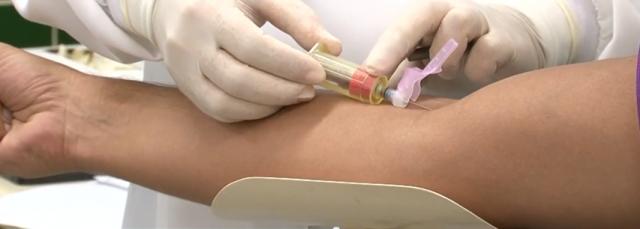
Coleta de sangue - Diagnóstico e monitoramento das DST, AIDS e Hepatites Virais (TELELAB)

A proposta do curso é atualizar a capacitação do aluno para os procedimentos de coleta de sangue, disponibilizando orientações e metodologias adequadas para realização do processo. O curso contempla procedimentos de acolhimento do paciente ao transporte de amostras enfatizando itens de segurança.

Self Paced
Self-Paced
Introduction to Genetics and Evolution (Coursera) Coursera
Duke University

Introduction to Genetics and Evolution (Coursera)

Introduction to Genetics and Evolution is a college-level class being offered simultaneously to new students at Duke University. The course gives interested people a very basic overview of some principles behind these very fundamental areas of biology. We often hear about new "genome sequences," commercial kits that can tell you about your ancestry (including pre-human) from your DNA or disease predispositions, debates about the truth of evolution, why animals behave the way they do, and how people found "genetic evidence for natural selection." This course provides the basic biology you need to understand all of these issues better, tries to clarify some misconceptions, and tries to prepare students for future, more advanced coursework in Biology (and especially evolutionary genetics). No prior coursework is assumed.

Oct 26th 2026
5-12 Weeks
Diagnóstico de Hepatites Virais (TELELAB) TELELAB
Universidade Federal de Santa Catarina - UFSC

Diagnóstico de Hepatites Virais (TELELAB)

O Curso descreve os vírus causadores de Hepatites e desenvolve conteúdo sobre as infecções causadas pelos vírus dos tipos B e C. Aborda os princípios metodológicos dos testes para o diagnóstico da infecção, os marcadores sorológicos, a realização, leitura e interpretação dos resultados dos testes.

Self Paced
Self-Paced
Drug Development (Coursera) Coursera
University of California, San Diego

Drug Development (Coursera)

The University of California San Diego, Skaggs School of Pharmacy and Pharmaceutical Sciences Drug Development course brings you lectures from both faculty and industry experts. With this course, recorded on campus at UCSD, we seek to share our access to top people in the field who bring an unprecedented range of expertise on drug development. In this course you will learn the different stages of clinical development as well as the regulatory including but not limited to, an Investigational New Drug Application (IND), New Drug Application (NDA), and product labeling.

Oct 26th 2026
3 Weeks