Tales from the Genome (Udacity)

Offered by Udacity, 23andMe,
Tales from the Genome (Udacity)

Introduction to Genetics for Beginners. This course is a journey into the biology of the human genome and will highlight the scientific, social, and personal perspectives of people living with a variety of traits.

Class Deals by MOOC List - Click here and see Udacity's Active Discounts, Deals, and Promo Codes.

You will learn about fundamental principles of inheritance, gene expression, mutation and variation, development of simple and complex biological traits, human ancestry and evolution, and the acquisition of personal genetic information. By the end of this course, you will be able to read and understand genetic information available from personal genetics services such as 23andMe.

Why Take This Course
You will learn about fundamental principles of inheritance, gene expression, mutation and variation, development of simple and complex biological traits, human ancestry and evolution, and the acquisition of personal genetic information. By the end of this course, you will be able to read and understand genetic information available from personal genetics services such as 23andMe.

What You Will Learn

Lesson 1
Origin of mutation/variation

  • Types of mutations and various causes of mutation.
  • Allelic frequency
  • and the spread of alleles in a population.

Lesson 2
How to obtain and interpret personal genetic information

  • Personalized genetics: sample acquisition
  • DNA extraction and processing.
  • Interpretation of results.

Lesson 3
Simple genetic traits

  • Molecular causes of monogenic traits.
  • Loss-of-function vs. gain-of-function alleles
  • and dominance.

Lesson 4
Multifactorial traits

  • Polygenic traits
  • qualitative and quantitative measures.
  • Twin studies
  • relative risk
  • and genome-wide association studies (GWAS).

Lesson 5
Pharmacogenetics: genes and drugs

  • Pharmacokinetics and pharmacodynamics.
  • Alleles affecting drug metabolism.
  • Personalized medicine.

Lesson 6
Origin of mutation/variation

  • Types of mutations and various causes of mutation.
  • Allelic frequency
  • and the spread of alleles in a population.

Lesson 7
How to obtain and interpret personal genetic information

  • Personalized genetics: sample acquisition
  • DNA extraction and processing.
  • Interpretation of results.

Lesson 8
Simple genetic traits

  • Molecular causes of monogenic traits.
  • Loss-of-function vs. gain-of-function alleles
  • and dominance.

Lesson 9
Multifactorial traits

  • Polygenic traits
  • qualitative and quantitative measures.
  • Twin studies
  • relative risk
  • and genome-wide association studies (GWAS).

Lesson 10
Pharmacogenetics: genes and drugs

  • Pharmacokinetics and pharmacodynamics.
  • Alleles affecting drug metabolism.
  • Personalized medicine.
Go to Class
MOOC List is learner-supported. When you buy through links on our site, we may earn an affiliate commission.

Related Courses

Dynamical Modeling Methods for Systems Biology (Coursera) Coursera
Icahn School of Medicine at Mount Sinai

Dynamical Modeling Methods for Systems Biology (Coursera)

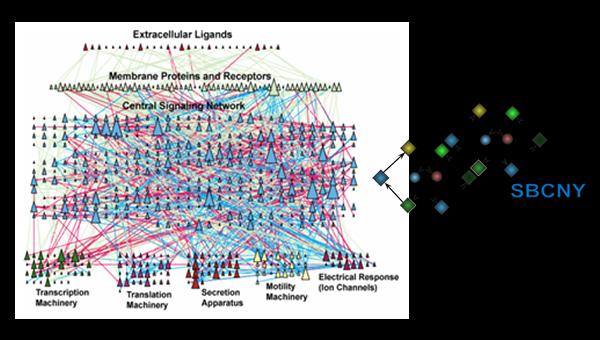
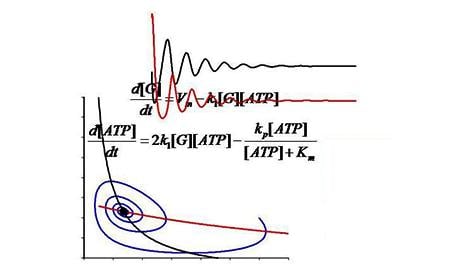
An introduction to dynamical modeling techniques used in contemporary Systems Biology research. We take a case-based approach to teach contemporary mathematical modeling techniques. The course is appropriate for advanced undergraduates and beginning graduate students. Lectures provide biological background and describe the development of both classical mathematical models and more recent representations of biological processes. The course will be useful for students who plan to use experimental techniques as their approach in the laboratory and employ computational modeling as a tool to draw deeper understanding of experiments.

Jun 15th 2026
5-12 Weeks
Introduction to Biology: Evolution (Coursera) Coursera
Rice University

Introduction to Biology: Evolution (Coursera)

Evolution is one of the most interesting fields within biology, and one that’s central to a complete understanding of modern biology. We begin by tracing how Charles Darwin developed a theory of evolution by natural selection and the many ways that biologists have advanced the science of evolution since his lifetime. We then go on to learn about the many applications of evolutionary biology to our everyday lives.

Jun 22nd 2026
4 Weeks
Engineering Life: Synbio, Bioethics & Public Policy (Coursera) Coursera
Johns Hopkins University

Engineering Life: Synbio, Bioethics & Public Policy (Coursera)

Synbio is a diverse field with diverse applications, and the different contexts (e.g., gain-of-function research, biofuels) raise different ethical and governance challenges. The objective of this course is to increase learners’ awareness and understanding of ethical and policy/governance issues that arise in the design, conduct and application of synthetic biology. The course will begin with a short history of recombinant DNA technology and how governance of that science developed and evolved, and progress through a series of areas of application of synbio.

Jun 15th 2026
5-12 Weeks
Emergent Phenomena in Science and Everyday Life (Coursera) Coursera
University of California, Irvine

Emergent Phenomena in Science and Everyday Life (Coursera)

Before the advent of quantum mechanics in the early 20th century, most scientists believed that it should be possible to predict the behavior of any object in the universe simply by understanding the behavior of its constituent parts. For instance, if one could write down the equations of motion for every atom in a system, it should be possible to solve those equations (with the aid of a sufficiently large computing device) and make accurate predictions about that system’s future.

Jun 22nd 2026
5-12 Weeks
Introduction to the Biology of Cancer (Coursera) Coursera
Johns Hopkins University

Introduction to the Biology of Cancer (Coursera)

Over 500,000 people in the United States and over 8 million people worldwide are dying every year from cancer. As people live longer, the incidence of cancer is rising worldwide and the disease is expected to strike over 20 million people annually by 2030. This open course is designed for people who would like to develop an understanding of cancer and how it is prevented, diagnosed, and treated.

Jun 22nd 2026
5-12 Weeks
Comparing Genes, Proteins, and Genomes (Bioinformatics III) (Coursera) Coursera
University of California, San Diego

Comparing Genes, Proteins, and Genomes (Bioinformatics III) (Coursera)

Once we have sequenced genomes in the previous course, we would like to compare them to determine how species have evolved and what makes them different. In the first half of the course, we will compare two short biological sequences, such as genes (i.e., short sequences of DNA) or proteins. We will encounter a powerful algorithmic tool called dynamic programming that will help us determine the number of mutations that have separated the two genes/proteins.

Jun 22nd 2026
5-12 Weeks
Contemporary Biology (Coursera) Coursera
University of North Texas

Contemporary Biology (Coursera)

This course is an introduction to biology as it applies to our everyday life. Learners will explore the interplay between science and self through a personalized case study of themselves and their environment. By the end of the course, learners will be able to recognize the interactions among natural phenomena and the implications of the scientific principles behind the physical world and their experiences living in it.

Jun 22nd 2026
4 Weeks
生物演化 (Coursera) Coursera
Peking University

生物演化 (Coursera)

本课程以达尔文的“自然选择”和“生命之树”为主线,将重点介绍达尔文演化理论的要点,以及后人对达尔文理论的修订、补充和完善;介绍一些推动生物演化的主要力量,如遗传变异、自然选择、中性选择、遗传漂变等。同时还将介绍生物演化研究领域的各种方法和技术,并在此基础上通过很多实例对从远古的化石到现今多姿多彩的生物世界、从生物的形态改变到遗传物质的变化、从生物分子的起源到人类的起源等现象和问题进行解释。本课程将以大量的事实告诉大家:生物演化不仅仅是理论,而且是事实,它就发生在我们的身边。

Jun 15th 2026
13-24 Weeks
Introduction to Biology: Biodiversity (Coursera) Coursera
Rice University

Introduction to Biology: Biodiversity (Coursera)

In this course we will examine the incredible variety of life that inhabits this planet including microorganisms, plants, and animals. For each of the major groups we’ll learn about their characteristics, functions, and how they came into existence as well as some of the roles they play in the natural world, and how they’re relevant to people. We’ll also take a close look at us humans and consider what we know about our origins and what might become of us in the future.

Jun 22nd 2026
5-12 Weeks
Big Data, Genes, and Medicine (Coursera) Coursera
The State University of New York

Big Data, Genes, and Medicine (Coursera)

This course distills for you expert knowledge and skills mastered by professionals in Health Big Data Science and Bioinformatics. You will learn exciting facts about the human body biology and chemistry, genetics, and medicine that will be intertwined with the science of Big Data and skills to harness the avalanche of data openly available at your fingertips and which we are just starting to make sense of.

Jun 22nd 2026
5-12 Weeks