Sustainable Development Goal 6: Clean Water and Sanitation (CanopyLAB)

Offered by SDG LAB,
Sustainable Development Goal 6: Clean Water and Sanitation (CanopyLAB)

In this course, we provide you with an introduction to the Sustainable Development Goal 6: Clean Water and Sanitation and all its related targets aiming to achieve the goal by the year 2030. We will also learn about how the United Nations, civil society, the private sector and governments work both independently and interdependently on this issue. We will be “visiting” countries such as Somalia, the U.S., India, Qatar, Palestine, Bosnia and Herzegovina and Chile to get a better understanding of the very different challenges each country faces. We will also do many fun exercises to help you analyze the knowledge you have gained, link theory to examples, and partake in the fight for water rights for all. Finally, we will look at what YOU can do to make a difference for Goal 6!

What’s the first thing you do when you wake up in the morning... Take a sip of water? Rush to the bathroom to use the toilet or shower? Prepare your morning tea or coffee?
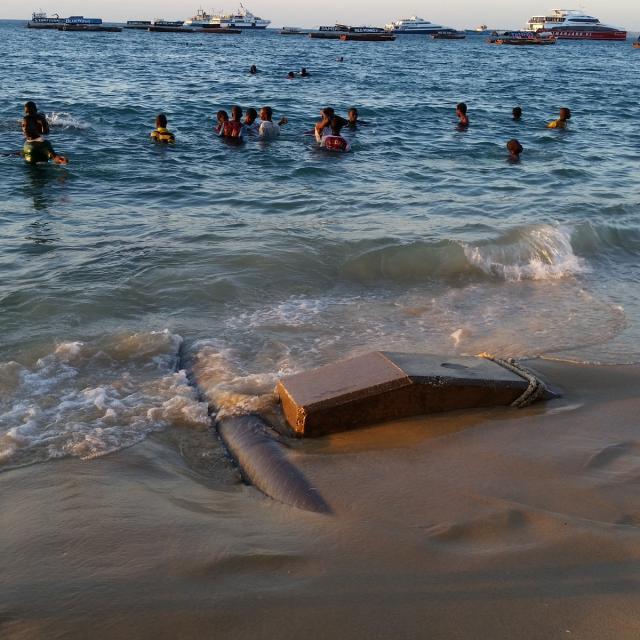
Chances are MOST of the things related to your morning routine (and any point of your day) is related to water. Have you ever experienced having your home’s water supply cut off? Imagine having to walk hours to get a few liters of clean water every day. Imagine you didn’t have a plumbing system in your school, so you had to pee, poop and everything else in between out in the open.
Find out why water is such a big issue today and how YOU can make a difference in other people’s lives who are on the path to achieving Goal#6.
Unit 1 - Introduction to Goal 6: Clean Water and Sanitation
Unit 2 - The Targets of Goal 6: Clean Water and Sanitation
Unit 3 - Reality Check: Water and Sanitation around the Globe
Unit 4 - What Can You Do to Promote Goal 6: Clean Water and Sanitation?

Go to Class
MOOC List is learner-supported. When you buy through links on our site, we may earn an affiliate commission.

Related Courses

Strategy and Sustainability (Coursera) Coursera
IESE Business School

Strategy and Sustainability (Coursera)

Business and environmental sustainability are not natural bedfellows. Business is about making money. Sustainability is about protecting the planet. Business is measured in months and quarters. Sustainability often requires significant short term costs to secure a sometimes uncertain long-term benefit. To some activists, all executives are exploitative, selfish one percenters. To some executives, all activists are irresponsible, unyielding extremists.

Sep 14th 2026
5-12 Weeks
Planning for Climate Change in African Cities (Coursera) Coursera
Erasmus University Rotterdam,United Cities and Local Governments of Africa,African Local Government Academy,Institute for Housing and Urban Development

Planning for Climate Change in African Cities (Coursera)

Climate change poses a threat to economic growth and long-term prosperity of many countries around the world. Africa is not an exception, considering the actual and potential impacts of climate change and climate variability that will threaten its vulnerable sectors and human populations. African countries are projected to experience changing rainfall patterns, rising sea levels, and higher temperatures that will affect food security, agricultural production, water availability, and public health, among others. These climate change impacts and climate variability can further produce social and political problems, such as rural-urban migration and water resource disputes.

Sep 14th 2026
5-12 Weeks
Sustainable Development Goal 8: Decent Work and Economic Growth (CanopyLAB) CanopyLAB
SDG LAB

Sustainable Development Goal 8: Decent Work and Economic Growth (CanopyLAB)

This course aims at introducing you to Goal 8: Decent Work and Economic Growth. In Unit 1, we will take a look at what this goal means, and why the UN views it as an important goal for sustainable development. In Unit 2, we will focus on the targets set under Goal 8, and some real-world examples of how governments and businesses are doing their part to achieve the goal by 2030. In Unit 3, we will look at the organizations and figures who are making great contributions to Goal 8 and what we can learn from their dedication and approaches. Finally, in Unit 4, you will get the opportunity to take the reigns and become a champion of Goal 8 yourself.

Self Paced
Self-Paced
Sustainable Development Goal 9: Industry, Innovation & Infrastructure (CanopyLAB) CanopyLAB
SDG LAB

Sustainable Development Goal 9: Industry, Innovation & Infrastructure (CanopyLAB)

Goal 9: Industry, Innovation & Infrastructure covers a wide range of topics that encompass us. Think about all the clothes, food, and other products that you use, or the highways, airports and other transportation systems, or the infrastructure that delivers the internet to your home. At the same time, industry and infrastructure are the some of the main sources of CO2 emissions in the world, not to mention their contribution to social and economic inequality. In this course, you will learn about how industry, innovation, and infrastructure impact individuals, businesses and societies. From there, we will explore how the industry, innovation and infrastructure of the future can be re-imagined and re-designed so that they contribute to economic development while also reduce inequality and protect the environment.

Self Paced
Self-Paced
Sustainability through Soccer: Systems-Thinking in Action (Coursera) Coursera
University of Virginia

Sustainability through Soccer: Systems-Thinking in Action (Coursera)

This course takes learners on a journey through a progression of systems-thinking and sustainability concepts. Using the beautiful game of soccer as an analogy, we'll work together to illuminate real-world interdependencies (such as between climate change and human rights), building the chain of concepts in a fun, accessible way. Soccer nerds and newbies alike will be entertained and, ultimately, rewarded with the epiphanies that come from seeing in systems more clearly.

Sep 14th 2026
4 Weeks
Sustainable Development Goal 14: Life Below Water (CanopyLAB) CanopyLAB
SDG LAB

Sustainable Development Goal 14: Life Below Water (CanopyLAB)

You might not constantly think about it, but oceans are a crucial part of the ecosystem that makes Earth habitable for humans. More than half of the oxygen we breathe comes from algae, and the oceans absorb a large amount of the carbon dioxide released by human activities, thus mitigating the impact of climate change. The oceans are also a crucial source of food and livelihood for humans. Yet today, the oceans face multiple threats including climate change, environmental degradation, pollution, and overfishing. In this course, you will learn about the important role oceans play, their current state of deterioration, and what you can do to improve it.

Self Paced
Self-Paced
Sustainable Development Goal 16: Peace, Justice and Strong Institutions (CanopyLAB) CanopyLAB
SDG LAB

Sustainable Development Goal 16: Peace, Justice and Strong Institutions (CanopyLAB)

This course takes you around the world to see what it means to work for peace, justice, and inclusion, and what happens when these conditions are absent in a society. On this topic, individuals play a hugely important role as witnesses and first-hand victims when institutions do not treat everyone with equal respect. And as the invincible Malala Yousafzai has shown the world, individuals also have the power to rise above violence and demand their rights to education, healthcare, justice services and much more, so that they can be thriving citizens and care for those their fellow citizens, especially the minorities and marginalized.

Self Paced
Self-Paced
Sustainable Development Goal 2: Zero Hunger (CanopyLAB) CanopyLAB
SDG LAB

Sustainable Development Goal 2: Zero Hunger (CanopyLAB)

The course will walk you through the content and targets of the Sustainable Development Goals 2 titled “Zero Hunger”, and provide you with information on how different UN agencies, civil society, governments, the private sector, and education/research institutes work to achieve this goal. But it does not stop there. Through the course, you will gain not only important knowledge but also skills to help you champion this goal and take action to bring about the end of hunger by 2030.

Self Paced
Self-Paced
Effective Engagement of Civil Society in Development (Coursera) Coursera
Erasmus University Rotterdam

Effective Engagement of Civil Society in Development (Coursera)

Civil society organizations (CSOs) are key actors in development that have valuable contributions to make. They play a multitude of roles - including in relation to humanitarian assistance, service-delivery, research and policy development, and pursuing accountability from governments and other stakeholders – all of which can significantly contribute to the realization of the Sustainable Development Goals (SDGs). CSOs are expected to play a critical role in implementing the SDGs and in monitoring their progress. It is therefore urgent that CSOs meaningfully and effectively engage in development processes.

Sep 14th 2026
5-12 Weeks
Sustainable Development Goal 4: Quality Education (CanopyLAB) CanopyLAB
SDG LAB

Sustainable Development Goal 4: Quality Education (CanopyLAB)

Quality education encompasses a range of issues: from ensuring primary and secondary education, literacy and numeracy for all, to fighting discrimination and other societal issues that prevent people from receiving education, and many more. We take a special focus on girls' and women's rights to education and examine the layers of obstacles that females may face when it comes to overcoming poverty, violence, and stereotypes in order to receive the education that they are entitled to. Undeterred by the challenges, many female figures and organizations advocating for education and women's' rights have made amazing achievements in advancing their own education and that of females around the world. Part of this course is dedicated to telling their stories and inspiring you to take action to advance Goal 4.

Self Paced
Self-Paced