Sustainable building design for tropical climates: principles and guidelines for EAC (POK)

Offered by Politecnico di Milano,
Sustainable building design for tropical climates: principles and guidelines for EAC (POK)

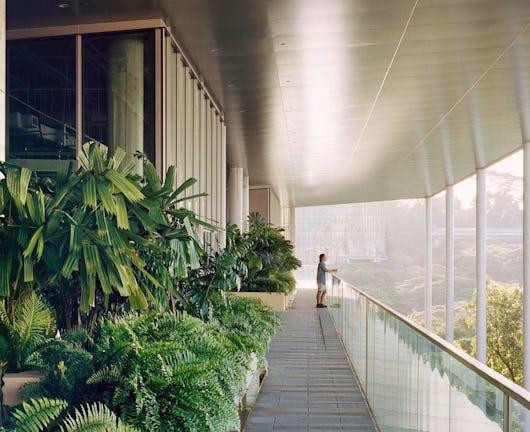
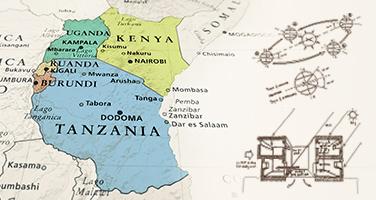
The course provide the basic necessary information for designing climate responsive buildings, aiming to minimise energy demand and to achieve thermal and visual comfort in EAC (East African Community) and other tropical countries with similar climates.

In 2010 the worldwide building sector was responsible for 24% of the total GHG emissions deriving from fossil fuel combustion, second only to the industrial sector, but, if the embodied energy of construction materials is included, the share is far higher and the building sector becomes the prime GHG emitter.
Moreover developing countries are going to play a decisive role in the future world energy scenario, as a consequence of their economic development. Industrial energy consumption will grow, and a dramatic increase in energy consumption for transport can be expected, with the growth in the number of vehicles on the roads – if the currently accepted worldwide approach to mobility does not change.

The increase in energy consumption in the building sector can be expected to be even more dramatic, not only because air conditioning will spread and the number of domestic electric and electronic appliances will grow, but also because of the increase in the number of buildings.
In that respects, the aim of the course is to provide basic necessary information for designing climate responsive buildings in order to minimise energy demand and to achieve thermal and visual comfort in EAC (East African Community) and other tropical countries with similar climates.

Go to Class
MOOC List is learner-supported. When you buy through links on our site, we may earn an affiliate commission.

Related Courses

The Engineering of Structures Around Us (edX) EdX
DartmouthX,Dartmouth College

The Engineering of Structures Around Us (edX)

Explore how engineers design bridges and buildings in our communities and iconic structures around the world. In this introductory course, you’ll learn some engineering principles that can be applied to structural systems everywhere: in nature, in furniture, in mechanical and aerospace systems, and in any solid object that resists a load. Together we’ll explore how structures work, why they were designed the way they were designed, how they support loads, and where forces flow through them.

Self Paced
Self-Paced
L'Art des Structures 2 : treillis, poutres, dalles et cadres (Coursera) Coursera
École Polytechnique Fédérale de Lausanne

L'Art des Structures 2 : treillis, poutres, dalles et cadres (Coursera)

Les structures en treillis, en poutre, en dalles et en cadre sont essentielles pour une grande partie des constructions modernes : immeubles pour l'habitation ou de bureaux, halles et usines, ponts, ou passerelles, voies de transport de l'énergie ou des télécommunications, stades et grandes toitures. Le cours L'Art des Structures 2 vous propose d'en découvrir le fonctionnement et les bases de leur dimensionnement.

Aug 31st 2026
5-12 Weeks
Sustainable building design in Africa (POK) Polimi OPEN KNOWLEDGE
Politecnico di Milano

Sustainable building design in Africa (POK)

The course provides the main information about technological systems and tools for designing climate responsive buildings in Africa. The building sector is a major CO2 emitter, second only to the industry sector, accounting for 27% of global emissions, deriving both by the fossil fuel burnt for building operations viz. space heating, hot water production and cooking and by the one burnt for producing the electricity consumed. Moreover, almost 40% of the raw materials and energy produced worldwide are used in the building sector.

Available
5-12 Weeks
Sustainable Building: Design and Specification (Coursera) Coursera
Parsons School of Design, The New School

Sustainable Building: Design and Specification (Coursera)

This course is an examination of the role designers play in protecting health through specification of materials and choices made in the building design phase. You learn about strategies and principles employed in the execution of healthier design projects. Finally, you look at how the use of healthier materials can lead to a healthier world. Participants in the course should have leadership-level career experience in design, architecture, contracting, or a similar field.

Aug 31st 2026
3 Weeks
City Design (Stepic) Other Providers
Stepic

City Design (Stepic)

City Design online course shows the fundamentals of city planning, building and exploitation via funny short video lectures (like the one above) and a variety of brief assignments for self-control. It is ideal for people who want to know about designing the cities before starting professional readings or to draw inspiration.

Mar 1st 2014
5-12 Weeks
Modelling the Energy Transition: the revolution of open-source software (POK) Polimi OPEN KNOWLEDGE
Politecnico di Milano

Modelling the Energy Transition: the revolution of open-source software (POK)

Deep dive on the energy modelling world to discover available open-source software for the analysis of the current and future Energy Transition. The MOOC aims at providing the attendants with the fundamental knowledge of the main challenges that characterize the Energy Transition at both Global and Regional level, and a set of tools to scientifically support their analysis.

Available
3 Weeks
Dynamic Energy Modelling of Buildings: Thermal Simulation (edX) EdX
Delft University of Technology,DelftX

Dynamic Energy Modelling of Buildings: Thermal Simulation (edX)

Understand the dynamics of buildings’ thermal behavior and learn how to optimize their design and operation through thermal modeling. Many engineers are puzzled by questions such as: how to shift or reduce peak heating demand to obtain a better match with a smart grid or renewable energy system? What is thermally more efficient: a heavy concrete building or a light timber-frame building? How effective is night ventilation in warm periods? This course will provide you with the answers to these and many other questions related to dynamic thermal behavior in buildings.

Future dates to be announced
5-12 Weeks
Façade design and engineering: complexity made simple (edX) EdX
Delft University of Technology,DelftX

Façade design and engineering: complexity made simple (edX)

Understand the fundamental technology behind façade design and construction and the impact of the various components in facilitating the construction of sustainable, energy efficient, aesthetic and modern buildings. The building façade forms the interface between outside conditions and the habitable indoor climate, where we spend most of our time. So its design and construction seriously affect the performance of our buildings in terms of sustainability, energy efficiency, aesthetics and comfort.

Self Paced
Self-Paced
Share Food, Cut Waste (POK) Polimi OPEN KNOWLEDGE
Politecnico di Milano

Share Food, Cut Waste (POK)

From words to action: surplus food management to tackle food poverty and food waste. This course is addressed to all those who are interested in reducing food waste and enhancing food security for people in need. Producers, food transformers, distributors, HoReCa enterprises and non-profit organizations, as well as consumers and citizens, can get new insights on issues such as the food waste hierarchy, food donation, healthy and responsible patterns of food consumption, food banking.

Available
5-12 Weeks