EdX

Spirituality and Sensuality: Sacred Objects in Religious Life (edX)

Offered by Hamilton College,
Spirituality and Sensuality: Sacred Objects in Religious Life (edX)

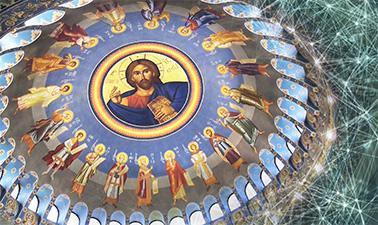
Religions are deeply, stubbornly physical and sensual. This course aims to re-imagine our understanding of religion by grounding traditions in physical encounters between human bodies and sensual objects.

Class Deals by MOOC List - Click here and see EdX's Active Discounts, Deals, and Promo Codes.

Playing drums, telling stories, touching stones, creating wildly colorful altars, dancing, eating and drinking special substances are all basic religious activities. Examples will range across Native American, Buddhist, Hindu, Muslim, Christian, and Jewish rituals and symbols, and materials will traverse fields from art history to anthropology, philosophy to poetry, science to religious studies. We will toggle between broad theories of religions and specific case studies.

An introductory week will be followed by a week on each of the five senses, and a concluding week. Each week we will incorporate lectures, readings, podcasts, images, and videos, and students will be challenged to spend a little time "offline" and taking notice of the sensual-spiritual elements that make up our cultural life.

What you'll learn

  • Find ways to critically reflect on religious environments
  • Search for the sensual bases of religious traditions
  • Engage with examples across Native American, Buddhist, Hindu, Muslim, Christian, and Jewish rituals and symbols

Go to Class
MOOC List is learner-supported. When you buy through links on our site, we may earn an affiliate commission.

Related Courses

Mindfulness and Well-being: Peace in, Peace Out (Coursera) Coursera
Rice University

Mindfulness and Well-being: Peace in, Peace Out (Coursera)

The purpose of this course is to introduce mindfulness as a robust tool for spiritual development. Highlighting its rich traditional roots, the course explores the capacity of mindfulness to expand understanding about the nature of human consciousness and facilitate certain transcendent emotional experiences, including awe, wonder and flow.

Oct 12th 2026
4 Weeks
The Science of Religion (edX) EdX
The University of British Columbia,UBCx

The Science of Religion (edX)

What is religion? Are we wired to believe? Does science have the answers? Join us on a journey to the origins of religion and spirituality. Drawing on new scientific advances, this religion course examines foundational questions about the nature of religious belief and practice.

This course is archived
5-12 Weeks
Philosophy, Science and Religion: Religion and Science (Coursera) Coursera
University of Edinburgh

Philosophy, Science and Religion: Religion and Science (Coursera)

Philosophy, Science and Religion mark three of the most fundamental modes of thinking about the world and our place in it. Are these modes incompatible? Put another way: is the intellectually responsible thing to do to ‘pick sides’ and identify with one of these approaches at the exclusion of others? Or, are they complementary or mutually supportive? As is typical of questions of such magnitude, the devil is in the details. For example, it is important to work out what is really distinctive about each of these ways of inquiring about the world. In order to gain some clarity here, we’ll be investigating what some of the current leading thinkers in philosophy, science and religion are actually doing.

Oct 6th 2026
5-12 Weeks
The Politics of Skepticism (Coursera) Coursera
Erasmus University Rotterdam

The Politics of Skepticism (Coursera)

This is a course about the history of Skepticism from the ancient Greeks to today, with special attention to the political ramifications of questioning man's ability to know the world and himself with any certainty. We will discuss the debates raging between Plato and the Sophists, the rise of Christianity in the Roman world, and the so-called 'Skeptical Crisis' of the Renaissance as well as Pierre Bayle's Skepticism and David Hume's.

Oct 26th 2026
5-12 Weeks
Religion, Conflict and Peace (edX) EdX
HarvardX,Harvard University

Religion, Conflict and Peace (edX)

Explore the diverse and complex roles that religions play in both promoting and mitigating violence. In this course, we will explore a series of contemporary conflicts in different regions of the world with a special focus on identifying and analyzing the diverse and complex roles that religions play in both promoting and mitigating violence in each context.

Self Paced
Self-Paced
Religious Literacy: Traditions and Scriptures (edX) EdX
HarvardX,Harvard University

Religious Literacy: Traditions and Scriptures (edX)

Learn how to better understand the rich and complex ways that religions function in historic and contemporary contexts. The study of religion is the study of a rich and fascinating dimension of human experience that includes but goes well beyond beliefs and ritual practices. In this religion course, learners explore case studies about how religions are internally diverse, how they evolve and change through time, and how religions are embedded in all dimensions of human experience.

Self Paced
Self-Paced
Intellectual Humility: Practice (Coursera) Coursera
University of Edinburgh

Intellectual Humility: Practice (Coursera)

We live in a polarised world where all too often people talk past each other. But do you know when to believe what others say? For example, how quick should we be to accept something that someone else tells us is true, and what should we be looking out for when assessing a person's trustworthiness? Meanwhile, what should we do when we encounter disagreements with people who seem to be our equals? How and when should we adjust our beliefs, and how does the appropriate response vary depending on the evidence? These challenges may be especially important in the arena of religious disagreements. How should we weigh the evidence for and against various theistic and atheistic stances?

Oct 19th 2026
4 Weeks
Science & Religion 101 (Coursera) Coursera
University of Alberta

Science & Religion 101 (Coursera)

This course examines the nature of both science and religion and attempts to explore the possible relationships between them. The primary purpose is to dispel the popular myth that science and religion are entrenched in a never-ending conflict. As a result, this course argues that if the limits of both science and religion are respected, then their relationship can be complementary.

Oct 26th 2026
5-12 Weeks