Socio-Economic Justice through Human Rights (GCHumanRights)

Socio-Economic Justice through Human Rights (GCHumanRights)

This MOOC explores current developments in implementing economic and social rights and their role in redressing unjust distribution of resources and powers. It looks at legal frameworks and current political, social and economic challenges to better understand their links with a rights-based approach to socio-economic justice. Through regional examples and case studies, it provides a global overview of difficulties and obstacles but also possible alternatives and solutions. Registration deadline: 27 February 2022

In recent decades, we have witnessed a multitude of increasingly urgent demands for social and economic justice whereby every human being should have equal access to health, well-being, wealth and opportunity. If “the age of rights” propelled some hopes in that direction, a series of recent global crises (financial, environmental, socio-political and medical) have instead propelled anxiety, reinforced inequalities, inflamed cleavages and negatively affected economic growth and social development.

We take the view that it is in times of crisis that human rights become more important and transformative. Far from being resolved, the current crises actually offer the opportunity to reclaim a fundamental role for the promotion, protection and implementation of human rights. From equality between women and men to dignified living and working conditions, from social movements to attempts at radical participatory democracy, from social protection to education, many are the areas where a rights-based approach - and socio-economic rights in particular - can and should intertwine with economic and social justice. Good practices and case-law already exist that call for a more attentive study of how social and economic justice can be enhanced through human rights.

Course Outline

The course runs over 4 weeks and is organised in 2 modules:
Module 1 introduces a rights-based approach to socio-economic justice, with a focus on legal, political and social perspectives on rights, justice and equality.
Module 2 is dedicated to Socio-Economic Justice through human rights in practice and aims to suggest ways forward by looking at specific themes and rights such as poverty, gender, education, socio-economic justice for children.

Learning Outcomes
Upon completion of this course participants will have gained:

  • Knowledge about key international standards, documents and initiatives on a rights-based approach to socio-economic justice
  • Understanding of progress and obstacles in the implementation of such standards
  • Ability to identify multi-faceted aspects of current debates on the link between socio-economic justice and human rights
  • Capacity to discuss specific issues and rights from a theoretical and practical perspective
  • Awareness of multiple avenues for accountability and redress, as well as support for rights-based changes in the fight for socio-economic justice

Go to Class
MOOC List is learner-supported. When you buy through links on our site, we may earn an affiliate commission.

Related Courses

Introduction to EdTech (Coursera) Coursera
EDHEC Business School

Introduction to EdTech (Coursera)

Co-developed by Supercharger Ventures and EDHEC Business School. EdTech, short for Education Technology, is one of the most exciting sectors in the economy today poised to re-shape how education systems work and how people learn around the world. Introduction to EdTech MOOC is designed to explore EdTech fundamentals and build the foundational knowledge for educators, institutions, entrepreneurs and governments to appreciate the impact and potential of new tools, technologies, business models and learning methods in education.

Oct 12th 2026
4 Weeks
Cultures et pédagogies (Coursera) Coursera
University of Geneva

Cultures et pédagogies (Coursera)

Dans ce cours, nous explorons des alternatives pédagogiques qui s'inscrivent dans des contextes historiques, culturels et politiques différents. Vous découvrirez des pédagogies et des pédagogues qui opèrent une rupture avec les approches pédagogiques dominantes de notre société. Nous verrons ensemble les fondements pratiques et théoriques des apports de pédagogues à portée internationale, tels que P. Freire (Brésil) ou J. Krishnamurti (Inde).

Oct 12th 2026
5-12 Weeks
Promoting and Protecting Human Rights: a Global Overview (GCHumanRights) Global Campus of Human Rights
Global Campus of Human Rights

Promoting and Protecting Human Rights: a Global Overview (GCHumanRights)

In times of violence and crisis, human rights are important safeguards. In times of peace, security and development, they are important pillars sustaining our common humanity. They are more than moral or legal concepts: they are the lymph of our lives. For them to run effectively, we need to relentlessly promote and protect them. This course provides you with a solid basis to understand, know and stand up for human rights.

Self Paced
Self-Paced
Children’s Right to Education in Armed Conflict (GCHumanRights) Global Campus of Human Rights
Global Campus of Human Rights

Children’s Right to Education in Armed Conflict (GCHumanRights)

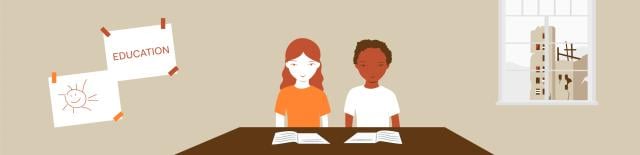
Wars, armed conflicts, and displacement are not only attacks to spaces, places and people, but also violations of a fundamental human right recognised in numerous international, regional and national instruments. Education is a right in itself and a multiplier of other rights. Legal frameworks, measures and tools already exist that provide a variety of solutions. Alas, proper knowledge of such instruments and possible avenues for action is still limited. The MOOC on Children’s Right to Education in Armed Conflict, offered by the Global Campus in partnership with Right to Education, fills this knowledge gap and mobilises more people and resources in the defence of such a fundamental right when and where it is most needed.

Feb 19th 2024
5-12 Weeks
Teaching LGBTQ+ Health (Coursera) Coursera
Stanford University

Teaching LGBTQ+ Health (Coursera)

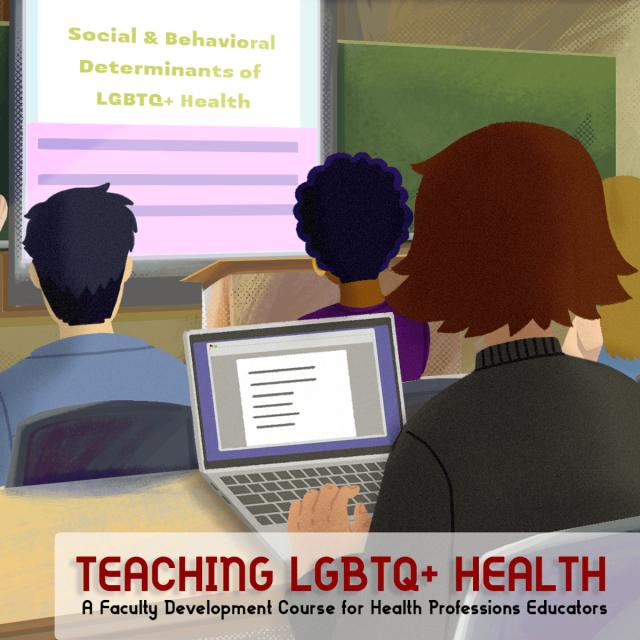
This curriculum is designed for faculty members and health professions educators. The course goals are to improve your knowledge, teaching skills, and attitudes pertaining to the provision of health care to LGBTQ+ patients.e.g. This is primarily aimed at first- and second-year undergraduates interested in engineering or science, along with high school students and professionals with an interest in programming.

Oct 12th 2026
2 Weeks
Disability Inclusion in Education: Building Systems of Support (Coursera) Coursera
University of Cape Town

Disability Inclusion in Education: Building Systems of Support (Coursera)

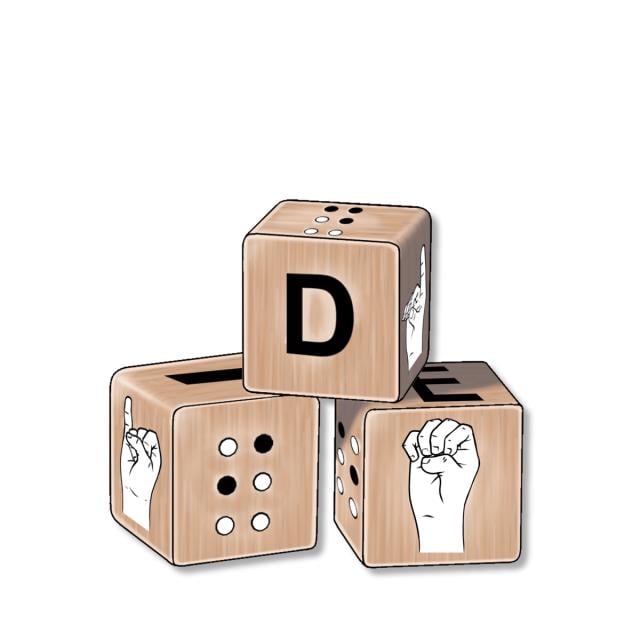
Worldwide millions of children are not able to fully participate in schooling, and this is especially a problem for children with disabilities. In this course, we explore the support that teachers need in order to meet the needs of children with severe to profound hearing, visual and intellectual disabilities. We consider how this can be done by talking with a range of experts (from teachers to activists) about inclusive education as well as sharing experiences of education.

Oct 12th 2026
5-12 Weeks
Copyright for Educators & Librarians (Coursera) Coursera
Duke University,Emory University,University of North Carolina at Chapel Hill

Copyright for Educators & Librarians (Coursera)

Fear and uncertainty about copyright law often plagues educators and sometimes prevents creative teaching. This course is a professional development opportunity designed to provide a basic introduction to US copyright law and to empower teachers and librarians at all grade levels. Course participants will discover that the law is designed to help educators and librarians.

Oct 12th 2026
5-12 Weeks
THINK GLOBAL: TEACHERS TRAINING COURSE (IDP-ICE) (Coursera) Coursera
University of Barcelona

THINK GLOBAL: TEACHERS TRAINING COURSE (IDP-ICE) (Coursera)

A group of seven European partners from Catalonia, Belgium, and Wales worked together on the Erasmus+ funded ‘Think Global’ project on global competence. The project seeks to address the following research question through development and piloting of practical classroom activities: What is global competence, and how can it be learned effectively?

Oct 12th 2026
5-12 Weeks
Multimodal Literacies: Communication and Learning in the Era of Digital Media (Coursera) Coursera
University of Illinois at Urbana-Champaign

Multimodal Literacies: Communication and Learning in the Era of Digital Media (Coursera)

Whereas the focus of traditional literacy pedagogy has been the written word in its standard and literary forms, this courser expands the scope of literacy learning to encompass contemporary multimodal texts and the wide range of ways of making meaning that occur in different social and cultural contexts. Another course, "Literacy Teaching and Learning: Aims, Approaches and Pedagogies" addresses pedagogical aspects of literacies. This "Multimodal Literacies" learning module does not require or expect that participants will have already completed the "Literacy Teaching and Learning" module.

Oct 12th 2026
4 Weeks
Assessment in Higher Education: Professional Development for Teachers (Coursera) Coursera
Erasmus University Rotterdam

Assessment in Higher Education: Professional Development for Teachers (Coursera)

Are you a teacher in higher education wanting to get the best out of your students and assessments? Then on behalf of Risbo, Erasmus University Rotterdam, we would like to welcome you to this MOOC on Assessment in Higher Education. In this MOOC we will guide you through the different phases of preparing, creating and evaluating the assessments in your course.

Oct 12th 2026
5-12 Weeks
Resilient Teaching Through Times of Crisis and Change (Coursera) Coursera
University of Michigan

Resilient Teaching Through Times of Crisis and Change (Coursera)

Resilient teaching is the ability to facilitate learning experiences that are designed to be adaptable to fluctuating conditions and disruptions. This teaching ability can be seen as an outcome of a design approach that attends to the relationship between learning goals and activities, and the environments they are situated in. Resilient teaching approaches take into account how a dynamic learning context may require new forms of interactions between teachers, students, content, and tools. Additionally, they necessitate the capacity to rethink the design of learning experiences based on a nuanced understanding of context.

Oct 12th 2026
4 Weeks