The Social Dimensions of Antimicrobial Resistance (Coursera)

The Social Dimensions of Antimicrobial Resistance (Coursera)

Sonar-Global is a collaborative work to mobilize social sciences against infectious threats. It is a sustainable international network to strengthen the active participation of the social sciences in the prevention and response to infectious threats, including those posed by antimicrobial resistance (AMR) and vaccine hesitancy.

Class Deals by MOOC List - Click here and see Coursera's Active Discounts, Deals, and Promo Codes.

The Sonar-Global's Social Dimensions of Antimicrobial Resistance MOOC is an independent course for non-social scientists who want to know more about the social dimensions of AMR. Furthermore, the course is also the basis for the OPERATE-SOC AMR curriculum, which is a curriculum developed for trainers who need to provide interdisciplinary training about the social dimensions of antimicrobial resistance to non-social scientists. This MOOC includes lectures on important social science dimensions by 19 social science experts in the field of AMR, and it has been fully developed by social scientists.
The training objectives of this MOOC are:
• To provide a guided introduction to the social dimensions of AMR
• To learn about the relevance of social science perspectives and approaches in the study of AMR
• To get introduced to the need for interdisciplinary collaboration with social scientists when working on AMR
• To serve as a basis for the Sonar-Global OPERATE-SOC curriculum

What You Will Learn
To render visible the social dimensions of AMR
To learn about social science perspectives and tools
To learn about interdisciplinary collaboration

Syllabus

WEEK 1
Social Sciences & AMR basics
This module introduces the course, presents the definitions of AMR and social sciences, and explore the complexity of AMR. Also, introduces AMR from a biomedical and social science perspective and shows the role that social science/social scientists play(s) in this field.

WEEK 2
People and Publics
This module aims to portray the social science dimensions of AMR from a micro (individual) to a macro (governance) level. The level of people and the public, people’s experiences with and knowledge of antimicrobials and the relation with its provision, consumption and the wider infrastructures will be explored.

WEEK 3
Systems and Governance
This module aims to portray the social science dimensions of AMR from a micro (individual) to a macro (governance) level. In terms of systems and environments, insights will be provided on the dynamics and interactions related to the relevant systems surrounding AMR and the internal and external influences. The development and implementation of AMR policies from a local to a global level and the matter of AMR framing will be covered, related to AMR institutions and policies.

WEEK 4
Interdisciplinary Transformations
This module aims to portray interdisciplinary, collaborative ways of bringing about change in the field of AMR. It will reflect upon how to work on AMR collaboratively while also zooming into the synergies and tensions of working together between different disciplines. Moreover, it will present social science methods - social survey, participant observations, interviewing and implementation science - to achieve AMR transformations in terms of behaviour change and community engagement and awareness.
Go to Class
MOOC List is learner-supported. When you buy through links on our site, we may earn an affiliate commission.

Related Courses

Reputation Crisis? Facebook meets Cambridge Analytica (Coursera) Coursera
Erasmus University Rotterdam

Reputation Crisis? Facebook meets Cambridge Analytica (Coursera)

Do you remember when you first created your Facebook account? Do you know what happens to the data and stories you share on Facebook? Are you aware of the Facebook – Cambridge Analytica crisis and its ramifications? In this course, you will take a deep dive into reputation management by tackling a case study on the crisis, the effects of which are still unravelling for Facebook, the tech industry, and society at large. You will explore the concept of corporate reputation, and touch upon topics such as data privacy implications for the big tech or the importance of leadership and culture, and how Mark Zuckerberg’s leadership might have affected Facebook in particular. In the final project, you will be asked to link theory and practice to provide an analysis of events and make recommendations for Facebook, going forward.

Sep 28th 2026
5-12 Weeks
Foundations of Teaching for Learning: Introduction to Student Assessment (Coursera) Coursera
Commonwealth Education Trust

Foundations of Teaching for Learning: Introduction to Student Assessment (Coursera)

The Foundations of Teaching for Learning programme is for anyone who is teaching, or who would like to teach, in any subject and any context - be it at school, at home or in the workplace. With dynamic lessons taught by established and respected professionals from across the Commonwealth, this eight course programme will see you develop and strengthen your skills in teaching, professionalism, assessment, and more. As you carry on through the programme, you will find yourself strengthening not only your skills, but your connection with colleagues across the globe. A professional development opportunity not to be missed.

Sep 21st 2026
5-12 Weeks
Network Dynamics of Social Behavior (Coursera) Coursera
University of Pennsylvania

Network Dynamics of Social Behavior (Coursera)

How do revolutions emerge without anyone expecting them? How did social norms about same sex marriage change more rapidly than anyone anticipated? Why do some social innovations take off with relative ease, while others struggle for years without spreading? More generally, what are the forces that control the process of social evolution –from the fashions that we wear, to our beliefs about religious tolerance, to our ideas about the process of scientific discovery and the best ways to manage complex research organizations?

Sep 28th 2026
5-12 Weeks
Get Interactive: Practical Teaching with Technology (Coursera) Coursera
University of London,Bloomsbury Learning Environment

Get Interactive: Practical Teaching with Technology (Coursera)

This course is designed to help you create dynamic, interactive online courses through the use of multimedia tools, student collaboration opportunities, and formative assessment and feedback. Each week we will focus on a particular topic: Using multimedia for teaching and learning; Encouraging student collaboration; Formative assessment and feedback.

Oct 4th 2026
3 Weeks
Linguistic Diversity, What for? (Coursera) Coursera
Universitat Autònoma de Barcelona

Linguistic Diversity, What for? (Coursera)

What is linguistic diversity? What are its implications and opportunities? How is diversity around the world? How is it experienced, understood and managed in different contexts? What is your knowledge and experience about languages and diversity? In this course we approach linguistic diversity and multilingualism not only from a theoretical point of view, but also from a perspective oriented to help understand and manage various contexts that emerge from diversity in different environments of social interaction.

Sep 28th 2026
5-12 Weeks
Diversity and Inclusion in Education (Coursera) Coursera
University of Glasgow

Diversity and Inclusion in Education (Coursera)

Student diversity is becoming the rule rather than the exception in education systems across the world. Students bring to classroom different characteristics such as ability and disability, socio-economic background, race, ethnicity, and cultural background, beliefs and religion, and gender characteristics. The United Nations’ Sustainable Development Goal 4 aims to ensure inclusive and equitable quality education and promote lifelong learning opportunities for all (United Nations, 2015).

Oct 5th 2026
4 Weeks
Basic Statistics (Coursera) Coursera
University of Amsterdam

Basic Statistics (Coursera)

Understanding statistics is essential to understand research in the social and behavioral sciences. In this course you will learn the basics of statistics; not just how to calculate them, but also how to evaluate them. This course will also prepare you for the next course in the specialization - the course Inferential Statistics. In the first part of the course we will discuss methods of descriptive statistics. You will learn what cases and variables are and how you can compute measures of central tendency (mean, median and mode) and dispersion (standard deviation and variance). Next, we discuss how to assess relationships between variables, and we introduce the concepts correlation and regression.

Sep 28th 2026
5-12 Weeks
Introduction to Economic Theories (Coursera) Coursera
Erasmus University Rotterdam

Introduction to Economic Theories (Coursera)

Wondering why economists have not predicted serious financial crises? Shocked by economic assumptions of human behavior as self-centered and focusing only on what can be measured? Asking yourself if there are no sensible economic alternatives to free markets? Then you are at the right place to learn economics! This is the first online course that teaches economics from a pluralist perspective. Economic pluralism means that a plurality of theoretical and methodological viewpoints is regarded as valuable in itself and is simply the best way in which economics can make progress in understanding the world.

Sep 28th 2026
5-12 Weeks
Whole genome sequencing of bacterial genomes - tools and applications (Coursera) Coursera
Technical University of Denmark - DTU

Whole genome sequencing of bacterial genomes - tools and applications (Coursera)

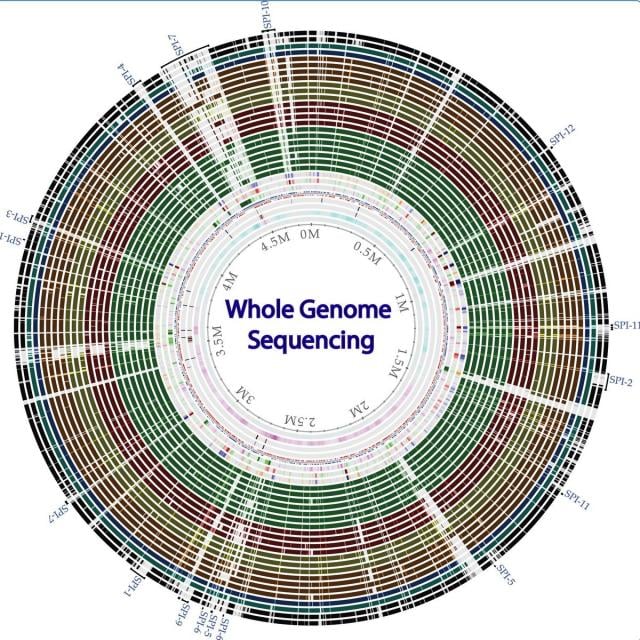
This course will cover the topic of Whole genome sequencing (WGS) of bacterial genomes which is becoming more and more relevant for the medical sector. WGS technology and applications are high on international political agenda, as the classical methods are being replaced by WGS technology and therefore bioinformatic tools are extremely important for allowing the people working in this sector to be able to analyze the data and obtain results that can be interpreted and used for different purposes.

Oct 5th 2026
5-12 Weeks
社会调查与研究方法 (上)Methodologies in Social Research (Part I) (Coursera) Coursera
Peking University

社会调查与研究方法 (上)Methodologies in Social Research (Part I) (Coursera)

社会调查与研究方法,首先,是一套观察社会现象、测量社会现象的工具;其次,是一套分析和运用社会现象数据的科学方法;最高境界,则是一套针对社会、经济、教育、政治、法律、管理、公共卫生、新闻报道等人类的生产与生活现象,进行科学沟通的思维逻辑与表达方式。

Oct 5th 2026
5-12 Weeks
The Sustainable Development Goals – A global, transdisciplinary vision for the future (Coursera) Coursera
University of Copenhagen

The Sustainable Development Goals – A global, transdisciplinary vision for the future (Coursera)

In 2015, the UN launched the 17 Sustainable Development Goals (SDGs). Adopted by 193 member states, the goals represent an important international step in setting humanity on a trajectory towards sustainable development. Within this course, you will get a historical overview of how sustainability has been understood, as well as a thorough introduction to the SDGs – what they are, how progress can be measured, and how the SDGs are relevant for the management of the global systems supporting humanity. The course will examine how various societal actors are responding to and implementing the SDGs.

Sep 27th 2026
3 Weeks
Ethical Social Media (Coursera) Coursera
The University of Sydney

Ethical Social Media (Coursera)

Social media connects us across space and time, allowing us to find like-minded communities and participate creatively in public life as never before. We may often use social media without thinking much about the possible consequences. But there is a shadow side associated with social media use, which takes the form of hate speech, increased surveillance, lack of anonymity and questionable use of our data. What do we need to know to use social media spaces effectively, in a way that is safe and productive for all?

Oct 5th 2026
5-12 Weeks