EdX

Smart grid: fundamentos técnicos (edX)

Smart grid: fundamentos técnicos (edX)

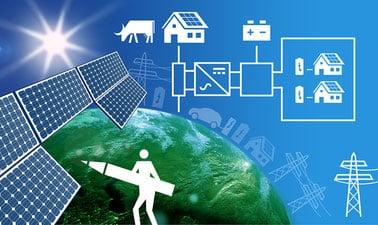
Aprende los fundamentos técnicos de una smart grid; la configuración de las capas inferiores y la forma en que se interconectan los dispositivos, casas y edificios inteligentes (internet of things) a la red inteligente de manera general. El conocimiento de los fundamentos técnicos de las smart grid o de las redes inteligentes son una necesidad actual para quienes buscan comprender las evoluciones energéticas globales.

Class Deals by MOOC List - Click here and see EdX's Active Discounts, Deals, and Promo Codes.

Las smart grids combinan áreas que antes no se encontraban en las redes eléctricas convencionales, como son los sistemas de comunicaciones o los sistemas inteligentes de toma de decisiones.
Sin estas áreas, la integración de fuentes alternas de energía a las redes eléctricas estarían incompletas y no se podrían explotar de la manera eficiente.
Por esta razón es necesario conocer cómo una smart grid se interconecta con los dispositivos inteligentes de casas o edificios en el IoT o Internet de las cosas, que al igual que las compañías de energía pueden suministrar, administrar y vender la energía eléctrica producida.
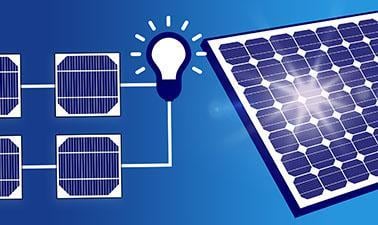
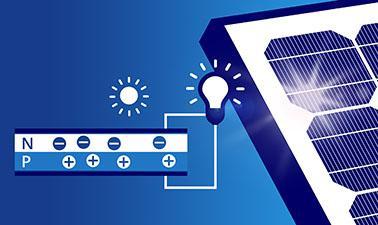
En este curso el estudiante comprenderá el concepto de red inteligente analizando sus capas inferiores, profundizará en la generación de energía eólica y energía solar de manera experimental y teórica cuando se interconectan a la red inteligente, además podrá comprender la función de los sistemas eléctricos de potencia en las redes inteligentes.
A partir de este MOOC el estudiante podrá:
Profundizar en el conocimiento de sistemas eléctricos de potencia
Analizar cómo cambian los escenarios energéticos a partir de las smart grid, las cuales predominarán en unos cuantos años y permitirán volvernos consumidores y generadores de energía eléctrica.
La seguridad, en este caso la ciberseguridad, es fundamental en el smard grid, en este curso conoceremos las características de seguridad más relevantes en las redes inteligentes.
This course is part of the Sustentabilidad energética y la smart grid Professional Certificate.

What you'll learn

  • Aplicar las bases teóricas de las redes eléctricas inteligentes a partir de cálculos experimentales de generación de energía convencional, eólica y solar; para que comprendas el funcionamiento de una red inteligente
  • La contribución de la energía eólica en una red inteligente
  • La energía solar en la red inteligente
  • Identificar los sistemas de monitoreo para redes inteligentes
  • Conocer cómo se aprovecha la energía renovable en la smart grid

Syllabus

1. Contribución de energía solar en la red inteligente
1.1 Introducción a las redes inteligentes y fuentes alternas de energía solar
1.2 Generación de energía solar
1.3 Modelos de celdas solares
1.4 Laboratorio de smart grid: estudio de energía solar

2. Energía eólica en una red inteligente
2.1 introducción a las fuentes alternas de energía eólica en redes inteligentes
2.2 Generación de energía eólica
2.3 Modelos básicos de generadores eólicos
2.4 Laboratorio de smart grid: energía eólica a la red

3. Sistemas de monitoreo para redes inteligentes
3.1 introducción a los sistemas de monitoreo en redes inteligentes
3.2 Control supervisor y adquisición de datos
3.3 Seguridad cibernética
3.4 Monitoreo de una red con un sistema SCADA
Go to Class
MOOC List is learner-supported. When you buy through links on our site, we may earn an affiliate commission.

Related Courses

Sustainable Energy: Design a Renewable Future (edX) EdX
Delft University of Technology,DelftX

Sustainable Energy: Design a Renewable Future (edX)

Learn how to make the transition to 100% renewable energy from wind, solar and biomass for electricity, heat and fuels for a sustainable future. A transition to sustainable energy is needed for our climate and welfare. In this engineering course, you will learn how to assess the potential for energy reduction and the potential of renewable energy sources like wind, solar and biomass. You’ll learn how to integrate these sources in an energy system, like an electricity network and take an engineering approach to look for solutions and design a 100% sustainable energy system.

Self Paced
Self-Paced
Smart Grids: Modeling (edX) EdX
Delft University of Technology,DelftX

Smart Grids: Modeling (edX)

Learn to build a model of a smart power grid, and to diagnose the effects of disturbances from variable renewable energy resources and intelligent demand on the grid. The smart grid of the future is a complex electrical power system. Its study, design, and management requires the integration of knowledge from various disciplines including sustainability, technology and mathematics.

This course is archived
5-12 Weeks
Energy, Environment, and Everyday Life (Coursera) Coursera
University of Illinois at Urbana-Champaign

Energy, Environment, and Everyday Life (Coursera)

This course teaches you everything you need to know about energy, the environment, and at least a number of things in everyday life. It starts by talking about energy itself and where it comes from. This includes how much we have, who has it, who uses it, and what that all means. The video clips are produced in a fast-paced multimedia format during which Professor Ruzic throws in fun and demonstrations. There are multiple-choice questions to check your understanding and some more in-depth exercises to guide you deeper into the subject.

Oct 26th 2026
5-12 Weeks
New Energy Technologies: Energy Transition and Sustainable Development (FutureLearn) FutureLearn
Grenoble Ecole de Management

New Energy Technologies: Energy Transition and Sustainable Development (FutureLearn)

Explore the development of new energy technologies and discover key energy challenges with this online course. In a world facing pressing energy challenges, the need for alternative energy and new energy technologies has never been more pressing. This course explores the new and upcoming technologies that may help solve some of the world’s biggest energy challenges - examining them from both a business and technological perspective.

Self Paced
4 Weeks
The Resilient and Renewable Grid: How Microgrids are Revolutionizing Energy Systems (edX) EdX
University of Alaska Fairbanks,AlaskaX

The Resilient and Renewable Grid: How Microgrids are Revolutionizing Energy Systems (edX)

A foundational course on microgrid systems design with an emphasis on community-based projects and non-grid connected remote systems. The electric grid of the future will need to be more resilient, decentralized, and capable of integrating more distributed energy resources including on-site renewable energy technologies, energy storage and even electric vehicle (EV) charging. Microgrids are an important building block in designing this sustainable grid architecture of the future. This course covers fundamental concepts of microgrid design from a community-centric perspective and emphasizes a holistic approach to energy systems management.

Self Paced
Self-Paced
Solar Energy 1 (edX) EdX
Delft University of Technology,DelftX

Solar Energy 1 (edX)

Learn about the leading role of solar energy in rural electrification and climate change mitigation. Introduce yourself to the physical principle of the photovoltaic energy conversion of solar cells. In this first course in the program Solar Energy you will be introduced to the technology that converts solar energy into electricity.

Self Paced
Self-Paced
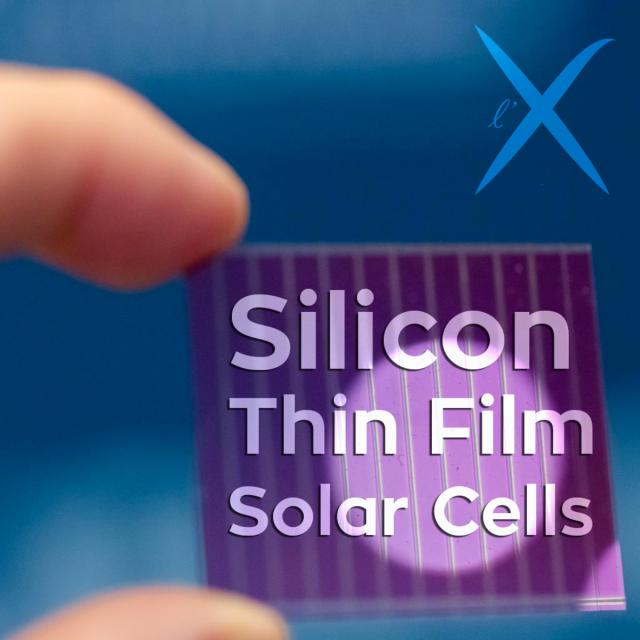
Silicon Thin Film Solar Cells (Coursera) Coursera
École Polytechnique

Silicon Thin Film Solar Cells (Coursera)

This course consists of a general presentation of solar cells based on silicon thin films. It is the third MOOC of the photovoltaic series of Ecole polytechnique on Coursera. The general aspects of the photovoltaic field are treated in "Photovoltaic Solar Energy". And the detailed description of the crystalline silicon solar cells can be found in "Physics of Silicon Solar Cells".

Nov 2nd 2026
3 Weeks
Solar Energy 3 (edX) EdX
Delft University of Technology,DelftX

Solar Energy 3 (edX)

Solar photovoltaics (PV) is the cheapest source of electricity in many parts of the world. Learn to both design a complete PV system and to perform technical and economic assessments for PV systems ranging from large solar farms to residential systems. In the third course of the program Solar Energy, you will learn to design a complete photovoltaic (PV) system for any application and location, from utility scale solar farms to residential scale systems. For these scales, both grid-connected and stand-alone solutions will be examined.

Self Paced
Self-Paced
Solar Energy: Photovoltaic (PV) Technologies (edX) EdX
Delft University of Technology,DelftX

Solar Energy: Photovoltaic (PV) Technologies (edX)

Explore the main PV technologies in the current market. Get in-depth knowledge on the design and processing methods of solar cells. The technologies used to produce solar cells and photovoltaic modules are advancing to deliver highly efficient and flexible solar panels. In this course you will explore the main PV technologies in the current market.

Self Paced
5-12 Weeks
Smart Grids: The Basics (edX) EdX
Delft University of Technology,DelftX

Smart Grids: The Basics (edX)

Understand the basics of smart grids. Learn about their heterogeneity, dynamics, control, and about security and assessment strategies. The smart grid of the future is a complex electrical power system. Its study, design, and management requires the integration of knowledge from various disciplines including sustainability, technology and mathematics.

Self Paced
Self-Paced
Solar Energy: Photovoltaic (PV) Energy Conversion (edX) EdX
Delft University of Technology,DelftX

Solar Energy: Photovoltaic (PV) Energy Conversion (edX)

Learn how solar cells generate electricity, and about the semiconductor physics and optics required to design and manufacture solar cells. The key factor in getting more efficient and cheaper solar energy panels is the advance in the development of photovoltaic cells. In this course you will learn how photovoltaic cells convert solar energy into useable electricity. You will also discover how to tackle potential loss mechanisms in solar cells.

Self Paced
5-12 Weeks