EdX

Sikhism Through Its Scriptures (edX)

Sikhism Through Its Scriptures (edX)

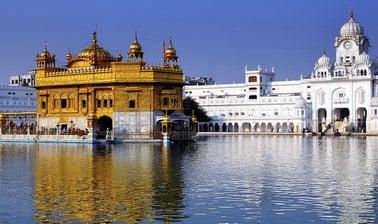
This course examines the Sikh scripture from a doctrinal and historical perspective by providing an overview of Sikh teachings as well as the historical context within which the scripture evolved and became canonized. Sikhi, commonly known as Sikhism, is a monotheistic religious tradition that was founded byGuru Nanak in late fifteenth-century Panjab in South Asia. Today, Sikhi’s approximately twenty-five to thirty million adherents can be found all over the globe, making it one of the six major religions of the world.

Class Deals by MOOC List - Click here and see EdX's Active Discounts, Deals, and Promo Codes.

Sikhi encompasses a number of religious, social, economic and politicalinstitutions, most of which were established and nurtured by Guru Nanak and his ninesuccessors, known as Sikh Gurus.
For over five hundred years, Sikhs in the Panjab and all over the world have engaged with their scripture, the Guru Granth Sahib, through the devotional practices of exegesis, singing,recitation, memorization and calligraphy.
This course examines the Sikh scripture from a doctrinal and historical perspective by providingan overview of Sikh teachings as well as the historical context within which the scripture evolvedand became canonized. It also examines the musical and aesthetic dimensions of the Sikhscripture, as well as ways in which the voluminous text has provided Sikhs with a social, ethical,spiritual and political message to help them respond to and shape the world around them.
This course is part of the World Religions Through Their Scriptures XSeries.

What you'll learn

  • Exploration of a foundational Sikh text, the Japji, which was composed by Guru Nanakand is recited by Sikhs as part of their morning prayers
  • The place of Guru Granth Sahib, the Sikh scripture, in Sikh life
  • Interpretative skills to engage in a nuanced reading of Guru Granth Sahib
  • Gurmat Sangit, the Sikh musical tradition, as represented in the Sikh scripture and itscultural context
  • The aesthetics of Sikhi, including literature, art, and music
  • The political dimensions of Sikh scripture and its impact on the evolution of Sikhs as aPanth or community

Go to Class
MOOC List is learner-supported. When you buy through links on our site, we may earn an affiliate commission.

Related Courses

Christian-Muslim Relations (FutureLearn) FutureLearn
University of Edinburgh

Christian-Muslim Relations (FutureLearn)

Uncover important themes in the history of Christian-Muslim relations and understand the politics that continue to shape it. Gain an insight into the academic study of Christian-Muslim Relations. On this innovative four-week course, you’ll be introduced to the academic study of Christian-Muslim Relations with the School of Divinity at the University of Edinburgh.

Oct 3rd 2022
4 Weeks
South Asian Religions & Ecology (Coursera) Coursera
Yale University

South Asian Religions & Ecology (Coursera)

At first glance the fields of religion and ecology may seem and unlikely pairing, but a deeper consideration reveals the two have a great deal to contribute to one another and are indeed inextricably linked. Religions recognize the unity and interdependence of humans with nature. Ecological sciences affirm this deep interconnection with the natural world. This partnership can inspire work for the wellbeing of the Earth community

Jun 22nd 2026
5-12 Weeks
Cosmopolitan Tang: Aristocratic Culture in China (edX) EdX
HarvardX,Harvard University

Cosmopolitan Tang: Aristocratic Culture in China (edX)

Explore the reunification of China under the Tang with a focus on aristocratic culture — from poetry to calligraphy to literature. By the Tang period, China was divided into northern and southern dynasties with different rulers and political systems. The north was conquered by relatively unsophisticated barbarians, but in the south, the aristocratic families established a refined appreciation of writing and literature.

Self Paced
Self-Paced
Literati China: Examinations, Neo-Confucianism, and Later Imperial China (edX) EdX
HarvardX,Harvard University

Literati China: Examinations, Neo-Confucianism, and Later Imperial China (edX)

Explore China’s imperial period, with a focus on the Song dynasty and the role of the exam system in government. Fundamental changes in government, the economy, and broader society took place between the 8th and 11th centuries in China. The state aristocracy gave way to new literati elite: educated men who sought to enter government through competitive examinations. A new kind of Confucianism also took shape, which prized the moral autonomy of individuals. With this, the later imperial period of China’s history begins.

Self Paced
Self-Paced
Was Alexander Great? The Life, Leadership, and Legacies of History’s Greatest Warrior (edX) EdX
Wellesley College,WellesleyX

Was Alexander Great? The Life, Leadership, and Legacies of History’s Greatest Warrior (edX)

Was Alexander Great? If so, how? If not, why not? This course explores the life, leadership, and legacies of history’s greatest warrior. Alexander the Great conquered most of the world known to the ancient Greeks, fused the eastern and western peoples of his empire, and became a god – before his 33rd birthday.

No sessions available
4 Weeks
Islam Through Its Scriptures (edX) EdX
HarvardX,Harvard University

Islam Through Its Scriptures (edX)

Learn about the Quran, the central sacred text of Islam, through an exploration of the rich diversity of roles and interpretations in Muslim societies. How can you improve your understanding of Islam and its most important holy text, the Quran? How can you make sense of a tradition and a text that have been interpreted in different ways across vast geographical spaces for nearly a millennium and a half?

Self Paced
Self-Paced
Christianity Through Its Scriptures (edX) EdX
HarvardX,Harvard University

Christianity Through Its Scriptures (edX)

Learn about Christianity through a study of its sacred scriptures. We will explore how diverse Christians have interpreted these writings and practiced their teachings over a 2000 year, global history. Christianity is a global religion. From modest beginnings 2,000 years ago, it has grown to encompass nearly a third of the human population. Diverse in languages, cultures, histories and creeds, Christians nonetheless share a common collection of sacred scripture called the Bible.

Self Paced
Self-Paced
The Bible in Light of the Ancient Near East (edX) EdX
IsraelX

The Bible in Light of the Ancient Near East (edX)

This course is an introduction to the Bible, set against the background of the rich Archaeological findings from the Ancient Near East. The purpose of this course is to introduce you to the fascinating world of Israel’s neighboring civilizations in biblical times. It offers a comparative study that examines the relationship between the Bible and these civilizations.

Mar 14th 2023
5-12 Weeks