Sensory Science: Conducting Tests (Coursera)

Sensory Science: Conducting Tests (Coursera)

This course will introduce the sensory evaluation laboratory and will teach you best practices for testing and documentation. We'll explore how various factors, especially the testing environment, can influence sensory experiments. Our main focus will be on two specific sensory tests: duo-trio discrimination and 3-product consumer testing.

Class Deals by MOOC List - Click here and see Coursera's Active Discounts, Deals, and Promo Codes.

Through case studies, we’ll examine how these tests can address product challenges. For both test types, we’ll dive into how to develop an appropriate hypothesis, select products, execute a sensory test, decode collected data, and interpret the test results. Additionally, you’ll learn how to identify and select core and opportunity target groups of consumers. Each module in this course builds towards your final project where you will design a sensory test to conduct your own research experiment.
This course is part of the Foundations of Sensory Science Specialization.

Syllabus

Labs and Procedures
Module 1
Welcome to the last course in the Foundations of Sensory Science series! In this course, we will introduce the sensory evaluation laboratory and teach you how to conduct two types of research experiments: a discrimination test and a 3-product consumer test. In this module, you will learn about errors in testing and ways to minimize those errors to ensure valid and reliable sensory data. You will review principles for recruiting qualified assessors for each test type and discuss ways to instruct assessors and the importance of documenting test instructions. This course will describe best practices testing procedures and ways that a sensory experiment can be influenced, especially the test environment. Let’s get started!

Discrimination Testing
Module 2
In this module, we will begin by discussing discrimination testing methods and what problems they might solve for product issues. You will review various case studies that illustrate common business problems where discrimination testing was beneficial. You will review approaches to establishing a research objective using a balanced reference duo-trio test and the importance of product selection will be discussed. We will identify best practices qualification criteria for sensory analytical tests – discrimination testing and descriptive analysis. This module will teach you the principles of conducting your own research experiment based on discrimination testing principles. We will discuss how to develop an appropriate hypothesis, select products, prepare and conduct testing, decode the data, and interpret the results. In this module you’ll also start developing a sensory test using the tools you’ll gain throughout this course. Let’s begin!

Consumer Testing
Module 3
In this module, we will continue our discussion by reviewing a different style of sensory testing: consumer product testing. You’ll review consumer product testing methods and how they apply to sensory science. We’ve previously formulated a hypothesis and research objectives. We will now discuss product selection for conducting a consumer test, and review how to identify and select a core and opportunity target group of consumers. We will review the importance of balanced serving orders and discuss how to prepare and conduct a 3-product consumer test. This module will teach you the principles of conducting your own research experiment based on consumer product testing principles. We will discuss how to develop an appropriate hypothesis, select products, prepare and conduct testing, decode the data, and interpret the results. For your final project, you will select and conduct either a duo-trio discrimination test or a 3-product consumer test. You will continue to design the various research components that will be used to build your final project. Both research experiments are designed as paper/pencil activities to aid in the learning process. Let’s get started!

Final Project
Module 4
In this final module, everything you’ve worked on in the previous modules will come together to complete your project. You will apply the design of your sensory test to conduct a research experiment. You’ll use the testing method, and its principles, you selected in module 3 (either the duo-trio discrimination test or the 3-product consumer test) to conduct your test. You’ll develop the appropriate set of testing materials for the test you selected, as outlined in the program. You will also report on your own research experiment by preparing and reporting your data and key findings. For the final project, you’ll report your findings in the form of a discussion forum and through a graded self-assessment by demonstrating your comprehension of sensory science principles.

Go to Class
MOOC List is learner-supported. When you buy through links on our site, we may earn an affiliate commission.

Related Courses

RPA Lifecycle: Development and Testing (Coursera) Coursera
Automation Anywhere

RPA Lifecycle: Development and Testing (Coursera)

To adopt RPA, you begin with the Discovery and Design phases and proceed onto the Development and Testing phase. RPA Lifecycle – Development and Testing is the second course of the Specialization on Implementing RPA with Cognitive Solutions and Analytics. In this course, you will learn how to develop and test bots.

Dec 2nd 2024
5-12 Weeks
Meaningful Predictive Modeling (Coursera) Coursera
University of California, San Diego

Meaningful Predictive Modeling (Coursera)

This course will help us to evaluate and compare the models we have developed in previous courses. So far we have developed techniques for regression and classification, but how low should the error of a classifier be (for example) before we decide that the classifier is "good enough"? Or how do we decide which of two regression algorithms is better?

Aug 31st 2026
4 Weeks
Network Security (Udacity) Udacity
Georgia Institute of Technology,Udacity

Network Security (Udacity)

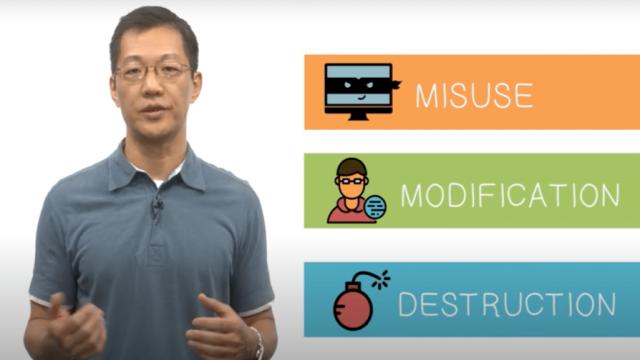
This course provides an introduction to computer and network security. Students successfully completing this class will be able to evaluate works in academic and commercial security, and will have rudimentary skills in security research. The course begins with a tutorial of the basic elements of cryptography, cryptanalysis, and systems security, and continues by covering a number of seminal papers and monographs in a wide range of security areas.

Self Paced
Self-Paced
Automated Software Testing: Model and State-based Testing (edX) EdX
Delft University of Technology,DelftX

Automated Software Testing: Model and State-based Testing (edX)

Learn the advanced software testing techniques, tools, and best practices required to deliver high-quality software. Software testing gets a bad rap for being difficult, time-consuming, redundant, and above all - boring. But in fact, it is a proven way to ensure that your software will work flawlessly and can meet release schedules.

Self Paced
Self-Paced
Java Workshop - Einführung in die Testgetriebene Entwicklung mit JUnit (openHPI) OpenHPI
Hasso-Plattner-Institut

Java Workshop - Einführung in die Testgetriebene Entwicklung mit JUnit (openHPI)

Probieren ist gut, testen ist besser. In der Regel weiss man, was ein Programm tun soll bevor man es schreibt. Warum nicht gleich die Bedingungen nach denen es funktionieren soll in Code fassen, der überprüft ob die Vorgaben auch erfüllt werden? Um dies zu tun gibt es eine Reihe spezialisierter Frameworks die das auf verschiedene Weisen sicher stellen. In diesem Workshop wollen wir uns auf das Unit Testing mit JUnit konzentrieren. Unter Unit Tests versteht man Tests die kleine abgeschlossene Code-Einheiten, wie z.B. Klassen oder Methoden auf korrekte Funktionalität prüfen.

Self Paced
Self-Paced
Beginners Guide to Test Driven Development (Eduonix) Eduonix
Eduonix Learning Solutions Pvt. Ltd.

Beginners Guide to Test Driven Development (Eduonix)

Enhance your testing skills with our beginner course on test driven development from scratch. Programmers are often vary of pushing through new code, because it most often than not results in bugs or breaks in the already mentioned code. More time is then wasted, trying to pin point exactly where the issue arose and what you can do to solve it.

Self Paced
Self-Paced
Software Analysis & Testing (Udacity) Udacity
Georgia Institute of Technology,Udacity

Software Analysis & Testing (Udacity)

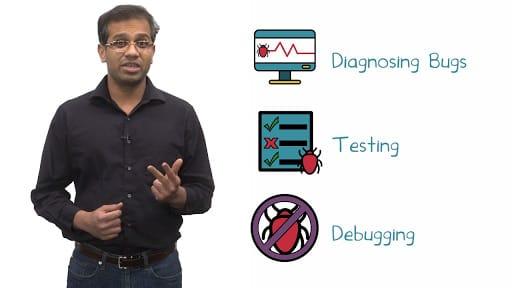
This course covers the theory and practice of software analysis, which lies at the heart of many software development processes such as diagnosing bugs, testing, debugging, and more. It presents diverse techniques, each with their own strengths and limitations, for automating tasks such as testing, debugging, and finding bugs in complex real-world programs. These techniques include dataflow analysis, constraint-based analysis, type systems, model checking, symbolic execution, and more. The course teaches the principles underlying these techniques as well as imparts hands-on experience with using and implementing tools based on these techniques.

Self Paced
Self-Paced
Laboratory Training for COVID-19 Molecular Testing (FutureLearn) FutureLearn
Foundation for Innovative New Diagnostics - FIND

Laboratory Training for COVID-19 Molecular Testing (FutureLearn)

Learn how to plan for and establish COVID-19 testing in your laboratory to ensure accurate, timely and impactful results. Understand the components of COVID-19 testing in the laboratory. With the world reeling from the COVID-19 pandemic, testing capacity has emerged as a major issue. Adequate testing capacity for SARS-CoV-2 is crucial to halting the outbreak.

No sessions available
1 Week
COVID-19 Diagnostics and Testing (FutureLearn) FutureLearn
London School of Hygiene & Tropical Medicine,Foundation for Innovative New Diagnostics - FIND,African Society for Laboratory Medicine - ASLM

COVID-19 Diagnostics and Testing (FutureLearn)

Get the latest recommendations on COVID-19 diagnostics and testing, and how to improve testing capacity in low-income settings. Understand the key role diagnostics play in outbreak control. As the world struggles to contain the COVID-19 outbreak, healthcare infrastructure and testing capacity have emerged as major issues.

No sessions available
3 Weeks
Synapses, Neurons and Brains (Coursera) Coursera
Hebrew University of Jerusalem

Synapses, Neurons and Brains (Coursera)

These are very unique times for brain research. The aperitif for the course will thus highlight the present “brain-excitements” worldwide. You will then become intimately acquainted with the operational principles of neuronal “life-ware” (synapses, neurons and the networks that they form) and consequently, on how neurons behave as computational microchips and how they plastically and constantly change - a process that underlies learning and memory.

Sep 21st 2026
5-12 Weeks