Religions and Society in China (Coursera)

Religions and Society in China (Coursera)

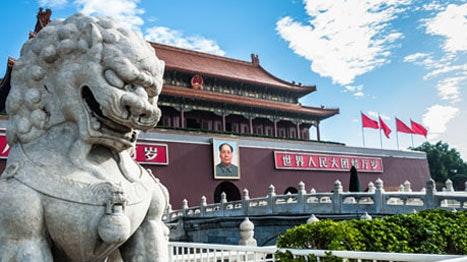
This course provides an introduction to the study of the history, major teachings, and practices of the major Chinese religions and spiritual practices and is deigned to give conceptual tools to appreciate diverse religious practice in East. It covers the development of Buddhism, Daoism, Confucianism and wide range of popular and local religions.

Class Deals by MOOC List - Click here and see Coursera's Active Discounts, Deals, and Promo Codes.

From historical perspective we will also explore the development of key theological, religious and philosophical doctrines as well as associated practices. An effort will be made to spend time on each tradition according to its importance to Asia as a whole.
We will explore the role of religions in politics and social relations in East and South, South East Asia and China in particular, and will analyze the origins, central teachings, divisions and branches, rituals and practices, influences on culture, and responses to modern challenges for each tradition.
The emphasis throughout the course is on the hermeneutic difficulties attendant upon the study of religion in general, and Asian religions in particular. We will explore new Asian religions as dynamic, ongoing forces in the lives of individuals and in the collective experience of modern societies.

Syllabus

WEEK 1
Foundations of Religions in China
This module's content lays the foundations of understanding what is religion in China, how the Chinese perceive the very notion of religion and how this perception and this notion must not be confused with the correspondent Western notions and pereptions.

WEEK 2
Taosim in China
This module's content describes what is Taoism, relates its history and defines its sources, shows the main paths of genesis for the Taoist cults.

WEEK 3
Taoism in Chinese society: main religious practises
This module's content describes the paths of development, which were taken by Taoist cults in their history, explains the ways that connected Taoist philosophy and social practice of religious cults and organisations.

WEEK 4
Confucianism in Chinese society: from sacrality to morality
This module's content describes the main ideas and principles of Confucianism, outlines the paths of its developments, explains the difference between what is Confucianism in its particular totality of traits and what is understood as a religion or a philosophy in the West.

WEEK 5
Buddhism in the Chinese Tradition
This module's content describes the basic notions of Buddhism and explains its principles. The module gives an outline of the process of Buddhism's transition to China.

WEEK 6
Sinified Buddhism as an almost independent tradition
This module's content outlines the main texts and doctrines of Chan Buddhism, enumerates the main schools and branches, explains the influence that Buddhism had and has on Chinese life and art.

WEEK 7
Chinese Mythology
This module's content is dedicated to Chinese Mythos. This Module explains how the very notion of a mythical hero in China differs greatly from the correspondent Western notion.

WEEK 8
Chinese folk religions: ancestor worship, temples, festivals and communal identities
This module's content describes the characteristic traits of Chinese sects and popular cults. This module introduces one of the most important notions in Chinese religious studies: Chinese synctretism.

WEEK 9
Modern China and its attitude to religions
This module's content is dedicated to describing the religious life in modern China, the main attitudes of officials to religion in PRC and in other places, where Chinese culture is widely spread.


Go to Class
MOOC List is learner-supported. When you buy through links on our site, we may earn an affiliate commission.

Related Courses

What Is Contemporary Art? (Coursera) Coursera
The Museum of Modern Art

What Is Contemporary Art? (Coursera)

What is contemporary art? In this course, you’ll consider this question through more than 70 works of art made between 1980 and the present, with a focus on art from the past decade. You’ll hear directly from artists, architects, and designers from around the globe about their creative processes, materials, and inspiration.

Jun 22nd 2026
5-12 Weeks
Chinese Politics Part 2 - China and the World (Coursera) Coursera
The Hong Kong University of Science and Technology - HKUST

Chinese Politics Part 2 - China and the World (Coursera)

One of the most significant changes in the world in the past 30 years is the opening of China to the outside world and its engagement with that world. In the initial years of the opening, external forces influenced China’s economy, regional balances, bureaucracy, as well as the political authority of local leaders in the coastal areas.

Jun 22nd 2026
5-12 Weeks
China Strategy (Coursera) Coursera
The Chinese University of Hong Kong

China Strategy (Coursera)

This course is designed to help you, as a strategist of a foreign company, better understand how to develop your China strategy. Specifically, after studying China’s changing strategic landscape, you will focus on mastering three strategic issues: who – the major players in China, how – the entry modes, and where – the location strategy for your China business. This course is aimed to deliver updated knowledge and real experiences of developing China strategy.

Jun 22nd 2026
4 Weeks
Plagues, Witches, and War: The Worlds of Historical Fiction (Coursera) Coursera
University of Virginia

Plagues, Witches, and War: The Worlds of Historical Fiction (Coursera)

A unique and exciting introduction to the genre and craft of historical fiction, for curious students, aspiring authors--anyone with a passion for the past. Read classics of the genre, encounter bestselling writers of historical fiction, and discover your own historical archive while interacting with a global community of interested readers.

Jun 22nd 2026
5-12 Weeks
More Chinese for Beginners (Coursera) Coursera
Peking University

More Chinese for Beginners (Coursera)

This is an advanced course for Chinese for beginners. Learners will expand vocabularies about personal information, daily life, food and drink, healthy, and expressions about greeting, suggestion, agreement, comparison, complaint, prohibition, experience, plan, recommendation, etc. Learners can improve their listening and speaking and know much more about Chinese social cultures.

Jun 22nd 2026
5-12 Weeks
Intellectual Humility: Science (Coursera) Coursera
University of Edinburgh

Intellectual Humility: Science (Coursera)

It’s clear that the world needs more intellectual humility. But how do we develop this virtue? And why do so many people still end up so arrogant? Do our own biases hold us back from becoming as intellectually humble as we could be—and are there some biases that actually make us more likely to be humble? Which cognitive dispositions and personality traits give people an edge at being more intellectually humble - and are they stable from birth, learned habits, or something in between? And what can contemporary research on the emotions tell us about encouraging intellectual humility in ourselves and others?

Jun 22nd 2026
4 Weeks
The History of Modern Israel - Part II: Challenges of Israel as a sovereign state (Coursera) Coursera
Tel Aviv University

The History of Modern Israel - Part II: Challenges of Israel as a sovereign state (Coursera)

This course deals with the Israeli politics, economy, society and culture, since its creation in 1948 till today. It analyzes the construction of the Israeli historical narrative as an identity-building narrative, intending to inculcate a collective memory to a diverse society. We will focus on key events and essential components that shaped the Israeli society from the fifties till the present. We will also discuss the changes that the Israeli society experiences in its almost seventy years of existence and how it affects its politics and culture.

Jun 22nd 2026
5-12 Weeks
What does it mean to identify as Transgender or Gender Non-Conforming (TGNC)? (Coursera) Coursera
University of Minnesota

What does it mean to identify as Transgender or Gender Non-Conforming (TGNC)? (Coursera)

In the last decade transgender and gender nonconforming (TGNC) individuals have become increasingly visible in our families, culture, and public discourse. This course explores the concept of gender identity for people who are curious about the nature of gender, the process of gender affirmation, or changing social dynamics. Participants will learn the unique challenges faced by the TGNC population as well as develop the skills to build inclusive spaces in all spheres of their life. This course was developed under the Joycelyn Elders Chair for Sexual Health Education at the University of Minnesota.

Jun 22nd 2026
5-12 Weeks
Selling to Chinese Consumers (Coursera) Coursera
The Chinese University of Hong Kong

Selling to Chinese Consumers (Coursera)

This course is designed to help learners sell their products, goods and services to Chinese consumers. To achieve this goal, the course will use evidence-based research in psychology, economics, legal studies and marketing to help learners understand the historical, economic and legal contexts of doing business in China and the behavioral characteristics of Chinese consumers. The course will cover topics in Chinese and global marketing, Chinese consumers, institutional and cultural influence on consumer motivation and behaviors in Chinese markets, and brand management in China.

Jun 22nd 2026
4 Weeks
Entrepreneurship (Coursera) Coursera
The Chinese University of Hong Kong

Entrepreneurship (Coursera)

An entrepreneur is someone who is always on the lookout for problems that can be turned into opportunities and finds creative ways to leverage limited resources to reach their goals. In this course, learners will be introduced to the fundamental concepts, theories, and frameworks of entrepreneurship and learn how to apply them within the context of the world's largest market: China.

Jun 22nd 2026
4 Weeks