Regression using Scikit-Learn (Coursera)

Regression using Scikit-Learn (Coursera)

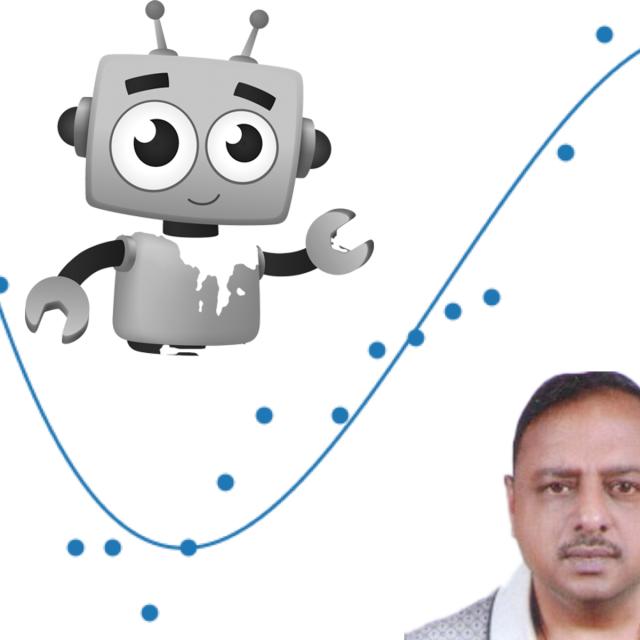
This project is aimed at students and practitioners of Data Sciences for building Predictive Analytics models for research and commercial purposes. Machine Learning can be used to solve prediction problems for classification and regression. In this project, we discuss about using Machine Learning for building Regression Models. We will use Python Language.

Class Deals by MOOC List - Click here and see Coursera's Active Discounts, Deals, and Promo Codes.

In Python, we have many options for building Machine Learning solutions like Tensor Flow, Keras, etc. In this project, we use Scikit-Learn. Scikit-Learn provides a comprehensive array of tools for building regression models. The concepts learnt in this project can be extended to build Neural Networks using Tensor Flow or Keras or any other tool.
This Guided Project was created by a Coursera community member.

In this Guided Project, you will:

  • Learn how to create Regression Models using Scikit-Learn
  • Learn about Linear Regression, Regression using Random Forest Algorithm, Regression using Support Vector Machine Algorithm

Learn step-by-step:

  1. Loading Data
  2. Find the correlation between the dependent variable and the independent variables
  3. Building the Linear Regression Model
  4. Building the Random Forest and Support Vector Machine Regression Models
  5. Exploratory Data Analysis - Part 2
  6. Exploratory Data Analysis
Go to Class
MOOC List is learner-supported. When you buy through links on our site, we may earn an affiliate commission.

Related Courses

Principles of fMRI 1 (Coursera) Coursera
Johns Hopkins University

Principles of fMRI 1 (Coursera)

Functional Magnetic Resonance Imaging (fMRI) is the most widely used technique for investigating the living, functioning human brain as people perform tasks and experience mental states. It is a convergence point for multidisciplinary work from many disciplines. Psychologists, statisticians, physicists, computer scientists, neuroscientists, medical researchers, behavioral scientists, engineers, public health researchers, biologists, and others are coming together to advance our understanding of the human mind and brain. This course covers the design, acquisition, and analysis of Functional Magnetic Resonance Imaging (fMRI) data, including psychological inference, MR Physics, K Space, experimental design, pre-processing of fMRI data, as well as Generalized Linear Models (GLM’s).

Jun 22nd 2026
4 Weeks
Machine Learning: Regression (Coursera) Coursera
University of Washington

Machine Learning: Regression (Coursera)

Case Study - Predicting Housing Prices. In our first case study, predicting house prices, you will create models that predict a continuous value (price) from input features (square footage, number of bedrooms and bathrooms,...). This is just one of the many places where regression can be applied. Other applications range from predicting health outcomes in medicine, stock prices in finance, and power usage in high-performance computing, to analyzing which regulators are important for gene expression.

Jun 22nd 2026
5-12 Weeks
Machine Learning With Big Data (Coursera) Coursera
University of California, San Diego

Machine Learning With Big Data (Coursera)

Want to make sense of the volumes of data you have collected? Need to incorporate data-driven decisions into your process? This course provides an overview of machine learning techniques to explore, analyze, and leverage data. You will be introduced to tools and algorithms you can use to create machine learning models that learn from data, and to scale those models up to big data problems.

Jun 22nd 2026
5-12 Weeks
Statistical Inference (Coursera) Coursera
Johns Hopkins University

Statistical Inference (Coursera)

Statistical inference is the process of drawing conclusions about populations or scientific truths from data. There are many modes of performing inference including statistical modeling, data oriented strategies and explicit use of designs and randomization in analyses. Furthermore, there are broad theories (frequentists, Bayesian, likelihood, design based, …) and numerous complexities (missing data, observed and unobserved confounding, biases) for performing inference.

Jun 22nd 2026
4 Weeks
Hypothesis Testing with Python and Excel (Coursera) Coursera
Tufts University

Hypothesis Testing with Python and Excel (Coursera)

In today's job market, leaders need to understand the fundamentals of data to be competitive. An essential procedure to understand business and analytics is hypothesis testing. This short course, designed by Tufts University expert faculty, will teach the fundamentals of hypothesis testing of a population mean and a population proportion, using Excel and Python for calculations. You'll also discover the central limit theorem, which is essential for hypothesis testing. To conclude the course, you will apply your newfound skills by creating a plan for an experiment in your own workplace that uses hypothesis testing.

Jun 23rd 2026
1 Week
Cloud Networking (Coursera) Coursera
University of Illinois at Urbana-Champaign

Cloud Networking (Coursera)

In the cloud networking course, we will see what the network needs to do to enable cloud computing. We will explore current practice by talking to leading industry experts, as well as looking into interesting new research that might shape the cloud network’s future. This course will allow us to explore in-depth the challenges for cloud networking—how do we build a network infrastructure that provides the agility to deploy virtual networks on a shared infrastructure, that enables both efficient transfer of big data and low latency communication, and that enables applications to be federated across countries and continents? Examining how these objectives are met will set the stage for the rest of the course.

Jun 22nd 2026
5-12 Weeks
Experimentation for Improvement (Coursera) Coursera
McMaster University

Experimentation for Improvement (Coursera)

We are always using experiments to improve our lives, our community, and our work. Are you doing it efficiently? Or are you (incorrectly) changing one thing at a time and hoping for the best? In this course, you will learn how to plan efficient experiments - testing with many variables. Our goal is to find the best results using only a few experiments. A key part of the course is how to optimize a system.

Jun 22nd 2026
5-12 Weeks
Effective Problem-Solving and Decision-Making (Coursera) Coursera
University of California, Irvine

Effective Problem-Solving and Decision-Making (Coursera)

Critical thinking – the application of scientific methods and logical reasoning to problems and decisions – is the foundation of effective problem solving and decision making. Critical thinking enables us to avoid common obstacles, test our beliefs and assumptions, and correct distortions in our thought processes. Gain confidence in assessing problems accurately, evaluating alternative solutions, and anticipating likely risks. Learn how to use analysis, synthesis, and positive inquiry to address individual and organizational problems and develop the critical thinking skills needed in today’s turbulent times. Using case studies and situations encountered by class members, explore successful models and proven methods that are readily transferable on-the-job.

Jun 22nd 2026
4 Weeks
Introduction to Machine Learning (Coursera) Coursera
Duke University

Introduction to Machine Learning (Coursera)

This course will provide you a foundational understanding of machine learning models (logistic regression, multilayer perceptrons, convolutional neural networks, natural language processing, etc.) as well as demonstrate how these models can solve complex problems in a variety of industries, from medical diagnostics to image recognition to text prediction.

Jun 26th 2026
5-12 Weeks