Questionnaire Design for Social Surveys (Coursera)

Questionnaire Design for Social Surveys (Coursera)

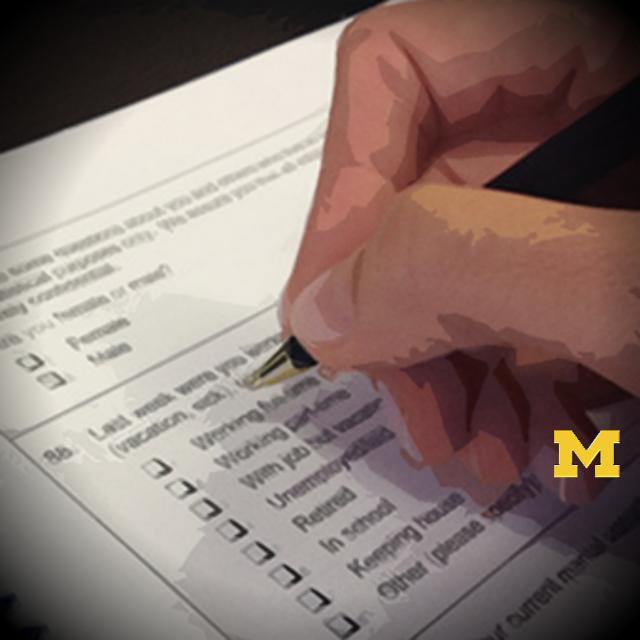
This course will cover the basic elements of designing and evaluating questionnaires. We will review the process of responding to questions, challenges and options for asking questions about behavioral frequencies, practical techniques for evaluating questions, mode specific questionnaire characteristics, and review methods of standardized and conversational interviewing.

Class Deals by MOOC List - Click here and see Coursera's Active Discounts, Deals, and Promo Codes.

Course 3 of 7 in the Survey Data Collection and Analytics Specialization.

Syllabus

WEEK 1
Introduction: Overview of Standardized Interviewing
Introduction; Different types of questions, Measurement error in questions: Bias and variance; Standardized and conversational interviewing; From specifying a concept to asking questions

WEEK 2
Response Process
Comprehension; Retrieval; Judgment; Response

WEEK 3
Asking Factual Questions
Facts and quasi facts; Memory and recall; Asking sensitive questions; Mode, privacy and confidentiality

WEEK 4
Measuring Attitudes
Context effects in attitude questions; Use of different scales; Offering don’t know options; Response order effects

WEEK 5
Testing Questionnaires
Expert reviews and focus groups; Cognitive interviews; Behavior coding; Quantitative techniques

WEEK 6
Putting It All Together
The questionnaire from start to finish; Things to put at the end; Mode Choice: Implementations for layout; Self-administered questionnaires


Go to Class
MOOC List is learner-supported. When you buy through links on our site, we may earn an affiliate commission.

Related Courses

The Bilingual Brain (Coursera) Coursera
University of Houston System

The Bilingual Brain (Coursera)

This course explores the brain bases of bilingualism by discussing literature relevant to differences in age of initial learning, proficiency, and control in the nonverbal, single language and dual-language literature. Participants will learn about the latest research related to how humans learn one or two languages and other cognitive skills.

Sep 7th 2026
5-12 Weeks
Claves para Gestionar Personas (Coursera) Coursera
IESE Business School

Claves para Gestionar Personas (Coursera)

¿Te has preguntado alguna vez qué criterios utilizan las empresas para contratar o retribuir a las personas? ¿Por qué no siempre entendemos los planes de promoción?. El objetivo de este curso es conocer algunas herramientas prácticas en materia de Recursos Humanos y aprender a gestionar personas y liderar el talento con la mayor eficacia posible.

Sep 7th 2026
5-12 Weeks
Corrección, estilo y variaciones de la lengua española (Coursera) Coursera
Universitat Autònoma de Barcelona

Corrección, estilo y variaciones de la lengua española (Coursera)

¿Le interesa el idioma español y se preocupa por la corrección, el estilo y las variaciones de la lengua española? ¿Siente curiosidad acerca de las variaciones española y argentina o americana del Español estudiadas en textos cultos de referencia? En este curso se estudian empíricamente algunos aspectos relevantes de esas variedades de la lengua con datos significativos de las versiones hispanas de J. D. Salinger: «El cazador oculto», argentinas; y «El guardián entre el centeno», españolas.

Sep 14th 2026
5-12 Weeks
Mindfulness and Well-being: Living with Balance and Ease (Coursera) Coursera
Rice University

Mindfulness and Well-being: Living with Balance and Ease (Coursera)

This is the sequel course to Foundations of Mindfulness that will continue to provide a broad overview of the fundamental concepts, principles, and practices of mindfulness. With interactive exercises to help students explore their own attitudes, mental habits and behaviors, Foundations of Mindfulness series offers a pathway for living with more freedom, authenticity and ease. Featured components of the course include experiential exercises, guided meditations, personal reflection and interactive discussions.

Sep 14th 2026
4 Weeks
The Psychology of Thrill Seekers (Coursera) Coursera
Emory University

The Psychology of Thrill Seekers (Coursera)

Sensation seeking is a trait we all have and includes the search for complex and new experiences. Thrill Seekers, people with high-sensation seeking personalities, crave exotic and intense experiences even when physical or social risks are involved. This course helps learners examine the remarkable world of the high-sensation seeking personality and explores the lifestyle, psychology, and neuroscience behind thrill seekers.

Sep 14th 2026
5-12 Weeks
Writing for Business Advanced (Coursera) Coursera
University of Glasgow

Writing for Business Advanced (Coursera)

This course will teach you how to apply advanced principles and strategies to produce successful business writing. It takes an immersive narrative approach so you learn how to use context to write purposeful and audience specific business texts. You will learn to deploy a range of tools and tactics so your business writing is on point, concise and appropriate, whatever the organisational culture or whomever the client or stakeholder.

Sep 14th 2026
5-12 Weeks
Writing Skills for Engineering Leaders (Coursera) Coursera
Rice University

Writing Skills for Engineering Leaders (Coursera)

Engineering leaders must write extensively for their jobs, and their writing needs to be professional, reader-focused, and error-free. What leaders write in particular can affect productivity and the bottom line, so the written communication that leaders create must be clear and concise. In this course, you’ll learn essential writing skills that you can apply in your daily activities on the job as an engineering leader.

Sep 14th 2026
4 Weeks
Fundamentals of Speechwriting (Coursera) Coursera
Coursera Instructor Network

Fundamentals of Speechwriting (Coursera)

Fundamentals of Speechwriting is a course that enhances speechwriting skills by deepening learners’ understanding of the impact of key elements on developing coherent and impactful speeches. It is aimed at learners with experience writing and speaking who wish to enhance their current skills. This course covers strategies for analyzing audience and purpose, selecting style and tone, and incorporating rhetorical appeals and storytelling.

Sep 14th 2026
1 Week
Psychology of Popularity (Coursera) Coursera
University of North Carolina

Psychology of Popularity (Coursera)

The level of popularity you experienced in childhood and adolescence is still affecting you today in ways that you may not even realize. Learn about how psychologists study popularity and how these same concepts can be used in adulthood to be more successful at work, become better parents, and have a happier life.

Sep 14th 2026
5-12 Weeks
The Strategy of Content Marketing (Coursera) Coursera
University of California, Davis

The Strategy of Content Marketing (Coursera)

This course is a partnership between the leading content marketing authority, Copyblogger, and UC Davis Extension. In this course, you will learn the core strategies content marketers use to acquire and retain customers profitably. Specifically, you will learn how to develop, organize and implement a content marketing strategy, analyze and measure the effectiveness of content marketing, write compelling copy, use a strategic framework when writing, and build your professional brand and authority through content marketing. You will also learn how to put the ideas presented to you into action and build your own personal brand through content marketing.

Sep 14th 2026
5-12 Weeks
Write Your First Novel (Coursera) Coursera
Michigan State University

Write Your First Novel (Coursera)

If you’ve ever had the dream, the desire or even just a vague notion that you would like to write a novel, this course is for you. Whether you are a full-time student, have a full-time job, a family to take care of or all of the above, you can do it. Really! And I will help you get there.

Sep 14th 2026
+25 Weeks
Psicología de la Percepción (Coursera) Coursera
Universidad de Palermo

Psicología de la Percepción (Coursera)

¿Cómo funcionan nuestros sentidos para ayudarnos a dar sentido y responder a nuestro entorno? ¿La percepción es un reflejo “fiel” del ambiente que nos rodea? ¿En qué se diferencia una alucinación de una percepción normal? ¿Cómo se relacionan los avances neurocientíficos con las teorías psicológicas clásicas de la percepción? ¿Cómo influyen la memoria, la atención y las expectativas en lo que percibimos?

Sep 14th 2026
3 Weeks