Quality Control and Regulatory in Cosmetic Science (Coursera)

Offered by Olay,
Quality Control and Regulatory in Cosmetic Science (Coursera)

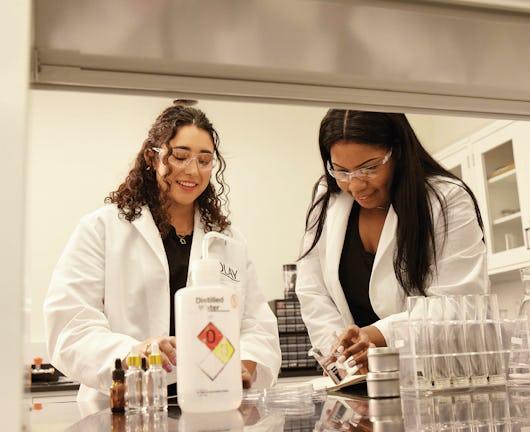
This course explores the multifaceted world of cosmetic science and quality assurance. You will explore the historical evolution of cosmetic regulatory landscapes, gain insights into cutting-edge safety assessment methodologies, and delve into the principles and practices of quality systems. The course emphasizes a holistic approach, ensuring participants understand the importance of regulations, enhance their expertise in safety assessments, and master the principles of quality control in cosmetic manufacturing.

Class Deals by MOOC List - Click here and see Coursera's Active Discounts, Deals, and Promo Codes.

This course is part of the Introduction to Cosmetic Science and Ingredients Specialization.

What you'll learn

  • Learn about the evolution of cosmetic regulations and quality control
  • Gain proficiency in safety assessments and regulatory compliance
  • Identify the principles of quality systems in cosmetic manufacturing
  • Master the formulation of stable and effective cosmetic products

Syllabus

Overview of Regulations and Agencies
This module provides an in-depth exploration of the history, evolution, and key aspects of cosmetic regulations, as well as insights into future trends shaping the cosmetic industry. Participants will gain a comprehensive understanding of the regulatory landscape governing cosmetic products, the agencies responsible for enforcement, and emerging challenges and opportunities in the global beauty market.

Cosmetic Safety
This comprehensive module is dedicated to the crucial aspect of product safety assessment in the cosmetic industry. It covers a range of topics, including skin safety assessments, ocular irritation, toxicological evaluations, new approach methodologies (NAMs), ingredient safety, finished goods safety, skin aging, and the impact of cosmetics on the skin microbiome. Participants will gain essential insights into the methodologies, regulations, and considerations that ensure the safety and well-being of cosmetic products.

Principles of Quality Systems
This module is designed to provide a comprehensive understanding of the principles of quality systems in the context of the cosmetic industry. Participants will explore the fundamental principles of quality management and their significance in ensuring the production of safe, effective, and high-quality cosmetic products. Through engaging videos and quizzes, learners will delve into quality control and assurance principles, raw material quality considerations, and the intricacies of ensuring the quality of finished goods.

Quality in Practice
This module delves into the practical application of the principles of quality systems, emphasizing statistical analysis and implementing quality control procedures in the cosmetic industry. Participants will explore statistical methods for quality assurance, raw material quality control, and the steps involved in implementing robust quality control procedures. Through case studies and quizzes, learners will gain hands-on experience identifying good and bad practices, ensuring a comprehensive understanding of quality systems in cosmetic manufacturing.

Go to Class
MOOC List is learner-supported. When you buy through links on our site, we may earn an affiliate commission.

Related Courses

Fixing Healthcare Delivery (Coursera) Coursera
University of Florida

Fixing Healthcare Delivery (Coursera)

Isn’t it time to end the loss of life from preventable medical errors? Each year 100,000 patients die from preventable errors in the U.S. How can you help to change this intractable problem? Knowledge is power, and this course will provide you with a deep understanding of the problems and the solutions. You can become part of the solution.

Dec 14th 2026
5-12 Weeks
Statistique pour l'ingénieur (FUN) FUN
Institut Mines-Telecom

Statistique pour l'ingénieur (FUN)

Les méthodes statistiques sont largement répandues dans presque tous les secteurs de l’activité humaine : sciences et techniques, économie, sciences humaines et sociales. Elles font partie des connaissances de base de l’ingénieur. Parmi les innombrables applications dans le domaine industriel, on peut citer le contrôle de qualité, la fiabilité, l’analyse des résultats de mesure, la prévision et la planification.

No sessions available
5-12 Weeks
Ebola : Vaincre ensemble ! (Coursera) Coursera
University of Geneva

Ebola : Vaincre ensemble ! (Coursera)

Il s’agit d’un MOOC sur la crise internationale sur Ebola partie d’Afrique de l’Ouest en 2014 ; d’une durée de 5 semaines, où interviendront plus de 30 professeurs des universités, chercheurs, responsables politiques, autorités sanitaires nationales et internationales, membres d’ONGs, et autres acteurs d’Europe et d’Afrique sur plus de 60 séquences vidéos. Les thèmes abordés se dérouleront selon une séquence hebdomadaire décrite ci-dessous (section « plan du cours »).

Dec 14th 2026
5-12 Weeks
Questionnaire Design for Social Surveys (Coursera) Coursera
University of Michigan

Questionnaire Design for Social Surveys (Coursera)

This course will cover the basic elements of designing and evaluating questionnaires. We will review the process of responding to questions, challenges and options for asking questions about behavioral frequencies, practical techniques for evaluating questions, mode specific questionnaire characteristics, and review methods of standardized and conversational interviewing.

Dec 14th 2026
5-12 Weeks
Big Data Science with the BD2K-LINCS Data Coordination and Integration Center (Coursera) Coursera
Icahn School of Medicine at Mount Sinai

Big Data Science with the BD2K-LINCS Data Coordination and Integration Center (Coursera)

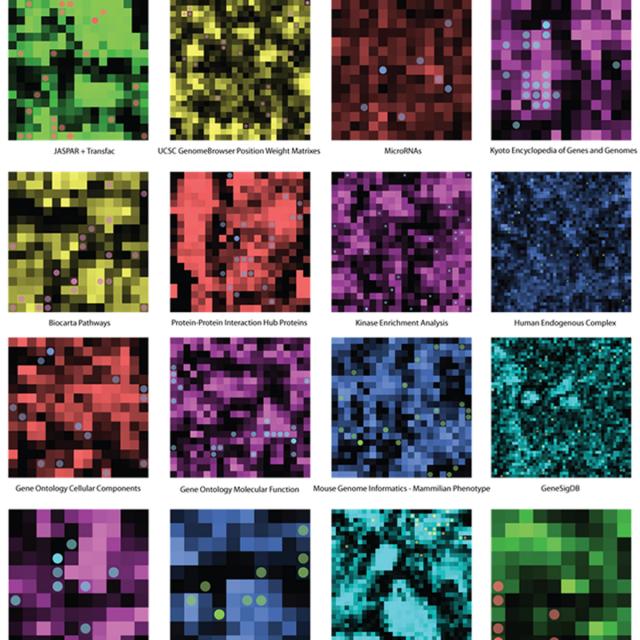
In this course we briefly introduce the DCIC and the various Centers that collect data for LINCS. We then cover metadata and how metadata is linked to ontologies. We then present data processing and normalization methods to clean and harmonize LINCS data. This follow discussions about how data is served as RESTful APIs. Most importantly, the course covers computational methods including: data clustering, gene-set enrichment analysis, interactive data visualization, and supervised learning. Finally, we introduce crowdsourcing/citizen-science projects where students can work together in teams to extract expression signatures from public databases and then query such collections of signatures against LINCS data for predicting small molecules as potential therapeutics.

Dec 14th 2026
5-12 Weeks
In the footsteps of Zika… approaching the unknown (Coursera) Coursera
University of Geneva

In the footsteps of Zika… approaching the unknown (Coursera)

Welcome to this on-demand MOOC “In the footsteps of Zika… approaching the unknown”. This MOOC has been produced by Université de Genève Institut Pasteur, Université Paris Descartes and Centre Virchow-Villermé. With the help of the intervention of faculty members and international experts, we will explore together the recent Zika phenomenon, a previously rare benign virus that recently turned unexpectedly into the limelight when on the 1st of February 2016 it was declared by the WHO as a Public Health Emergency of International Concern.

Dec 14th 2026
5-12 Weeks
Operations Management: Analysis and Improvement Methods (Coursera) Coursera
University of Illinois at Urbana-Champaign

Operations Management: Analysis and Improvement Methods (Coursera)

In this course, you will learn about the role of operations and how they are connected to other business functions in manufacturing- and service-focused organizations. You will learn and practice the use of decision-making frameworks and techniques applicable at all levels, from management-level strategic decisions such as connecting process to the needs of various customer segments, to front-line tactical decisions such as choosing between ordering larger quantities vs. ordering more frequently.

Jun 29th 2026
4 Weeks
Genetic Epidemiology Foundations (Coursera) Coursera
University of Colorado System

Genetic Epidemiology Foundations (Coursera)

This course is designed to provide students with the foundation necessary to conduct statistical analysis of genetic association study data. This course includes topics such as quality control in genetic studies, population-based case-control association studies, genome-wide association studies, and foundational concepts in population genetics and the history of genetics research. Examples of concepts and reference literature are provided in this 6-module course.

Nov 23rd 2026
5-12 Weeks
Instructional Methods in Health Professions Education (Coursera) Coursera
University of Michigan

Instructional Methods in Health Professions Education (Coursera)

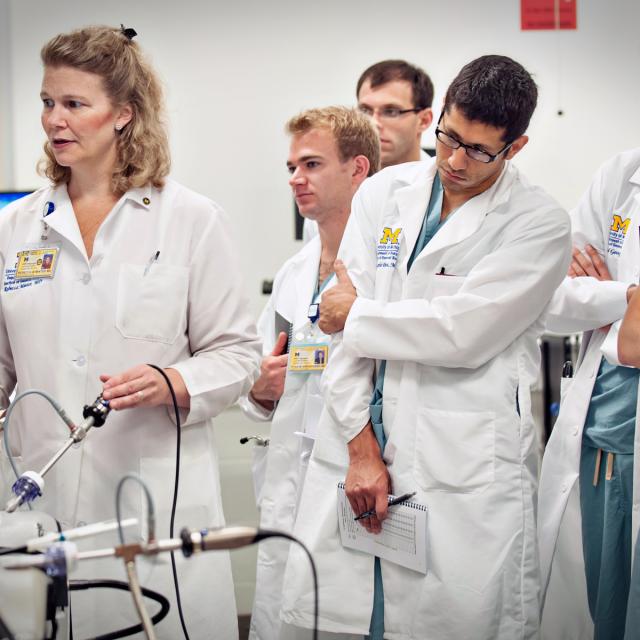
This course provides those involved in educating members of the health professions an asynchronous, interdisciplinary, and interactive way to obtain, expand, and improve their teaching skills. These skills can then be applied within their own professional context, with a variety of learners, extending across many stages.

Dec 14th 2026
5-12 Weeks