普通物理學 - 電磁學、光學及近代物理 (Coursera)

普通物理學 - 電磁學、光學及近代物理 (Coursera)

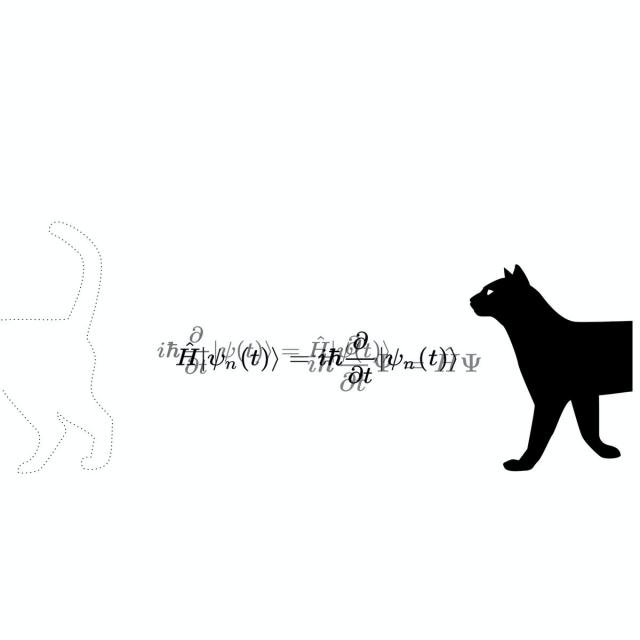
物理學是描述世上質量與能量交互作用的學問,在這門課中我們將為大家介紹近代物理對於世界的認識。我們會從電磁學出發,進展到光學,並進而說明近代物理對人類觀念的突破。

Class Deals by MOOC List - Click here and see Coursera's Active Discounts, Deals, and Promo Codes.

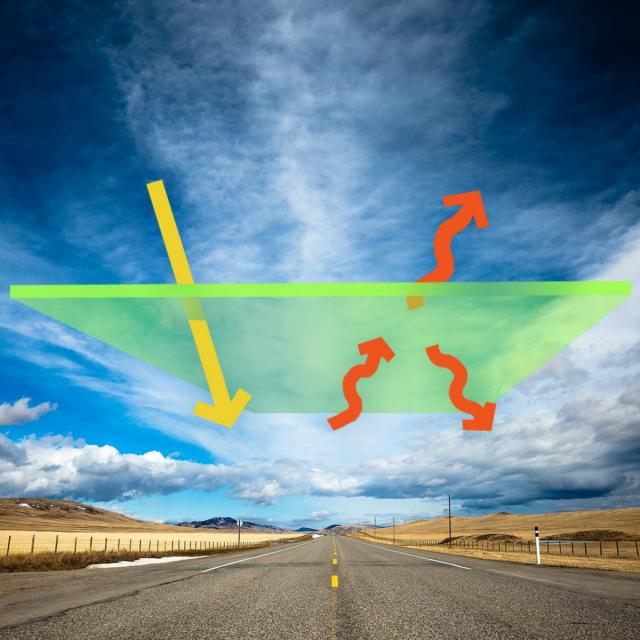
以牛頓為首的古典力學,結合重力解釋了從地表到星空中許多肉眼可見物體的運動行為。但是生活中顯然還有許多現象,是光靠重力無法解釋的。例如你現在正在看的這台電腦,為何不會因為重力穿過桌面落到地上?要詳細解釋這個現象的起源,就需要用到電磁學的知識。在我們的身邊,電與磁的現象以及兩者的交互作用事實上不斷發生,例如肉眼可見的閃電,在神經中傳導的電信號,或是在原子尺度的鍵結。而所謂的可見光以及光學現象事實上只是強度不斷變化的電磁波造成的。所以了解電磁作用對於我們認識這個世界扮演了非常關鍵的角色。
而且就物理學來說,電磁學提供了一個很好的例子,說明物理學希望用一套簡單的理論來解釋周圍所有現象的企圖。例如電與磁乍看之下是兩個毫不相干的現象(想想一根柱狀磁鐵和一個電池有何相同之處?),但是卻透過許多物理學家的努力,發現這兩者只是同一個現象的不同表現,並建立了一致的理論。而這套"簡單的"電磁學理論(可縮減到只有四個方程式),卻可以用來非常精確的預測許多生活中的物理現象,例如發電機,無線電傳輸,以及光速等。
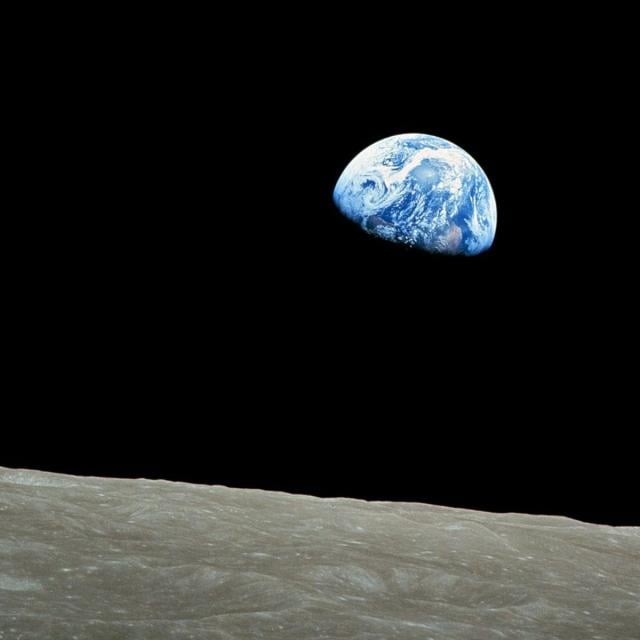
在十九世紀末期,當力學與電磁學都已經發展到相當完備的程度時,英國著名的物理學家Kelvin爵士曾感嘆「晴朗的天空只剩下遠方的兩朵小烏雲,物理學家們今後的工作,只不過剩下把數字算得更精確罷了!」。但是沒想到就是這兩個在光學上的實驗無法解釋(小烏雲),因而促成了二十世紀近代物理的兩大發現,亦即相對論與量子力學。
這門課希望以淺顯易懂的內容,引領聽眾從電磁學看到近代物理的發展,是如何劇烈地改變了我們人類對於大自然的認知方式。並能欣賞物理中使用數學作為語言的美麗,一些簡單的方程式,如何能告訴我們世界怎麼運轉?
具體的課程目標為

  1. 希望學生可以了解生活中有哪些地方用到電磁學或近代物理的概念,並能用適當的文字敘述
  2. 希望學生可以掌握基本的數學模型,用來解釋電磁學與近代物理現象
Go to Class
MOOC List is learner-supported. When you buy through links on our site, we may earn an affiliate commission.

Related Courses

Foundation of Structural Dynamics (Coursera) Coursera
ISAE-SUPAERO

Foundation of Structural Dynamics (Coursera)

A course with variable geometry where everyone, we hope, will find personal benefits. The parts can be studied sequentially or independently; and inside each part, elementary learning items can be picked up. Globally, this course proposes a deep knowledge of fundamental dynamics, with possible explicit and implicit applications in structural dynamics, but also in physics and control of any dynamic system (automatics, …).

Sep 7th 2026
5-12 Weeks
Analyzing the Universe (Coursera) Coursera
Rutgers University

Analyzing the Universe (Coursera)

Using publicly available data from NASA of actual satellite observations of astronomical x-ray sources, we explore some of the mysteries of the cosmos, including neutron stars, black holes, quasars and supernovae. We will analyze energy spectra and time series data to understand how these incredible objects work. We utilize an imaging tool called DS9 to explore the amazing diversity of astronomical observations that have made x-ray astronomy one of the most active and exciting fields of scientific investigation in the past 50 years.

Aug 31st 2026
5-12 Weeks
Física: Vectores, Trabajo y Energía (Coursera) Coursera
Tecnológico de Monterrey

Física: Vectores, Trabajo y Energía (Coursera)

Este curso provee al estudiante con conceptos y herramientas matemáticas para modelar problemas en física, que al aplicar podrá enfrentar con éxito los cursos de física universitarios. Así pues, la filosofía de este curso consiste en cubrir temas conceptuales relativos a la Física y desarrollar tu capacidad de aprender y aplicarlos en tu vida profesional.

Sep 14th 2026
5-12 Weeks
Physics 102 - Electric Charges and Fields (Coursera) Coursera
Rice University

Physics 102 - Electric Charges and Fields (Coursera)

This course serves as an introduction to the physics of electricity and magnetism. Upon completion, learners will have an understanding of how the forces between electric charges are described by fields, and how these fields are related to electrical circuits. They will gain experience in solving physics problems with tools such as graphical analysis, algebra, vector analysis, and calculus. The course follows the typical progression of topics of a first-semester university physics course: charges, electric forces, electric fields potential, magnetic fields, currents, magnetic moments, electromagnetic induction, and circuits.

Aug 31st 2026
4 Weeks
Astro 101: Black Holes (Coursera) Coursera
University of Alberta

Astro 101: Black Holes (Coursera)

What is a black hole? Do they really exist? How do they form? How are they related to stars? What would happen if you fell into one? How do you see a black hole if they emit no light? What’s the difference between a black hole and a really dark star? Could a particle accelerator create a black hole? Can a black hole also be a worm hole or a time machine? In Astro 101: Black Holes, you will explore the concepts behind black holes. Using the theme of black holes, you will learn the basic ideas of astronomy, relativity, and quantum physics.

Sep 14th 2026
5-12 Weeks
The Finite Element Method for Problems in Physics (Coursera) Coursera
University of Michigan

The Finite Element Method for Problems in Physics (Coursera)

This course is an introduction to the finite element method as applicable to a range of problems in physics and engineering sciences. The treatment is mathematical, but only for the purpose of clarifying the formulation. The emphasis is on coding up the formulations in a modern, open-source environment that can be expanded to other applications, subsequently.

Sep 7th 2026
13-24 Weeks
Tesoros de la Física y sus Descubridores I (Coursera) Coursera
Universidad de los Andes

Tesoros de la Física y sus Descubridores I (Coursera)

¿Sabes cómo vuelan los aviones, tan pesados y no se caen mientras vuelan? ¿Sabes que viajamos por el espacio sobre el planeta Tierra que se traslada y gira muy rápido y no lo percibimos? ¿O acaso, notas efectos de su movimiento? ¿Cuál es nuestro lugar en el universo? ¿Podemos viajar en el tiempo? ¡Preguntas, muchas preguntas! Con espíritu de descubridores nuestra curiosidad nos motiva a buscar respuestas, a explorar nuestro entorno, a entrar a lo desconocido y hallar nuevo conocimiento.

Aug 31st 2026
5-12 Weeks
Introduction to Particle Accelerators (NPAP MOOC) (Coursera) Coursera
Lund University

Introduction to Particle Accelerators (NPAP MOOC) (Coursera)

Welcome to the Nordic Particle Accelerator Program's (NPAP) Massive Open Online Courses and to the fascinating world of particle accelerators! Did you know that in the year of 2000 there were more than 15 000 particle accelerators in the world? Yet, today it has grown to more than 30 000 of them! A third of the particle accelerators are dedicated to medical applications, such as radio therapy, and a half are used for ion implantation in semiconductor devices.

Aug 31st 2026
5-12 Weeks
Control of Nonlinear Spacecraft Attitude Motion (Coursera) Coursera
University of Colorado Boulder

Control of Nonlinear Spacecraft Attitude Motion (Coursera)

This course trains you in the skills needed to program specific orientation and achieve precise aiming goals for spacecraft moving through three dimensional space. First, we cover stability definitions of nonlinear dynamical systems, covering the difference between local and global stability. We then analyze and apply Lyapunov's Direct Method to prove these stability properties, and develop a nonlinear 3-axis attitude pointing control law using Lyapunov theory. Finally, we look at alternate feedback control laws and closed loop dynamics.

Aug 31st 2026
4 Weeks
Archaeoastronomy (Coursera) Coursera
Politecnico di Milano

Archaeoastronomy (Coursera)

Archaeoastronomy is the “science of stars and stones”: it studies the relationships between the ancient monuments and the sky, in order to gain a better understanding of the ideas of the architects of the past and of their religious and symbolic world. The course provides the first complete, easy introduction to this fascinating discipline.

Sep 14th 2026
5-12 Weeks