EdX

The Psychology of Emotions: An Introduction to Embodied Cognition (edX)

The Psychology of Emotions: An Introduction to Embodied Cognition (edX)

This fascinating introduction to the cognitive psychology of emotions explores how, when we see others’ emotions, not only the mind, but also the body is engaged in the recognition. You will explore how to measure our ability to understand the feelings of others.

Class Deals by MOOC List - Click here and see EdX's Active Discounts, Deals, and Promo Codes.

Psychology is not just the mind, this course introduces and explores the idea that our mind is rooted in our body and that perhaps it is time to move on from this dichotomy. This course will touch on the fundamental principles of cognitive psychology with a specific focus on emotional social and embodied cognition, which theorizes that many functions of human cognition (even those linked to logic, reasoning and decision making) are aided by our entire bodies’ feelings and sensations.
Discover what might shape our ability to understand others and the importance of a functional emotional processing for every kind of interaction with others. This increased understanding can improve decision making processes, with knowledge of cognitive neuroscience sitting alongside human factors, and introduces new concepts to include in a view of mental health.
Learners will be encouraged to reflect on crucial and thought-provoking concepts such as the mind-body dualism and reductionism. The course is likely to make learners self-aware of how they express their emotions as well as how they read and interpret other persons’ emotions. Learners will know both the complexity and simplicity of the cognitive process that takes place whenever we try to recognize facial expressions, and how easily we can misinterpret others’ emotions.
During the course we will focus on the main theories of embodiment and hypotheses and on how researchers investigate and address them. In doing so, we will learn about the main methods and materials used to explore emotional embodiment and to measure our ability to recognise other people’s facial expressions. This will include the main experimental designs, behavioural and neuroimaging methods adopted.

What you'll learn

  • Key theories and concepts in psychology of social cognition and emotions:

Discuss nature v nurture, the relationship between the mind and the brain and the role of automatic vs controlled processes in shaping human behavior.

  • How we study emotions: Emotional processing and social cognition research methods
  • We are what we feel: The foundations of the theories of embodied cognition

How our understanding of other's emotions is an interpretation of emotional signals

  • Develop a critical approach to the literature and research questions of the field.

Syllabus

What is Cognitive Psychology: an overview
This week will provide an overview of key findings, theories and research methods of cognitive psychology.

How we feel emotions: introduction to the psychology of facial expressions and to theories of embodied emotional processing
This week will provide an introduction to the main concepts and theories of social cognition. In particular, videos explore the extent to which mirror neurons shape our ability to understand others and our ability to understand that others might have mental states that differ from our own (theory of mind reasoning).

How do we study emotions? Emotional processing and social cognition research methods
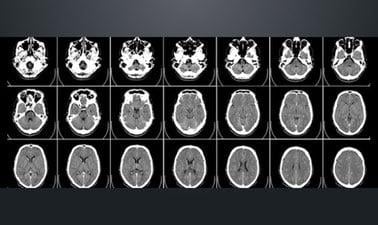
This week explores the key research methods of embodied emotional processing and social cognition. It will outline the most important techniques in the broader cognitive psychology and evaluate the contribution they can make to emotional processing research and embodiment theories. It will also introduce the role of neuropsychological research in understanding how brain lesions can help us understand how the brain normally functions. Key methods of neuroimaging techniques covered will be specifically focused on electroencephalogram (EEG) and electromyography (EMG).

How do we recognise the emotional facial expressions of others? Feeling me to feel you - from theory-theories to the simulation theory
This week will provide an introduction to the main theories of emotional facial expression recognition. It will include an overview of the theory models as well as of the simulation theory models. It will also illustrate the key findings on facial mimicry often associated with better facial expression recognition.

Is it always easy to understand others' emotions? The influence of context and expression ambiguity on mimicry during emotional recognition
Any emotional expression is a communication channel that has the intrinsic intention of conveying a message. The expression finds its meaning in the interaction with another person and its sense in the social context.
This week provides an overview of the factors that influence the emotional understanding in a natural social situation. This week will outline some of the main factors that are thought to affect the way we have insights about other’s feeling and intentions. This includes our attitude towards the other (for instance our motivation to understand their emotions), prior knowledge that we have about them and the ambiguity of the facial expression itself.


Go to Class
MOOC List is learner-supported. When you buy through links on our site, we may earn an affiliate commission.

Related Courses

AP® Psychology - Course 1: What is Psychology? (edX) EdX
The University of British Columbia,UBCx

AP® Psychology - Course 1: What is Psychology? (edX)

Learn about the history and research methods of psychology. This psychology course is an introduction to the field of psychology. It begins by asking “What is Psychology?” and provides some concrete answers to that question. Next, it covers the history of psychology and provides a look at the state of psychology today.

Self Paced
Self-Paced
Introduction to Psychology | 心理学概论 (edX) EdX
Tsinghua University,TsinghuaX

Introduction to Psychology | 心理学概论 (edX)

Explore psychological research to understand basic theories and methods of scientific psychology with a strong focus on positive psychology. 本课程以心理学的经典理论和最新实证研究为蓝本,以积极心理学的视角,概览式地介绍科学心理学的基本理论、基本方法、研究领域和研究热点

Self Paced
Self-Paced
Crafting Realities: Work, Happiness, and Meaning (edX) EdX
Indian Institute of Management, Bangalore,IIMBx

Crafting Realities: Work, Happiness, and Meaning (edX)

Learn to create and experience your work as a joyful and meaningful activity - for yourself and others. This course draws upon positive psychology, neuroscience, sociology, and philosophy to guide participants in proactively crafting their own work experience. It weaves inputs from these various fields into a series of lectures and experiential exercises.

Self Paced
Self-Paced
Digital Wellbeing and Productivity (edX) EdX
Jesus College, University of Cambridge

Digital Wellbeing and Productivity (edX)

Individuals and organisations now face the challenge of finding a healthy balance between productivity and downtime. How can we adapt to changes in our digital lives, while remaining healthy and happy? What habits can help us get the most out of our time and energy online? How can we best manage digital wellbeing while maintaining productive digital habits? And how can individuals, teams, businesses, and institutions learn from research-based knowledge to create digital habits and skills to help us flourish together?

Self Paced
Self-Paced
Learning and memory in the brain: a guide for teachers (edX) EdX
University of Cambridge

Learning and memory in the brain: a guide for teachers (edX)

This course will help you discover how neuroscience and psychology can help your students learn more effectively. This course provides a guided tour through the brain, looking at the changes that occur on a cellular level when we learn new information or store a memory. Using research from neuroscience and psychology, we will look at the process of storing long-term memories, and how you can help your students do this effectively.

Self Paced
Self-Paced
Introduction to Social Psychology (edX) EdX
University of Queensland,UQx

Introduction to Social Psychology (edX)

Learn why people think and behave the way they do in social settings. We often have firmly held beliefs about why people think and behave the way they do. Sometimes our intuitions are correct, but often they are not. Social psychology helps us understand how people think about themselves and other people and what motivates their behaviour in social settings. This course explores a range of topics in social psychology, from how we think about ourselves, how we think about others, and how we interact and communicate with others.

Self Paced
Self-Paced
Introduction to Psychological Aspects of Game Design (edX) EdX
LaSalle College,LaSalleX

Introduction to Psychological Aspects of Game Design (edX)

Learn the fundamental concepts and practice of game design and the theory connected to it. Are you ready to take the first step from gamer to game designer? Then this course is for you! This course is an introduction to the basic concepts of game development and design theory, and explores how these concepts affect the ways we design and interact with games.

Self Paced
Self-Paced
AP® Psychology - Course 5: Health and Behavior (edX) EdX
The University of British Columbia,UBCx

AP® Psychology - Course 5: Health and Behavior (edX)

Learn about the relationship between stress and physical and mental health and the treatment of abnormal behavior, including psychological disorders. This psychology course is all about the relationship between health and behavior. We will examine stress as a concept and learn about its relation to health and psychological adjustment. We will discuss abnormal behavior and how psychologists assess it as well as a wide range of psychological disorders and approaches to their treatment.

Self Paced
Self-Paced
Managing Happiness (edX) EdX
HarvardX,Harvard University

Managing Happiness (edX)

Managing Happiness encourages you to explore the science of happiness, allowing you to find your truest self. Through cutting-edge survey tools, the best research, and trends in social science, neuroscience, and philosophy to help learners unlock the strategies to create a more purposeful life, full of long-lasting enjoyment and satisfaction.

Self Paced
Self-Paced