EdX

Adaptive Markets: Financial Market Dynamics and Human Behavior (edX)

Offered by MIT, MITx,
Adaptive Markets: Financial Market Dynamics and Human Behavior (edX)

A completely new way of thinking about financial markets, institutions, and innovation that reconciles human behavior with market efficiency using concepts from evolutionary biology, cognitive neuroscience, and artificial intelligence. Half of all Americans have money in the stock market, yet economists can’t agree on whether investors and markets are rational and efficient, as modern financial theory assumes, or irrational and inefficient, as behavioral economists believe—and as financial bubbles, crashes, and crises suggest.

Class Deals by MOOC List - Click here and see EdX's Active Discounts, Deals, and Promo Codes.

This is one of the biggest debates in economics, and the value or futility of investment management and financial regulation hang on the outcome. In this course, MIT finance professor Andrew W. Lo cuts through this debate with a new framework—the Adaptive Markets Hypothesis—in which rationality and irrationality coexist.

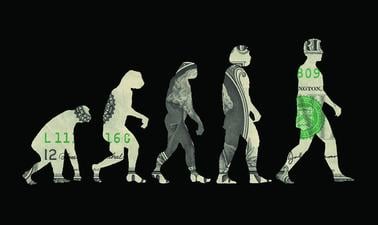
Drawing on psychology, evolutionary biology, neuroscience, artificial intelligence, and other fields, this course shows that the theory of market efficiency isn’t wrong, but merely incomplete. When markets are unstable, investors react instinctively, creating inefficiencies for others to exploit. This new paradigm explains how evolution shapes behavior and markets at the speed of thought—a fact revealed by swings between stability and crisis, profit and loss, and innovation and regulation.
A fascinating intellectual journey filled with compelling stories, the course begins with the origins of market efficiency and its failures, turns to the foundations of investor behavior, and concludes with some practical implications—including how hedge funds have become the Galápagos Islands of finance, what really happened in the 2008 meltdown, and how we might avoid future crises.
This course provides ambitious new approaches to address some of the biggest challenges facing us today such as cancer, climate change, the energy crisis, and how to navigate through the choppy waters of global financial markets in a post-COVID-19 world.

What you'll learn

  • Limits to rationality and market efficiency, and the adaptive nature of markets
  • Psychlogical, neuroscientific, and evolutionary foundations of human behavior
  • Formulation of the Adaptive Markets Hypothesis (AMH)
  • Applications of the AMH to hedge funds, the 2008 Financial Crisis, and COVID-19
  • Ethical implications and high-impact applications of the AMH

Syllabus

Unit 1: Introduction and Financial Orthodoxy
Unit 2: Rejecting the Random Walk and Efficient Markets
Unit 3: Behavioral Biases and Psychology
Unit 4: The Neuroscience of Decision-Making
Unit 5: Evolution and the Origin of Behavior
Unit 6: The Adaptive Markets Hypothesis
Unit: 7: Hedge Funds: The Galapagos Islands of Finance
Unit 8: Applications of Adaptive Markets
Unit 9: The Financial Crisis
Unit 10: Ethics and Adaptive Markets
Unit 11: The Finance of the Future and the Future of Finance


Go to Class
MOOC List is learner-supported. When you buy through links on our site, we may earn an affiliate commission.

Related Courses

Digital Wellbeing and Productivity (edX) EdX
Jesus College, University of Cambridge

Digital Wellbeing and Productivity (edX)

Individuals and organisations now face the challenge of finding a healthy balance between productivity and downtime. How can we adapt to changes in our digital lives, while remaining healthy and happy? What habits can help us get the most out of our time and energy online? How can we best manage digital wellbeing while maintaining productive digital habits? And how can individuals, teams, businesses, and institutions learn from research-based knowledge to create digital habits and skills to help us flourish together?

Self Paced
Self-Paced
The Science of Happiness (edX) EdX
University of California, Berkeley,BerkeleyX

The Science of Happiness (edX)

The first MOOC to teach positive psychology. Learn science-based principles and practices for a happy, meaningful life. "A free eight-week Science of Happiness course that will offer practical, research-backed tips on living a happy and meaningful life." - Huffington Post. We all want to be happy, and there are countless ideas about what happiness is and how we can get some. But not many of those ideas are based on science. That’s where this course comes in.

Self Paced
Self-Paced
Qualitative Research in Psychology (edX) EdX
American Psychological Association,APA

Qualitative Research in Psychology (edX)

In this course you will learn about the foundations of qualitative inquiry—and how it differs from quantitative research. You will gain practice in common qualitative traditions—like phenomenology and ethnography—and some of the methods they use, such as interviewing. You will gain the competence, confidence, and “know-how” to begin planning your very own qualitative study of a topic in psychology.

Self Paced
Self-Paced
Psychology of Personal Growth (edX) EdX
The Hong Kong University of Science and Technology - HKUST,HKUSTx

Psychology of Personal Growth (edX)

Learn to understand personal growth from a comparative perspective. Want to learn about how you become who you are, but not sure where to kick off that journey? This is a fantastic course for you. This course covers important factors influencing your growing up. We discuss personality and emotion, romantic and intimate relationships, as well as the interplay between culture and these factors on your personal growth journey.

Self Paced
Self-Paced
Financial Development and Financial Inclusion (edX) EdX
International Monetary Fund - IMF,IMFx

Financial Development and Financial Inclusion (edX)

Learn how to develop an efficient, inclusive and stable financial sector that is essential for a thriving economy. This course was developed by the IMF in collaboration with the European Investment Bank. Higher rates of financial inclusion and financial market development mean more prosperous societies. But how to make it all happen? This course outlines common ways countries develop robust financial sectors – from banks to equity markets.

Self Paced
Self-Paced
Psicologia dell'apprendimento (edX) EdX
University of Naples Federico II,FedericaX

Psicologia dell'apprendimento (edX)

Un’analisi delle diverse forme dell’apprendimento per comprendere come operiamo le nostre scelte, la natura profondamente esperienziale dei processi di apprendimento e lo stretto legame che questi hanno con il contesto in cui l’individuo è inserito.

Self Paced
Self-Paced
Tech for Good: The Role of ICT in Achieving the SDGs (edX) EdX
SDGAcademyX,SDG Academy

Tech for Good: The Role of ICT in Achieving the SDGs (edX)

What opportunities and challenges do digital technologies present for the development of our society? Tech for Good was developed by UNESCO and Cetic, the Brazilian Network Information Center’s Regional Center for Studies on the Development of the Information Society. It brings together thought leaders and changemakers in the fields of information and communication technologies (ICT) and sustainable development to show how digital technologies are empowering billions of people around the world by providing access to education, healthcare, banking, and government services; and how “big data” is being used to inform smarter, evidence-based policies to improve people’s lives in fundamental ways.

Self Paced
Self-Paced
Macroeconomics for a Sustainable Planet (edX) EdX
SDGAcademyX,SDG Academy

Macroeconomics for a Sustainable Planet (edX)

Is it possible to develop a thriving global economy in an equitable and environmentally-resilient way? Unemployment. Inflation. Protectionism. Trade barriers. Fiscal deficit. These are not just terms in an economics textbook or in newspaper headlines. These real-life challenges carry societal and environmental implications for billions of people around the world.

Self Paced
Self-Paced
Introduction to Psychological Research Methods (edX) EdX
University of Queensland,UQx

Introduction to Psychological Research Methods (edX)

Learn how to plan, conduct and analyze psychological research and effectively communicate the results. Do we really only use 10% of our brain? How can we answer questions like this? We shouldn’t just rely on our intuition, because unfortunately that can sometimes give us the incorrect answer. In this psychology course, learn how psychological research is conducted, how to analyze the findings and results and effectively write a research report.

Self Paced
Self-Paced
Introduction to Developmental Psychology (edX) EdX
University of Queensland,UQx

Introduction to Developmental Psychology (edX)

Learn how we develop over our lifetime, including our ability to think, communicate, and form social attachments. Have you ever wondered what babies are capable of from the moment they’re born? Developmental psychology is the study of an individual’s social, emotional, cognitive, and biological development through his or her lifespan. The focus of this course will be from infancy to later life.

Self Paced
Self-Paced
Introduction to Computer Science and Programming (edX) EdX
Tokyo Institute of Technology,TokyoTechX

Introduction to Computer Science and Programming (edX)

The term “Computation” refers to the action performed by a computer. A computation can be a basic operation and it can also be a sophisticated computer simultation requiring a large amount of data and substantial resources. This course aims at introducing learners with no prior knowledge to basics and key concepts of computer science. By following the lectures and exercises of this course you will have an understanding of algorithms and you will get a real experience of programming using the language Ruby.

Self Paced
Self-Paced