EdX

Principles of Hemp Cultivation (edX)

Offered by DoaneX, Doane University,
Principles of Hemp Cultivation (edX)

This course provides an in-depth investigation of hemp as an agronomic and horticultural crop. This course provides an in-depth investigation of hemp as an agronomic and horticultural crop. Agronomic principles pertaining to industrial hemp as a field crop are explored, including the cultivation, management, and harvesting of hemp for fiber and seed production.

Class Deals by MOOC List - Click here and see EdX's Active Discounts, Deals, and Promo Codes.

Growing hemp under controlled environments for flower production will also be discussed. Cultivation practices including irrigation, fertilization, integrated pest management (IPM), air circulation, and light control are examined for optimal crop quality and yield.

What you'll learn
By the end of the course learners will:

  • Differentiate hemp cultivation practices according to primary harvestable product (flower, seed, fiber, etc.)
  • Design a soil and nutrient management plan that includes site selection, necessary soil amendments, and fertilizer use required for optimal hemp production
  • Assess why light, water, and air are important considerations in the growing environment
  • Design a hemp propagation and monitoring plan for indoor or outdoor production
  • Identify common pests (insects, weeds, fungi, disease) combating hemp production
  • Design an Integrated Pest Management (IPM) plan for hemp cultivation that includes biological, mechanical, cultural, and chemical controls
  • Design a harvesting and storing plan for hemp cultivation
  • Explain how growers can adapt decision making according to changes in infrastructure, consumer demand, legislation, and technology innovations
Go to Class
MOOC List is learner-supported. When you buy through links on our site, we may earn an affiliate commission.

Related Courses

Urban Design for the Public Good: Dutch Urbanism (edX) EdX
Delft University of Technology,DelftX

Urban Design for the Public Good: Dutch Urbanism (edX)

Through a unique Dutch approach learn how to design landscapes and cities in response to social and environmental challenges. Are you an urban planner, designer, policy maker or involved or interested in the creation of good living environments? This course will broaden your scope and diversify your take on the field of urban planning and design.

Self Paced
Self-Paced
Agroforestry IV: Climate, Carbon Storage and Agroforestry (Coursera) Coursera
University of Florida

Agroforestry IV: Climate, Carbon Storage and Agroforestry (Coursera)

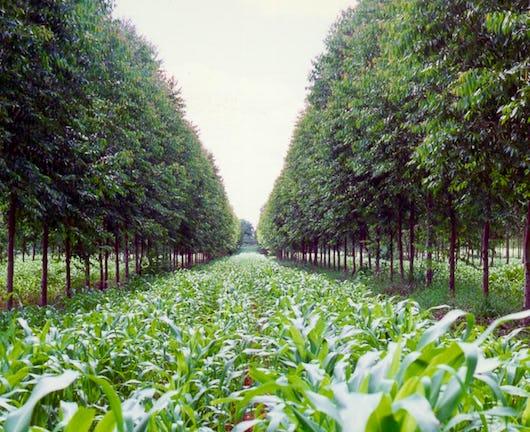
Welcome to Agroforestry IV: Climate Change, Carbon Storage and Agroforestry Systems, a detailed review of fundamental principles and best practices for successful agroforestry projects. This interdisciplinary module, presented by leading experts in the field, is the fourth in the five-module course covering the various aspects of agroforestry including the global distribution of the practices, their underlying principles, and major scientific advances during the past nearly five decades.

Sep 14th 2026
1 Week
Agroforestry V: Ecosystem Services, Food and Sustainability (Coursera) Coursera
University of Florida

Agroforestry V: Ecosystem Services, Food and Sustainability (Coursera)

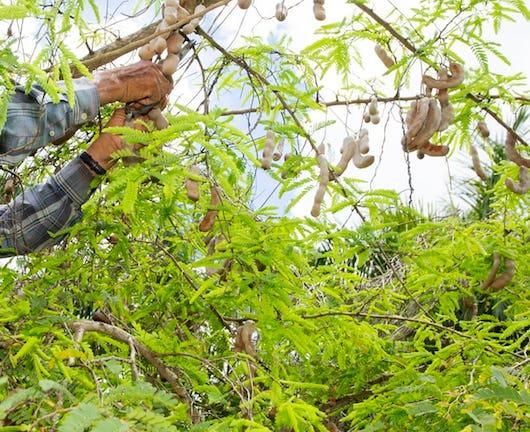
Welcome to Agroforestry V: Ecosystem Services, Food Security and Sustainable Development, a detailed review of fundamental principles and best practices for successful agroforestry projects. This interdisciplinary module, presented by leading experts in the field, is the final in the five-module course covering the various aspects of agroforestry including the global distribution of the practices, their underlying principles, and major scientific advances during the past nearly five decades.

Sep 14th 2026
2 Weeks
NECTAR : Nématodes Cultures Taxonomie Arthropodes (FUN) FUN
Montpellier SupAgro

NECTAR : Nématodes Cultures Taxonomie Arthropodes (FUN)

La taxonomie est une Science biologique élémentaire et fondamentale. Les arthropodes et nématodes constituent la grande majorité des espèces de la planète. Leurs connaissances et identifications présentent donc des enjeux majeurs pour la préservation et la gestion de la biodiversité. / Taxonomy is a fundamental and elementary science. Arthropods and nematodes constitute the majority of species on earth. Being able identify them is thus critical for biodiversity conservation and management.

Oct 15th 2021
5-12 Weeks
Using Photovoltaic (PV) Technology in Desert Climates (edX) EdX
Hamad Bin Khalifa University - HBKU,HBKUx

Using Photovoltaic (PV) Technology in Desert Climates (edX)

Learn how to mitigate the challenges related to PV technology and enhance the performance of solar cells and PV modules in desert climates. The high insolation in desert regions can result in a lower cost of solar energy. While this may be a key motivation to deploying PV in desert climates, there are also several challenges related to the technology that must be considered.

Self Paced
Self-Paced
Circular Economy for a Sustainable Built Environment (edX) EdX
Delft University of Technology,DelftX

Circular Economy for a Sustainable Built Environment (edX)

Learn how the principles of the Circular Economy can be applied to the built environment ranging from products and buildings to metropolitan and regional development strategies. In this course you will become familiar with circularity as a systemic, multi-disciplinary approach, concerned with the different scale, from material to product, building, city, and region.

Self Paced
Self-Paced
Nitrogen: A Global Challenge (edX) EdX
University of Edinburgh,EdinburghX

Nitrogen: A Global Challenge (edX)

Learn about the global nitrogen challenge, how nitrogen has helped human civilization to develop, and how its misuse now threatens us. It’s a perfect storm. Limited food, water and energy unequally spread between an expanding population, and a warming climate as the bitter icing on the cake. In all these global challenges nitrogen has a leading role to play. Here you will learn just how hard-wired into all of human civilisation nitrogen is, and whether the future will see it as our quiet savior or the toxic villain of the piece.

Self Paced
Self-Paced
Irrigation Efficiency: more food with less water (edX) EdX
KU Leuven University,KULeuvenX

Irrigation Efficiency: more food with less water (edX)

Learn to improve the efficiency of different irrigation system components over varying scales in order to extract less water from our resources while producing more food. How can we meet the demands of our ever hungrier and thirstier world? Irrigation water uses 70% of the fresh water extraction worldwide to produce 40% of the food.

Self Paced
Self-Paced
Sustainable Global Food Systems (edX) EdX
University of Edinburgh,EdinburghX

Sustainable Global Food Systems (edX)

How do we feed 11 billion people? Discover the importance of sustainable food systems on a global scale. We are currently facing one of the biggest challenges worldwide: how to feed a growing population without exhausting global resources. This course examines food security from a food systems perspective and illustrates the major global challenges present, from the environmental impact of food production to the public health impacts of current and future diets.

Self Paced
Self-Paced
Climate Change: Carbon Capture and Storage (edX) EdX
University of Edinburgh,EdinburghX

Climate Change: Carbon Capture and Storage (edX)

Explore the technology that can provide a long-term solution to protect our atmosphere from an excess of carbon dioxide, in the context of global energy, our use of fossil fuels, and climate change. The atmosphere is a shared resource and the amount of greenhouse gases it can absorb is a finite resource. This introductory course to the technology of Carbon Capture and Storage is designed for a wider audience with an interest in energy, sustainability and climate change.

Self Paced
Self-Paced
Introduction to Water and Climate (edX) EdX
Delft University of Technology,DelftX

Introduction to Water and Climate (edX)

Water is a crucial element in climate and for society. Find out about the latest engineering interventions for water management in rivers, coasts and the urban environment. Water is essential for life on Earth and of crucial importance for society. Water also plays a major role in affecting climate. Its natural cycle, from ocean to atmosphere by evaporation, then by precipitation back to land returning via rivers and aquifers to the oceans, has a decisive impact on regional and global climate patterns.

Self Paced
Self-Paced