From Point of View to Prototype (Coursera)

From Point of View to Prototype (Coursera)

When developing designs, it is important to pick a point of view and consider multiple design options using prototypes. This course will teach you to rapidly instantiate your point of view using multiple prototyping tools, from paper prototypes to the Wizard of Oz method, to test and iterate your ideas quickly. The design strategies you learn in this course will be applicable in a variety of contexts, from services, to interfaces, to products.

Class Deals by MOOC List - Click here and see Coursera's Active Discounts, Deals, and Promo Codes.

This course will be available in a self-paced format. The courses in the Interaction Design Specialization may be taken in any order.
Many people can see the same problem, but take very different strategies for approaching that problem. This course will help you consider what your approach will be, while creating multiple alternatives so you have the opportunity to pick something good - not just the first thing that comes to mind.
Once you have identified your approach, why wait months to get feedback? In this course, you’ll learn how to make a quick prototype with feedback in hours. We will cover a repertoire of strategies for quick prototyping so you can get feedback quickly, in order to help build consensus on your design team and decide how to move forward. The design strategies you learn in this course will be applicable in a variety of contexts from services, to interfaces, to products.
Topics include:

  • developing a point of view
  • considering multiple approaches to a problem
  • costs and benefits of different strategies for quick prototyping
  • methods of prototyping (e.g., paper prototypes, digital mockups, video prototyping, Wizard of Oz)
Go to Class
MOOC List is learner-supported. When you buy through links on our site, we may earn an affiliate commission.

Related Courses

Coding for Designers, Managers, & Entrepreneurs II (Coursera) Coursera
University of Virginia

Coding for Designers, Managers, & Entrepreneurs II (Coursera)

Do you want to experience what it is to go from idea to code? If so, this is the place for you! This is the second course in the Coding for Designers, Managers, and Entrepreneurs Specialization. If you’re a hands-on collaborator with developers, this course is specifically designed for you. In this course, we’re going to focus on creating interactive user interfaces (UI’s) with Javascript, building creative confidence and competence that will make you an even better collaborator on digital projects.

Jan 13th 2025
3 Weeks
Human-Centered Design: an Introduction (Coursera) Coursera
University of California, San Diego

Human-Centered Design: an Introduction (Coursera)

In this course, you will learn how to design technologies that bring people joy, rather than frustration. You'll learn several techniques for rapidly prototyping and evaluating multiple interface alternatives -- and why rapid prototyping and comparative evaluation are essential to excellent interaction design. You'll learn how to conduct fieldwork with people to help you get design ideas. How to make paper prototypes and low-fidelity mock-ups that are interactive -- and how to use these designs to get feedback from other stakeholders like your teammates, clients, and users. Armed with these design-thinking strategies, you’ll be able to do more creative human-centered design in any domain.

Nov 16th 2026
4 Weeks
Create High-Fidelity Designs and Prototypes in Figma (Coursera) Coursera
Google

Create High-Fidelity Designs and Prototypes in Figma (Coursera)

Create High-Fidelity Designs and Prototypes in Figma is the fifth course in a certificate program that will equip you with the skills you need to apply to entry-level jobs in user experience (UX) design. In this course, you will follow step-by-step tutorials to learn how to create high-fidelity designs, called mockups, in Figma, a popular design tool. Then, you’ll turn those designs into an interactive prototype that works like a finished product. You’ll conduct research to collect feedback about your designs and make improvements. Finally, you’ll learn how to share your designs with development teams and highlight your work in your professional UX portfolio.

Nov 2nd 2026
5-12 Weeks
Adding Electronics to Rapid Prototypes (Coursera) Coursera
Arizona State University

Adding Electronics to Rapid Prototypes (Coursera)

Hello, everyone! Welcome to this course on Adding Electronics to Rapid Prototypes. This is part of the Rapid Prototyping and Tooling specialization. In this course, I’ll cover the basics of electric circuits, breadboards, and multimeters. I’ll then discuss different options for connecting electrical components as well as discuss different types of motors and actuators. Finally, I’ll end this course by discussing microcontrollers and how to use them to make even more sophisticated prototypes.

Oct 26th 2026
5-12 Weeks
Using Rapid Prototyping in the Engineering Design Process (Coursera) Coursera
Arizona State University

Using Rapid Prototyping in the Engineering Design Process (Coursera)

Hello, everyone! Welcome to this course on Using Rapid Prototyping in the Engineering Design Process. This is part of the Rapid Prototyping and Tooling specialization. In this course, I’ll cover the engineering design process and how it can be used to solve open-ended problems. I’ll discuss the different stages of prototyping and why it is advantageous to produce prototypes rapidly. I’ll then discuss engineering drawings and how to communicate information about 3-dimensional objects on 2-dimensional mediums such as paper or a computer screen.

Oct 26th 2026
4 Weeks
Design Thinking for the Greater Good: Innovation in the Social Sector (Coursera) Coursera
University of Virginia

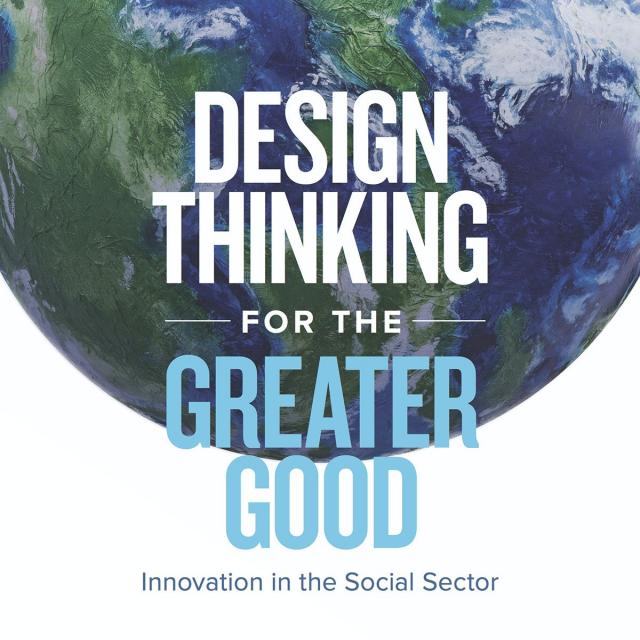
Design Thinking for the Greater Good: Innovation in the Social Sector (Coursera)

Do you work for a nonprofit or in the social sector? Are you struggling to solve the problems and meet the needs of the people you serve? Come learn more about how design thinking, a human-centered approach to problem solving, can help you truly understand an issue, generate ideas worth testing and iterate to find solutions that make a real difference. Through global stories from areas as diverse as government, health care, and education, we’ll show you the tools, techniques and mindset needed to use design thinking to uncover new and creative solutions in the social sector.

Oct 26th 2026
4 Weeks
Conduct UX Research and Test Early Concepts (Coursera) Coursera
Google

Conduct UX Research and Test Early Concepts (Coursera)

Conduct UX Research and Test Early Concepts is the fourth course in a certificate program that will equip you with the skills you need to apply to entry-level jobs in user experience (UX) design. In this course, you will learn how to plan and conduct a usability study to gather feedback about designs. Then, you will modify your low-fidelity designs based on insights from your research. Current UX designers and researchers at Google will serve as your instructors, and you will complete hands-on activities that simulate real-world UX design scenarios. Learners who complete the seven courses in this certificate program should be equipped to apply for entry-level jobs as UX designers.

Nov 2nd 2026
4 Weeks
Engineering and Product Design Processes (Coursera) Coursera
Arizona State University

Engineering and Product Design Processes (Coursera)

Welcome to “Engineering and Product Design Processes!” In this short course, you will learn how engineering design processes and product design processes are carried out. After the course, you will be familiar with the steps in both design processes. You will also be familiar with the main goal of each design process, as well as their similarities and differences.

Nov 2nd 2026
4 Weeks