Physics 102 - Electric Potential and DC Circuits (Coursera)

Offered by Rice University,
Physics 102 - Electric Potential and DC Circuits (Coursera)

This course serves as an introduction to the physics of electricity and magnetism. Upon completion, learners will have an understanding of how the forces between electric charges are described by fields, and how these fields are related to electrical circuits. They will gain experience in solving physics problems with tools such as graphical analysis, algebra, vector analysis, and calculus.

Class Deals by MOOC List - Click here and see Coursera's Active Discounts, Deals, and Promo Codes.

The course follows the typical progression of topics of a first-semester university physics course: charges, electric forces, electric fields potential, magnetic fields, currents, magnetic moments, electromagnetic induction, and circuits. Each module contains reading links to a free textbook, complete video lectures, conceptual quizzes, and a set of homework problems. Once the modules are completed, the course ends with an exam. This comprehensive course series is similar in detail and rigor to what is taught on-campus. It will thoroughly prepare learners for their upcoming introductory physics courses, or more advanced courses in physics.
Course 2 of 4 in the Introduction to Electricity and Magnetism Specialization.

Syllabus

WEEK 1: Electric Potential & Capacitors
WEEK 2: Circuits
WEEK 3: Exam
Go to Class
MOOC List is learner-supported. When you buy through links on our site, we may earn an affiliate commission.

Related Courses

Understanding Modern Physics I: Relativity and Cosmology (Coursera) Coursera
The Hong Kong University of Science and Technology - HKUST

Understanding Modern Physics I: Relativity and Cosmology (Coursera)

The 20th century was known as the century of physics. In the past 120 years, concepts such as space, time, energy, entropy and particles were understood to much deeper levels. New paradigms of thinking such as relativity and quantum mechanics emerged. This course is the first course in the Understanding Modern Physics series, which covers an introduction to special relativity, general relativity and cosmology.

Aug 31st 2026
5-12 Weeks
Nanotechnology and Nanosensors, Part 1 (Coursera) Coursera
Technion - Israel Institute of Technology

Nanotechnology and Nanosensors, Part 1 (Coursera)

Nanotechnology and nanosensors are broad, interdisciplinary areas that encompass (bio)chemistry, physics, biology, materials science, electrical engineering and more. The present course will provide a survey on some of the fundamental principles behind nanotechnology and nanomaterials and their vital role in novel sensing properties and applications. The course will discuss interesting interdisciplinary scientific and engineering knowledge at the nanoscale to understand fundamental physical differences at the nanosensors.

Sep 7th 2026
5-12 Weeks
Tesoros de la Física y sus Descubridores I (Coursera) Coursera
Universidad de los Andes

Tesoros de la Física y sus Descubridores I (Coursera)

¿Sabes cómo vuelan los aviones, tan pesados y no se caen mientras vuelan? ¿Sabes que viajamos por el espacio sobre el planeta Tierra que se traslada y gira muy rápido y no lo percibimos? ¿O acaso, notas efectos de su movimiento? ¿Cuál es nuestro lugar en el universo? ¿Podemos viajar en el tiempo? ¡Preguntas, muchas preguntas! Con espíritu de descubridores nuestra curiosidad nos motiva a buscar respuestas, a explorar nuestro entorno, a entrar a lo desconocido y hallar nuevo conocimiento.

Aug 31st 2026
5-12 Weeks
AstroTech: The Science and Technology behind Astronomical Discovery (Coursera) Coursera
University of Edinburgh

AstroTech: The Science and Technology behind Astronomical Discovery (Coursera)

Modern astronomy has made some astonishing discoveries - how stars burn and how black holes form; galaxies from the edge of the universe and killer rocks right next door; where the elements come from and how the expanding universe is accelerating. But how do we know all that? The truth is that astronomy would be impossible without technology, and every advance in astronomy is really an advance in technology. But the technology by itself is not enough. We have to apply it critically with a knowledge of physics to unlock the secrets of the Universe.

Aug 24th 2026
5-12 Weeks
Kinematics: Describing the Motions of Spacecraft (Coursera) Coursera
University of Colorado Boulder

Kinematics: Describing the Motions of Spacecraft (Coursera)

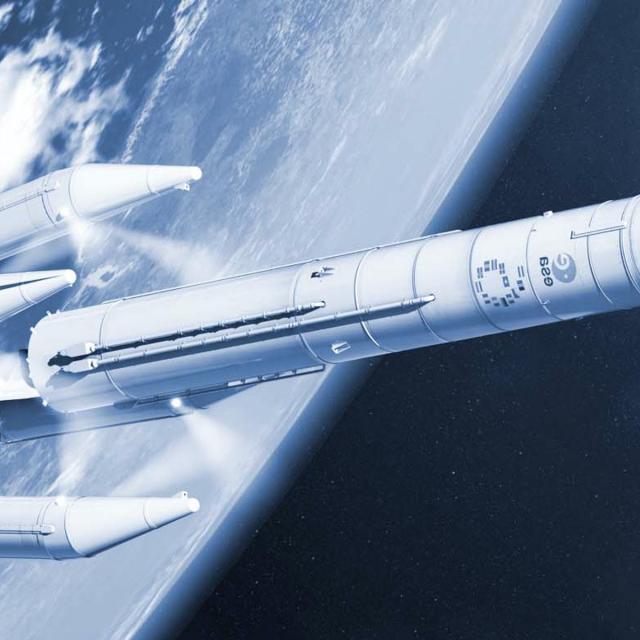
The movement of bodies in space (like spacecraft, satellites, and space stations) must be predicted and controlled with precision in order to ensure safety and efficacy. Kinematics is a field that develops descriptions and predictions of the motion of these bodies in 3D space. This course in Kinematics covers four major topic areas: an introduction to particle kinematics, a deep dive into rigid body kinematics in two parts (starting with classic descriptions of motion using the directional cosine matrix and Euler angles, and concluding with a review of modern descriptors like quaternions and Classical and Modified Rodrigues parameters).

Sep 7th 2026
4 Weeks
Understanding Modern Physics II: Quantum Mechanics and Atoms (Coursera) Coursera
The Hong Kong University of Science and Technology - HKUST

Understanding Modern Physics II: Quantum Mechanics and Atoms (Coursera)

The 20th century was known as the century of physics. In the past 120 years, concepts such as space, time, energy, entropy and particles were understood to much deeper levels. New paradigms of thinking such as relativity and quantum mechanics emerged. This course is the second course in the Understanding Modern Physics series, which covers an introduction to quantum mechanics, atomic physics and quantum information.

Aug 31st 2026
4 Weeks
Understanding Modern Physics III: Simplicity and Complexity (Coursera) Coursera
The Hong Kong University of Science and Technology - HKUST

Understanding Modern Physics III: Simplicity and Complexity (Coursera)

The 20th century was known as the century of physics. In the past 120 years, concepts such as space, time, energy, entropy and particles were understood to much deeper levels. New paradigms of thinking such as relativity and quantum mechanics emerged. This course is the third course in the Understanding Modern Physics series, which covers an introduction to action principle, fundamental particle physics, entropy & information and complexity.

Sep 7th 2026
4 Weeks
Fundamentals of Audio and Music Engineering: Part 1 Musical Sound & Electronics (Coursera) Coursera
University of Rochester

Fundamentals of Audio and Music Engineering: Part 1 Musical Sound & Electronics (Coursera)

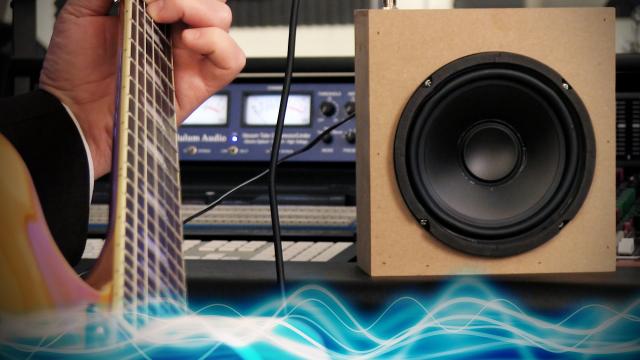
In this course students learn the basic concepts of acoustics and electronics and how they can applied to understand musical sound and make music with electronic instruments. Topics include: sound waves, musical sound, basic electronics, and applications of these basic principles in amplifiers and speaker design.

Aug 31st 2026
5-12 Weeks
The Discovery of the Higgs Boson (Coursera) Coursera
University of Edinburgh

The Discovery of the Higgs Boson (Coursera)

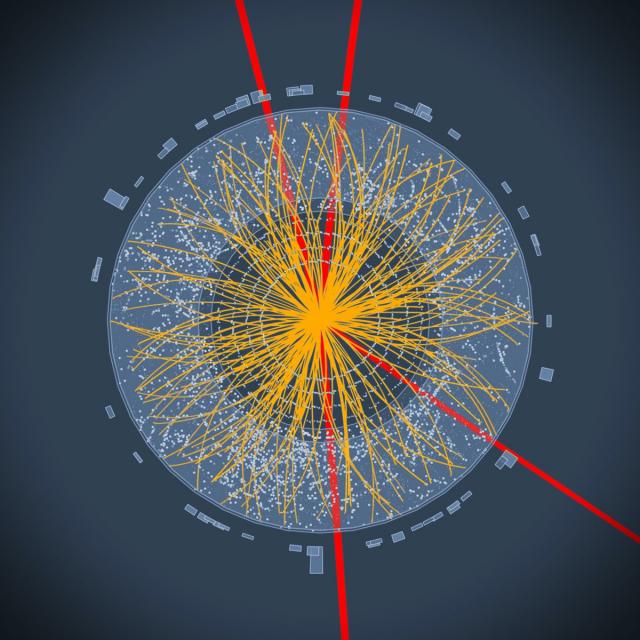
The discovery of a new fundamental particle at the Large Hadron Collider (LHC), CERN is the latest step in a long quest seeking to answer one of physics’ most enduring questions: why do particles have mass? The experiments’ much anticipated success confirms predictions made decades earlier by Peter Higgs and others, and offers a glimpse into a universe of physics beyond the Standard Model.

Aug 31st 2026
5-12 Weeks