Packet Switching Networks and Algorithms (Coursera)

Packet Switching Networks and Algorithms (Coursera)

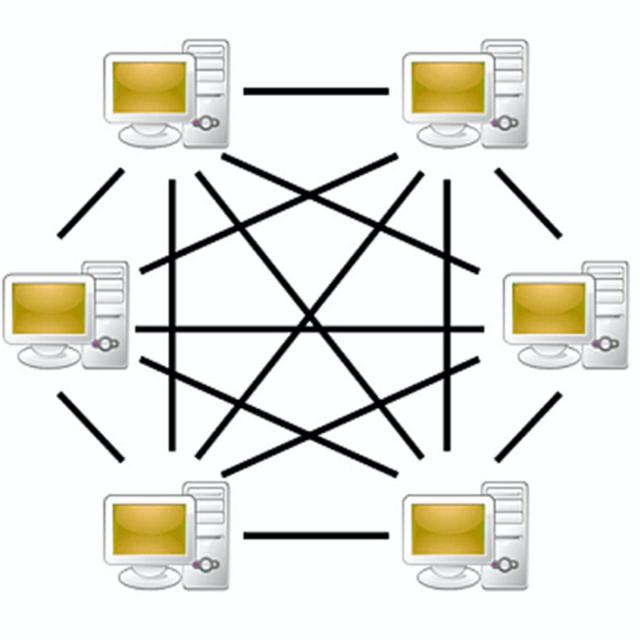
In this course, we deal with the general issues regarding packet switching networks. We discuss packet networks from two perspectives. One perspective involves external view of the network, and is concerned with services that the network provides to the transport layer that operates above it at the end systems. The second perspective is concerned with the internal operation of a network, including approaches directing information across the network, addressing and routing procedures, as well as congestion control inside the network.

Class Deals by MOOC List - Click here and see Coursera's Active Discounts, Deals, and Promo Codes.

Course 3 of 4 in the Computer Communications Specialization.

Syllabus

WEEK 1
Frame Switching and Packet Switching
This module introduces LAN bridges and data link layer switching, and then focuses on packet switching at the network layer. It discusses datagram, one basic packet switching approaches.

WEEK 2
Routing in Packet Networks
This module examines the other basic packet switching approach - virtual circuit, introduces basic approaches for selecting routes across the network, discusses the Bellman-ford algorithm for distance vector based shortest path routing.

WEEK 3
Shortest-Path Routing
This module introduces the link state routing, examines the Dijkstra algorithm for shortest-path routing, and discusses the applications of the distance vector and link state routing in real Internet protocols.

WEEK 4
Traffic Management
This module discusses packet-level traffic management operating in a short time scale, continues with traffic management at the flow level operating in a medium time scale. Common approaches including scheduling, queuing, admission control, and congestion control are discussed.

WEEK 5
Course Project - Packet Switching Networks and Algorithms
This is a comprehensive peer review assessment

Go to Class
MOOC List is learner-supported. When you buy through links on our site, we may earn an affiliate commission.

Related Courses

Algorithmic Thinking (Part 1) (Coursera) Coursera
Rice University

Algorithmic Thinking (Part 1) (Coursera)

Experienced Computer Scientists analyze and solve computational problems at a level of abstraction that is beyond that of any particular programming language. This two-part class is designed to train students in the mathematical concepts and process of "Algorithmic Thinking", allowing them to build simpler, more efficient solutions to computational problems.

Sep 7th 2026
4 Weeks
Programming Fundamentals (Coursera) Coursera
Duke University

Programming Fundamentals (Coursera)

Programming is an increasingly important skill, whether you aspire to a career in software development, or in other fields. This course is the first in the specialization Introduction to Programming in C, but its lessons extend to any language you might want to learn. This is because programming is fundamentally about figuring out how to solve a class of problems and writing the algorithm, a clear set of steps to solve any problem in its class.

Sep 7th 2026
4 Weeks
Information Theory (Coursera) Coursera
The Chinese University of Hong Kong

Information Theory (Coursera)

At the completion of this course, the student should be able to: demonstrate knowledge and understanding of the fundamentals of information theory; appreciate the notion of fundamental limits in communication systems and more generally all systems; develop deeper understanding of communication systems; apply the concepts of information theory to various disciplines in information science.

Sep 7th 2026
13-24 Weeks
Digital Signal Processing 4: Applications (Coursera) Coursera
École Polytechnique Fédérale de Lausanne

Digital Signal Processing 4: Applications (Coursera)

Digital Signal Processing is the branch of engineering that, in the space of just a few decades, has enabled unprecedented levels of interpersonal communication and of on-demand entertainment. By reworking the principles of electronics, telecommunication and computer science into a unifying paradigm, DSP is a the heart of the digital revolution that brought us CDs, DVDs, MP3 players, mobile phones and countless other devices.

Sep 14th 2026
3 Weeks
Computational Neuroscience (Coursera) Coursera
University of Washington

Computational Neuroscience (Coursera)

This course provides an introduction to basic computational methods for understanding what nervous systems do and for determining how they function. We will explore the computational principles governing various aspects of vision, sensory-motor control, learning, and memory. Specific topics that will be covered include representation of information by spiking neurons, processing of information in neural networks, and algorithms for adaptation and learning.

Sep 14th 2026
5-12 Weeks
Computer Science: Algorithms, Theory, and Machines (Coursera) Coursera
Princeton University

Computer Science: Algorithms, Theory, and Machines (Coursera)

This course introduces the broader discipline of computer science to people having basic familiarity with Java programming. It covers the second half of our book Computer Science: An Interdisciplinary Approach (the first half is covered in our Coursera course Computer Science: Programming with a Purpose, to be released in the fall of 2018). Our intent is to demystify computation and to build awareness about the substantial intellectual underpinnings and rich history of the field of computer science.

Sep 7th 2026
5-12 Weeks
Excel/VBA for Creative Problem Solving, Part 2 (Coursera) Coursera
University of Colorado Boulder

Excel/VBA for Creative Problem Solving, Part 2 (Coursera)

Excel/VBA for Creative Problem Solving, Part 2" builds off of knowledge and skills obtained in "Excel/VBA for Creative Problem Solving, Part 1" and is aimed at learners who are seeking to augment, expand, optimize, and increase the efficiency of their Excel spreadsheet skills by tapping into the powerful programming, automation, and customization capabilities available with Visual Basic for Applications (VBA).

Sep 7th 2026
4 Weeks
Cyber Incident Response (Coursera) Coursera
Infosec

Cyber Incident Response (Coursera)

The Cyber Incident Response course will give students an understanding of how incidents are responded to at a high level, as well as allow them to build important technical skills through the hands-on labs and projects. This course starts with a high-level discussion of what happens at each phase of responding to an incident, followed by a technical deep dive into some of the more exciting parts of memory, network, and host analysis and forensics. This course is for anyone wishing to apply learned forensics and offensive knowledge such as ethical hacking to the incident response process.

Sep 7th 2026
3 Weeks
Algorithmic Thinking (Part 2) (Coursera) Coursera
Rice University

Algorithmic Thinking (Part 2) (Coursera)

Experienced Computer Scientists analyze and solve computational problems at a level of abstraction that is beyond that of any particular programming language. This two-part class is designed to train students in the mathematical concepts and process of "Algorithmic Thinking", allowing them to build simpler, more efficient solutions to computational problems.

Sep 7th 2026
4 Weeks
Image and video processing: From Mars to Hollywood with a stop at the hospital (Coursera) Coursera
Duke University

Image and video processing: From Mars to Hollywood with a stop at the hospital (Coursera)

In this course, you will learn the science behind how digital images and video are made, altered, stored, and used. We will look at the vast world of digital imaging, from how computers and digital cameras form images to how digital special effects are used in Hollywood movies to how the Mars Rover was able to send photographs across millions of miles of space.

Sep 7th 2026
5-12 Weeks