EdX

Oscar Wilde, écrivain et penseur du langage (edX)

Offered by Sorbonne University,
Oscar Wilde, écrivain et penseur du langage (edX)

Ce MOOC présente l’œuvre entière d’Oscar Wilde: conférences, poésie, contes, roman, théâtre, essais, De profundis. L’accent est mis sur les relations de Wilde avec la France, sa langue et sa littérature, dont l’écrivain avait une connaissance profonde, et la nature innovante de sa relation au langage et à la littérature.

Class Deals by MOOC List - Click here and see EdX's Active Discounts, Deals, and Promo Codes.

Oscar Wilde est l’auteur d’une œuvre abondante qui illustre tous les genres littéraires.
Parfois mal compris, sans doute en raison de la confidence qu’il aurait faite à André Gide (« J’ai mis tout mon génie dans ma vie; je n’ai mis que mon talent dans mon œuvre ») dont tout invite à penser qu’elle n’est pas authentique, Wilde, souvent perçu comme un esthète brillant ancré dans son siècle, était au contraire un écrivain innovant qui a bel et bien mis son génie dans son œuvre.
Si sa culture était immense, il a su l’utiliser pour créer une œuvre profondément originale qui s’interroge en permanence sur le pouvoir, ou sur l’impuissance, du langage.
Wilde avait également une pensée politique qui remettait en cause les présupposés de son temps, et son théâtre, notamment, rend compte de sa capacité à déstabiliser les catégories établies, par exemple celles du « masculin » et du « féminin », avec les implications idéologiques que cela suppose.
Ce MOOC s’intéresse aussi, par conséquent, à sa postérité qui montre bien que son œuvre fait sens pour les lecteurs contemporains.

Syllabus

Séance I : Oscar Wilde, écrivain
1ère séquence : Wilde, l’Irlandais
2ème séquence : Oxford, John Ruskin et Walter Pater
3ème séquence : Création d’une réputation : Oscar Wilde en Amérique
4ème séquence : La conquête de Londres, succès littéraires
5ème séquence : Les procès et la prison
6ème séquence : Mort et transfiguration

Séance II : Oscar Wilde, poète
1ère séquence : Wilde, lecteur
2ème séquence : Wilde, jeune poète
3ème séquence : « La Sphinge »
4ème séquence : Les poèmes en prose
5ème séquence : La Ballade de la Geôle de Reading (I)
6ème séquence : La Ballade de la Geôle de Reading (II)

Séance III : Les essais critiques et De profundis
1ère séquence : Conférences en Amérique (1882)
2ème séquence : « L'Âme de l'homme sous le socialisme » (1891)
3ème séquence : Intentions I
4ème séquence : Intentions II
5ème séquence : De profundis I. Rédaction et réception
6ème séquence : De profundis II. Analyse de l’œuvre

Séance IV : Le Portrait de Dorian Gray
1ère séquence : Genèse du roman
2ème séquence : Rédaction, parution et réception du roman
3ème séquence : Les noms des deux personnages principaux
4ème séquence : Á quel genre littéraire le roman appartient-il ?
5ème séquence : Un roman psychologique
6ème séquence : Le Portrait de Dorian Gray et la musique

Séance V : Le théâtre d’Oscar Wilde
1ère séquence : Oscar Wilde, homme de théâtre
2ème séquence : Les influences I
3ème séquence : Les influences II
4ème séquence : Les premières pièces (Véra, ou les Nihilistes, La Duchesse de Padoue, L’Éventail de lady Windermere)
5ème séquence : Salomé (1892)
6ème séquence : Une femme sans importance, Un mari idéal et L’importance d’être Constant

Séance VI : Oscar Wilde, penseur et précurseur (philosophie, psychanalyse et théorie du genre).
Conclusion : sa postérité littéraire (6 séquences)
1ère séquence : Wilde et Hegel
2ème séquence : Wilde et Nietzsche: un rapprochement
3ème séquence : Le langage selon Wilde et Nietzsche
4ème séquence : Oscar Wilde et la psychanalyse
5ème séquence : Oscar Wilde et la théorie du genre
6ème séquence : Postérité littéraire

Go to Class
MOOC List is learner-supported. When you buy through links on our site, we may earn an affiliate commission.

Related Courses

Shakespeare's Hamlet: The Ghost (edX) EdX
HarvardX,Harvard University

Shakespeare's Hamlet: The Ghost (edX)

Explore the haunting figure at the heart of one of William Shakespeare’s most famous plays. In the first act of William Shakespeare’s Hamlet, the Ghost of the dead King of Denmark appears to his son, setting off a chain of events that culminates in the play’s notoriously bloody finale. But how would this mysterious figure have been understood in Shakespeare’s time?

Self Paced
Self-Paced
Plagues, Witches, and War: The Worlds of Historical Fiction (Coursera) Coursera
University of Virginia

Plagues, Witches, and War: The Worlds of Historical Fiction (Coursera)

A unique and exciting introduction to the genre and craft of historical fiction, for curious students, aspiring authors--anyone with a passion for the past. Read classics of the genre, encounter bestselling writers of historical fiction, and discover your own historical archive while interacting with a global community of interested readers.

Oct 12th 2026
5-12 Weeks
Online Games: Literature, New Media, and Narrative (Coursera) Coursera
Vanderbilt University

Online Games: Literature, New Media, and Narrative (Coursera)

Intended for both newcomers who are curious about video games and experienced gamers who want to reflect on their passion, this course will explore what happens to stories, paintings, and films when they become the basis of massively multiplayer online games. The Lord of the Rings trilogy—the novels, films, and video game—are our central example of how “remediation” transforms familiar stories as they move across media.

Oct 12th 2026
5-12 Weeks
Uncovering the Voices of Japanese Literature (edX) EdX
Waseda University,WasedaX

Uncovering the Voices of Japanese Literature (edX)

This course explores issues of agency in premodern and modern Japan. Discover many facets of the Japanese literary, theatrical, and intellectual traditions which, although important, are rarely taught around the world. This course will provide you with an introduction and a basis for further study in Japanese history, culture, literature, arts, and other areas which you may intend to explore in the future.

Self Paced
Self-Paced
Japanese Books: From Manuscript to Print (edX) EdX
HarvardX,Harvard University

Japanese Books: From Manuscript to Print (edX)

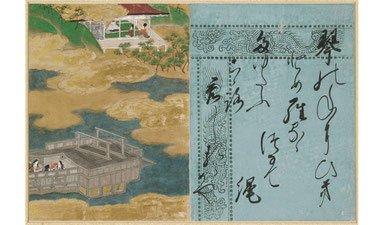
This course expands the definition of the “book” to include scrolls and albums, focusing on the reading experience of a variety of formats in Japan. You will begin by examining rare and beautifully preserved manuscripts in the Harvard Art Museums in an introduction exploring the material properties of Japanese books and scrolls, binding techniques, and important terminology.

Self Paced
Self-Paced
Modern Masterpieces of World Literature (edX) EdX
HarvardX,Harvard University

Modern Masterpieces of World Literature (edX)

Examine how great modern writers capture the intricacies of our globalized world and how their works circulate within that world to find their own audiences. Based on the second half of the Masterpieces of World Literature edX MOOC, this short literature course examines how writers reach beyond national and linguistic boundaries as worldly readers and travelers, and how their modern fictions rise to the status of world literature.

Self Paced
Self-Paced
AP® English Literature & Composition – Part 2: Poems (edX) EdX
University of California, Berkeley,BerkeleyX

AP® English Literature & Composition – Part 2: Poems (edX)

Learn how to read and interpret poetry and enhance your reading and writing skills in preparation for the AP® English Literature & Composition exam. This course prepares you to read more deeply and write more clearly about works of literature. Through an engaging collection of videos, authentic readings, and support material from a variety of sources, you will learn to appreciate literature from different genres. You will learn about different genres of poetry and the history of some of our greatest poets.

Self Paced
Self-Paced
The American Renaissance: Classic Literature of the 19th Century (edX) EdX
DartmouthX

The American Renaissance: Classic Literature of the 19th Century (edX)

Explore the writings of famous American authors from Ralph Waldo Emerson and Harriet Beecher Stowe to Mark Twain, and examine the historic role Dartmouth College played in their formation. What is the American Renaissance? How did Dartmouth help foster the formation of the American Renaissance and its reevaluation and reinvention in the twentieth? Why should we, as twenty-first century readers, concern ourselves with this literature?

Self Paced
4 Weeks