EdX

Organic Electronic Devices (edX)

Offered by Purdue University, PurdueX,
Organic Electronic Devices (edX)

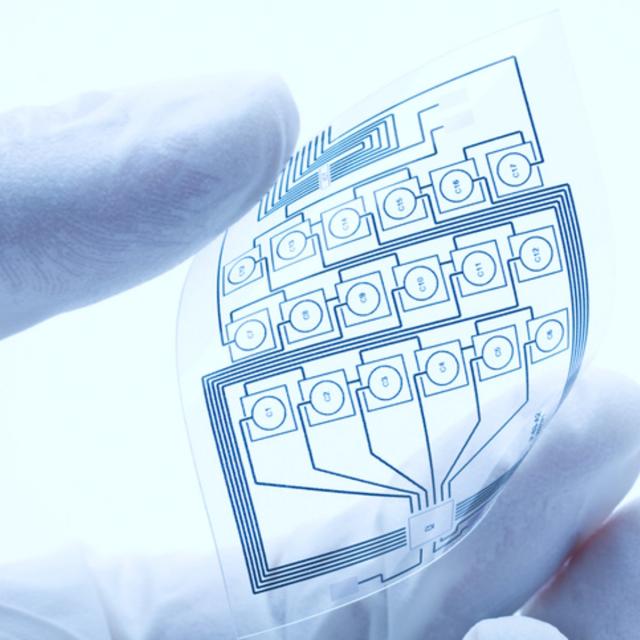
Using molecules and polymers to create the next generation of electronic devices. Organic electronic devices are quickly making their way into the commercial world, with innovative thin mobile devices, high-resolution displays, and photovoltaic cells.

Class Deals by MOOC List - Click here and see EdX's Active Discounts, Deals, and Promo Codes.

The future holds even greater potential for this technology, with an entirely new generation of ultralow-cost, lightweight and even flexible electronic devices, which will perform functions traditionally accomplished with much more expensive components based on conventional semiconductor materials, such as silicon.

Learn more about this highly promising technology, which is based on small molecules and polymers, and how these materials can be implemented successfully in established (e.g., organic light-emitting devices (OLEDs), organic photovoltaic (OPV) devices) and emerging (e.g., thermoelectric (TE) generators) organic electronic modules.
In this course you will gain the ability to tie molecular transport phenomena with macroscopic device response such that you will be well-prepared to analyze, troubleshoot, and design the next generation of organic electronic materials and devices.
This course has short lectures with quizzes, homework, and exams.

What you'll learn

  • Synthesis of Organic Semiconductors.

. Identify common mechanisms for the synthesis of small molecule and polymer semiconductors
. Describe the mechanism of controlled polymerization techniques for macromolecular semiconductors
. Interpret spectroscopic, chromatographic, and molecular characterization data in order to predict the structure of the organic semiconductor.

  • Charge Generation and Transport and Optoelectronic Characterization of Organic Semiconductors.

. Explain how molecular orbital levels are related to the optoelectronic properties of organic semiconductors
. Distinguish between different models for charge transport in organic semiconductors; describe clearly the difference between charge generation and transport in organic and inorganic semiconductors.

  • Device Application of Organic Semiconductors.

. Explain how organic electronic devices operate and how to apply known equations to evaluate device performance
. Critique the potential for organic electronic materials to supplement or replace inorganic semiconducting devices.

Go to Class
MOOC List is learner-supported. When you buy through links on our site, we may earn an affiliate commission.

Related Courses

Designing Electronics for Recycling in a Circular Economy (edX) EdX
Delft University of Technology,DelftX

Designing Electronics for Recycling in a Circular Economy (edX)

Discover the latest developments in Design for Recycling (DfR) of electrical and electronic equipment (EEE) and the application of recycled plastics into new products. Electronic products bring countless benefits to society, but their production and waste treatment also lead to numerous negative environmental and economic impacts. Since E-waste is the world’s fastest growing waste stream, governments are setting ambitious targets to help this industry transition towards a circular economy.

Nov 15th 2023
4 Weeks
Manufacturing Systems I (edX) EdX
MIT,MITx

Manufacturing Systems I (edX)

Learn about manufacturing systems and ways to analyze them in terms of material flow and storage, information flow, capacities, and times and durations of events, especially random events. In this course you will learn how to analyze manufacturing systems to optimize performance and control cost. You will develop an understanding of seemingly opaque production lines with a particular emphasis on random disruptive events – their effects and how to deal with them, as well as inventory dynamics and management.

Jan 9th 2024
5-12 Weeks
Recent Advances in Freeform Electronics (Coursera) Coursera
Yonsei University

Recent Advances in Freeform Electronics (Coursera)

In this course, the learners will understand fundamental basic backgrounds of p-n junctions, diodes and MOSFETs (Metal Oxide Semiconductor Field Effect Transistors). Also, recent approaches on flexible / stretchable electronics, transparent optoelectronics, and printed electronics using one dimensional or two dimensional nanomaterials will be introduced.

Jun 15th 2026
5-12 Weeks
Supply Chains for Manufacturing: Inventory Analytics (edX) EdX
MIT,MITx

Supply Chains for Manufacturing: Inventory Analytics (edX)

Learn about effective supply chain strategies for companies that operate globally, with emphasis on how to plan and integrate supply chain components into a coordinated system. This course was formerly known as Supply Chains for Manufacturing I. A supply chain entails two or more parties that are linked together by material, information and money flows.

Mar 6th 2024
5-12 Weeks
Fundamentals of Current Flow (edX) EdX
Purdue University,PurdueX

Fundamentals of Current Flow (edX)

Gain a new perspective on electron flow in solids with this insightful introduction. Very different from what is taught in standard courses, "Fundamentals of Current Flow" provides a unified conceptual framework for ballistic and diffusive transport of both electrons and phonons - essential information for understanding nanoelectronic devices.

Jan 8th 2024
5-12 Weeks
Applied Quantum Computing II: Hardware (edX) EdX
Purdue University,PurdueX

Applied Quantum Computing II: Hardware (edX)

Learn how present-day material platforms are built to perform quantum information processing tasks. This course is part 2 of the series of Quantum computing courses, which covers aspects from fundamentals to present-day hardware platforms to quantum software and programming. The goal of part 2 is to provide the essential understanding of how the fundamental quantum phenomena discussed in part 1 can be realized in various material platforms and the underlying challenges faced by each platform.

Feb 12th 2024
5-12 Weeks
Supply Chain Technology and Systems (edX) EdX
MIT,MITx

Supply Chain Technology and Systems (edX)

Learn how technology is used in supply chain systems from fundamental concepts to innovative applications. There are underlying fundamental principles and concepts that apply to all supply chains, which can be expressed in relatively straightforward models. However, to actually implement them across a real supply chain requires the use of technology across multiple systems. Supply chains have a long history of using technology to improve efficiency and effectiveness. The shear scale and scope of most supply chains require many distinct systems to interact with each other.

Jun 26th 2024
13-24 Weeks
Introduction to Biology - The Secret of Life (edX) EdX
MIT,MITx

Introduction to Biology - The Secret of Life (edX)

Explore the secret of life through the basics of biochemistry, genetics, molecular biology, recombinant DNA, genomics and rational medicine. 7.00x is an introductory level biology course hosted by professor Eric Lander, who was one of the leaders of the Human Genome Project. The course content reflects the topics taught in the MIT introductory biology courses and many biology courses across the world.

Mar 12th 2024
13-24 Weeks