Ordered Data Structures (Coursera)

Ordered Data Structures (Coursera)

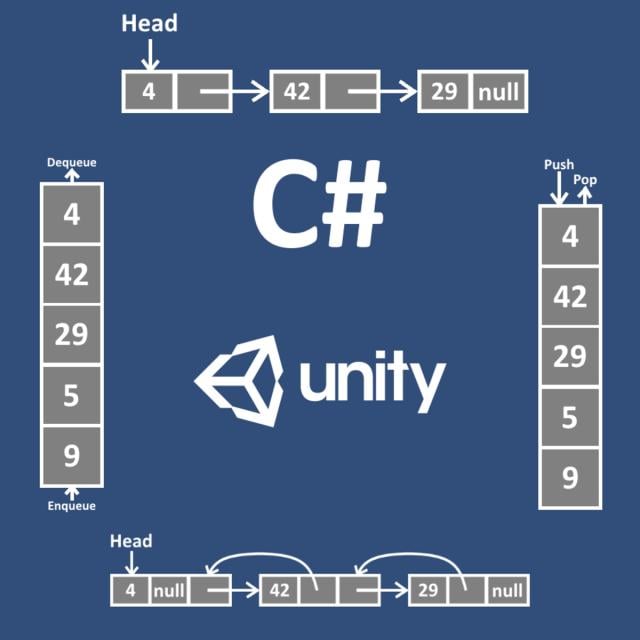
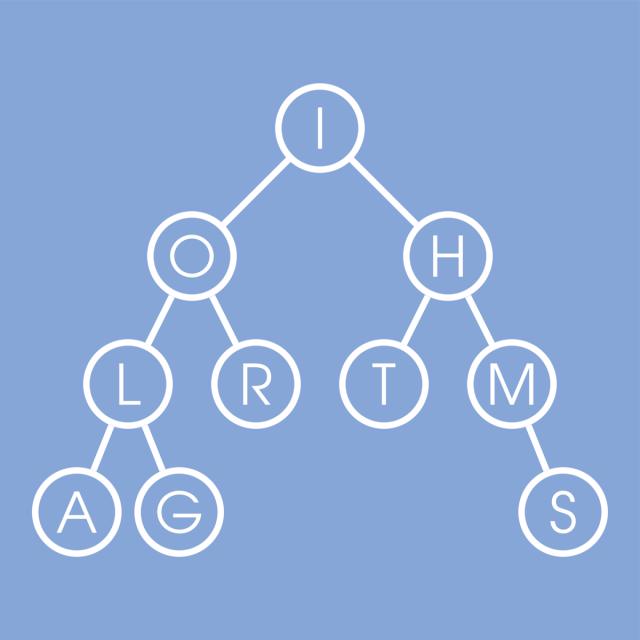
In this course, you will learn new data structures for efficiently storing and retrieving data that is structured in an ordered sequence. Such data includes an alphabetical list of names, a family tree, a calendar of events or an inventory organized by part numbers. The specific data structures covered by this course include arrays, linked lists, queues, stacks, trees, binary trees, AVL trees, B-trees and heaps. This course also shows, through algorithm complexity analysis, how these structures enable the fastest algorithms to search and sort data.

Class Deals by MOOC List - Click here and see Coursera's Active Discounts, Deals, and Promo Codes.

Course 2 of 3 in the Accelerated Computer Science Fundamentals Specialization.

Course Syllabus

Week 1: Orientation; Linear Structures
Week 2: Introduction to Tree Structures
Week 3: Advanced Tree Structures
Week 4: Heap Structures


Go to Class
MOOC List is learner-supported. When you buy through links on our site, we may earn an affiliate commission.

Related Courses

Python Scripting: Dates, Classes and Collections (Coursera) Coursera
LearnQuest

Python Scripting: Dates, Classes and Collections (Coursera)

This course is the second course in a series that aims to prepare you for a role working as a programmer. In this course, you will be introduced to the four main concepts in programming: Advanced String Operations and Dates, Modeling Classes, Development of Classes and Collections. Labs will allow the students to apply the material in the lectures in simple computer programs designed to re-enforce the material in the lesson.

Jun 22nd 2026
4 Weeks
Unordered Data Structures (Coursera) Coursera
University of Illinois at Urbana-Champaign

Unordered Data Structures (Coursera)

The Unordered Data Structures course covers the data structures and algorithms needed to implement hash tables, disjoint sets and graphs. These fundamental data structures are useful for unordered data. For example, a hash table provides immediate access to data indexed by an arbitrary key value, that could be a number (such as a memory address for cached memory), a URL (such as for a web cache) or a dictionary.

Jun 24th 2026
4 Weeks
Algorithmic Toolbox (Coursera) Coursera
University of California, San Diego,Higher School of Economics - HSE University

Algorithmic Toolbox (Coursera)

The course covers basic algorithmic techniques and ideas for computational problems arising frequently in practical applications: sorting and searching, divide and conquer, greedy algorithms, dynamic programming. We will learn a lot of theory: how to sort data and how it helps for searching; how to break a large problem into pieces and solve them recursively; when it makes sense to proceed greedily; how dynamic programming is used in genomic studies. You will practice solving computational problems, designing new algorithms, and implementing solutions efficiently (so that they run in less than a second).

Jun 22nd 2026
5-12 Weeks
Object-Oriented Data Structures in C++ (Coursera) Coursera
University of Illinois at Urbana-Champaign

Object-Oriented Data Structures in C++ (Coursera)

This course teaches learners how to write a program in the C++ language, including how to set up a development environment for writing and debugging C++ code and how to implement data structures as C++ classes. It is the first course in the Accelerated CS Fundamentals specialization, and subsequent courses in this specialization will be using C++ as the language for implementing the data structures covered in class.

Jun 24th 2026
4 Weeks
Advanced Algorithms and Complexity (Coursera) Coursera
University of California, San Diego,Higher School of Economics - HSE University

Advanced Algorithms and Complexity (Coursera)

You've learned the basic algorithms now and are ready to step into the area of more complex problems and algorithms to solve them. Advanced algorithms build upon basic ones and use new ideas. We will start with networks flows which are used in more typical applications such as optimal matchings, finding disjoint paths and flight scheduling as well as more surprising ones like image segmentation in computer vision.

Jun 22nd 2026
5-12 Weeks
Crash Course on Python (Coursera) Coursera
Google

Crash Course on Python (Coursera)

This course is designed to teach you the foundations in order to write simple programs in Python using the most common structures. No previous exposure to programming is needed. By the end of this course, you'll understand the benefits of programming in IT roles; be able to write simple programs using Python; figure out how the building blocks of programming fit together; and combine all of this knowledge to solve a complex programming problem.

Jun 23rd 2026
5-12 Weeks
Java Programming: Arrays, Lists, and Structured Data (Coursera) Coursera
Duke University

Java Programming: Arrays, Lists, and Structured Data (Coursera)

Build on the software engineering skills you learned in “Java Programming: Solving Problems with Software” by learning new data structures. Use these data structures to build more complex programs that use Java’s object-oriented features. At the end of the course you will write an encryption program and a program to break your encryption algorithm.

Jun 15th 2026
4 Weeks
Introduction to Python Programming (Coursera) Coursera
University of Pennsylvania

Introduction to Python Programming (Coursera)

This course provides an introduction to programming and the Python language. Students are introduced to core programming concepts like data structures, conditionals, loops, variables, and functions. This course includes an overview of the various tools available for writing and running Python, and gets students coding quickly. It also provides hands-on coding exercises using commonly used data structures, writing custom functions, and reading and writing to files.

Jun 22nd 2026
4 Weeks
Algorithms on Graphs (Coursera) Coursera
University of California, San Diego,Higher School of Economics - HSE University

Algorithms on Graphs (Coursera)

If you have ever used a navigation service to find optimal route and estimate time to destination, you've used algorithms on graphs. Graphs arise in various real-world situations as there are road networks, computer networks and, most recently, social networks! If you're looking for the fastest time to get to work, cheapest way to connect set of computers into a network or efficient algorithm to automatically find communities and opinion leaders in Facebook, you're going to work with graphs and algorithms on graphs.

Jun 22nd 2026
5-12 Weeks
Python Data Analysis (Coursera) Coursera
Rice University

Python Data Analysis (Coursera)

This course will continue the introduction to Python programming that started with Python Programming Essentials and Python Data Representations. We'll learn about reading, storing, and processing tabular data, which are common tasks. We will also teach you about CSV files and Python's support for reading and writing them. CSV files are a generic, plain text file format that allows you to exchange tabular data between different programs. These concepts and skills will help you to further extend your Python programming knowledge and allow you to process more complex data.

Jun 15th 2026
4 Weeks