Data Structures for Designers Using Python (Coursera)

Data Structures for Designers Using Python (Coursera)

In Data Structures for Designers Using Python, you’ll delve into the critical concepts of data structures and object-oriented programming, tailored specifically for design and visual content creation applications. You’ll be introduced to object-oriented programming principles in Python, enabling you to model real-world scenarios and design problems using objects and classes.

Class Deals by MOOC List - Click here and see Coursera's Active Discounts, Deals, and Promo Codes.

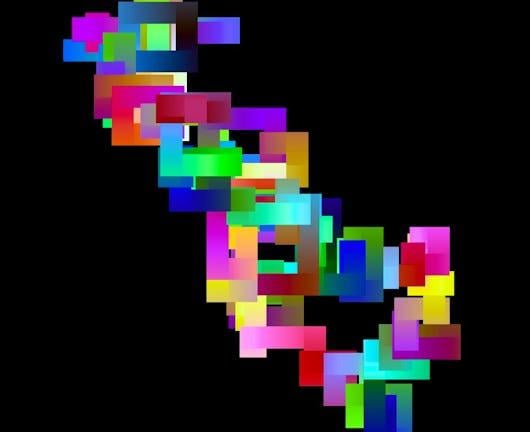
You will use the Processing platform to draw lines, rectangles, ellipses, and more through the program’s Python mode. Learn about vector math and how it can be manipulated to store, organize, and manage data efficiently in creative projects. These approaches to Python allow you to gain a deeper understanding of the programming language while enhancing your ability to conceptualize and implement sophisticated design solutions.
This is the second course in a three-part series, Programming for Designers, aimed at equipping designers, including those in architecture, graphic design, industrial design, game design, and visual artists, with essential computational design skills.
This course is part of the Programming for Designers Specialization.

What you'll learn

  • Learn to use Python data structures to create intricate designs
  • Use object-oriented programming to simulate complex behaviors and relationships in design composition
  • Use Python to create dynamic motions and transformations in digital artwork

Syllabus

Introduction to Data Structures
Our journey begins with lists and dictionaries, the fundamental data structures for organizing and storing data in Python. You'll learn how to manipulate these structures using examples that involve typography, exploring how text can be dynamically integrated and manipulated to create engaging visual compositions.

Grids
In our second week, we delve into grid structures, learning how to navigate and manipulate grids to perform neighbor operations. This knowledge is crucial for creating complex patterns and interactions within your designs, enabling a deeper exploration of spatial relationships and connectivity.

Vectors
Vectors and vector math form the backbone of generative art and design. This week focuses on understanding vectors and applying vector math to create dynamic and organic generative drawings. We will explore the power of vectors in modeling motion, forces, and other natural phenomena, translating these concepts into visually stunning designs.

Object Oriented Programming
Object-oriented programming (OOP) introduces a new way of thinking about code, focusing on classes and instances. This week, you'll learn how to define classes and create instances, encapsulating both data and functions into objects. This approach will enable you to organize your code more effectively and create more modular and flexible designs.

Object Interactions
We conclude our course by expanding our exploration of object-oriented programming. You'll learn how to work with multiple classes and how objects can interact with each other to simulate complex systems. This week provides the groundwork for developing advanced interactive and generative projects, where the interaction between multiple elements creates rich, dynamic systems.
Go to Class
MOOC List is learner-supported. When you buy through links on our site, we may earn an affiliate commission.

Related Courses

Introduction to Data Science in Python (Coursera) Coursera
University of Michigan

Introduction to Data Science in Python (Coursera)

This course will introduce the learner to the basics of the python programming environment, including fundamental python programming techniques such as lambdas, reading and manipulating csv files, and the numpy library. The course will introduce data manipulation and cleaning techniques using the popular python pandas data science library and introduce the abstraction of the Series and DataFrame as the central data structures for data analysis, along with tutorials on how to use functions such as groupby, merge, and pivot tables effectively. By the end of this course, students will be able to take tabular data, clean it, manipulate it, and run basic inferential statistical analyses.

Jun 22nd 2026
4 Weeks
Delivery Problem (Coursera) Coursera
University of California, San Diego,Higher School of Economics - HSE University

Delivery Problem (Coursera)

We’ll implement (in Python) together efficient programs for a problem needed by delivery companies all over the world millions times per day — the travelling salesman problem. The goal in this problem is to visit all the given places as quickly as possible. How to find an optimal solution to this problem quickly? We still don’t have provably efficient algorithms for this difficult computational problem and this is the essence of the P versus NP problem, the most important open question in Computer Science.

Jun 22nd 2026
3 Weeks
Intermediate Object-Oriented Programming for Unity Games (Coursera) Coursera
University of Colorado System

Intermediate Object-Oriented Programming for Unity Games (Coursera)

This course is the third course in the specialization about learning how to develop video games using the C# programming language and the Unity game engine on Windows or Mac. Why use C# and Unity instead of some other language and game engine? Well, C# is a really good language for learning how to program and then programming professionally. Also, the Unity game engine is very popular with indie game developers; Unity games were downloaded 16,000,000,000 times in 2016! Finally, C# is one of the programming languages you can use in the Unity environment.

Jun 22nd 2026
4 Weeks
Using Python to Interact with the Operating System (Coursera) Coursera
Google

Using Python to Interact with the Operating System (Coursera)

By the end of this course, you’ll be able to manipulate files and processes on your computer’s operating system. You’ll also have learned about regular expressions -- a very powerful tool for processing text files -- and you’ll get practice using the Linux command line on a virtual machine. And, this might feel like a stretch right now, but you’ll also write a program that processes a bunch of errors in an actual log file and then generates a summary file. That’s a super useful skill for IT Specialists to know.

Jun 23rd 2026
5-12 Weeks
Python Classes and Inheritance (Coursera) Coursera
University of Michigan

Python Classes and Inheritance (Coursera)

This course introduces classes, instances, and inheritance. You will learn how to use classes to represent data in concise and natural ways. You'll also learn how to override built-in methods and how to create "inherited" classes that reuse functionality. You'll also learn about how to design classes. Finally, you will be introduced to the good programming habit of writing automated tests for their own code.

Jun 22nd 2026
3 Weeks
Advanced Algorithms and Complexity (Coursera) Coursera
University of California, San Diego,Higher School of Economics - HSE University

Advanced Algorithms and Complexity (Coursera)

You've learned the basic algorithms now and are ready to step into the area of more complex problems and algorithms to solve them. Advanced algorithms build upon basic ones and use new ideas. We will start with networks flows which are used in more typical applications such as optimal matchings, finding disjoint paths and flight scheduling as well as more surprising ones like image segmentation in computer vision.

Jun 22nd 2026
5-12 Weeks
Machine Learning: Classification (Coursera) Coursera
University of Washington

Machine Learning: Classification (Coursera)

Case Studies: Analyzing Sentiment & Loan Default Prediction. In our case study on analyzing sentiment, you will create models that predict a class (positive/negative sentiment) from input features (text of the reviews, user profile information,...). In our second case study for this course, loan default prediction, you will tackle financial data, and predict when a loan is likely to be risky or safe for the bank.

Jun 22nd 2026
5-12 Weeks
Unordered Data Structures (Coursera) Coursera
University of Illinois at Urbana-Champaign

Unordered Data Structures (Coursera)

The Unordered Data Structures course covers the data structures and algorithms needed to implement hash tables, disjoint sets and graphs. These fundamental data structures are useful for unordered data. For example, a hash table provides immediate access to data indexed by an arbitrary key value, that could be a number (such as a memory address for cached memory), a URL (such as for a web cache) or a dictionary.

Jun 24th 2026
4 Weeks
Advanced Data Structures in Java (Coursera) Coursera
University of California, San Diego

Advanced Data Structures in Java (Coursera)

How does Google Maps plan the best route for getting around town given current traffic conditions? How does an internet router forward packets of network traffic to minimize delay? How does an aid group allocate resources to its affiliated local partners? To solve such problems, we first represent the key pieces of data in a complex data structure. In this course, you’ll learn about data structures, like graphs, that are fundamental for working with structured real world data.

Jun 22nd 2026
5-12 Weeks