EdX

New Zealand Landscape as Culture: Motu (Islands) (edX)

New Zealand Landscape as Culture: Motu (Islands) (edX)

Come and learn about the islands of New Zealand, 42 degrees south of the equator and rich in stories. In this course, you will learn about the islands of New Zealand, or Ngā Motu o Aotearoa, where humans have lived for a thousand years. The indigenous Māori people of New Zealand tell a powerful origin story about our islands. New Zealanders take pride in being islanders as it is part of their story, national identity and culture.

Class Deals by MOOC List - Click here and see EdX's Active Discounts, Deals, and Promo Codes.

Remote from other landmasses, you will learn how the islands of New Zealand have a unique geology and form part of the Pacific ‘Ring of Fire.’ Our long history of remoteness has been expressed by a New Zealand poet as ‘Distance looks our way.' But the idea of distance is a European one - who are we far away from? For the peoples of the Pacific we inhabit one group of islands in the Pacific, 'a sea of Islands.'

New Zealand is a bicultural nation. Māori voyagers named this chain of islands Aotearoa or land of the long white cloud. Colonisation by the British in the nineteenth century produced a complex history. You will hear about the Māori world view, and Pākehā, or European, New Zealand culture, from Dr Maria Bargh (Te Arawa and Ngāti Awa) who teaches politics in Te Kawa a Māui, the School of Māori Studies, and Professor Lydia Wevers, a specialist in New Zealand literature and history. With guest appearances from other experts, the course will also explore the geology, popular culture, politics, art and literature of landscape. You will learn to think about landscape as an expression of culture and be able to transfer these ideas to the landscape you live in.
Māori refer to their home landscape as ‘whenua.’ We will take you to the whenua called Aotearoa.

What you'll learn

  • An Indigenous narrative of Aotearoa
  • The geology and formation of the islands of New Zealand
  • The role of Oceanic voyaging in Pacific cultures
  • How islands are represented in New Zealand art, literature and national identity

Go to Class
MOOC List is learner-supported. When you buy through links on our site, we may earn an affiliate commission.

Related Courses

Visualizing Postwar Tokyo, Part 2 (edX) EdX
The University of Tokyo,UTokyoX

Visualizing Postwar Tokyo, Part 2 (edX)

Identify the geopolitics historically involved in the practice of “visualizing postwar Tokyo.” The history of postwar Tokyo reveals an essential feature of the modern city, i.e., the city as a place of visualities. In postwar Tokyo, countless gazes fell upon others; gazes from and upon Americans and the Emperor, gazes going up skyscrapers or rushing aggressively through the cityscape, and gazes twining and wriggling among classes, genders, and ethnic groups in downtown Tokyo.

Self Paced
Self-Paced
China and Communism (edX) EdX
HarvardX,Harvard University

China and Communism (edX)

Explore the Maoist period of China, from the Communist Party to the death of Mao and the reopening of China. How did the Communists conquer China? What role does culture play? What are the successes and failures of the Chinese Communist Party after seizing power in 1949? What constitutes liberation?

Self Paced
Self-Paced
New Zealand History, Culture and Conflict: A Museum Perspective (FutureLearn) FutureLearn
Museum of New Zealand Te Papa Tongarewa

New Zealand History, Culture and Conflict: A Museum Perspective (FutureLearn)

Discover the social history of Aotearoa New Zealand, learning how the country’s bicultural national consciousness was formed. Identify the factors that have contributed to New Zealand’s cultural identity. New Zealand’s social history is built on a foundation of exploration and colonial conflict. On this three-week course, you’ll access artefacts, treasures, and exhibitions within Te Papa Tongarewa’s collections to discover how New Zealand culture has evolved over time, identifying key historical moments that have impacted the formation of a national identity.

Self Paced
3 Weeks
Smart Cities: Social Change Through Technology (FutureLearn) FutureLearn
University of Canterbury

Smart Cities: Social Change Through Technology (FutureLearn)

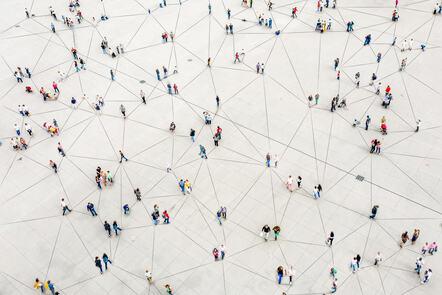
Learn from New Zealand’s inspirational smart city projects, and see how you can apply these principles to your own context. Gain insights into smart cities from the experts at the University of Canterbury. Smart cities harness the power of digital technology. Through innovative data collection, cities can use these insights to manage resources and operations more efficiently, and promote sustainable development.

Jan 31st 2022
5-12 Weeks
文物精品与文化中国:农业与制造业 | Relics in Chinese History - Part 1: Agriculture and Manufacturing (edX) EdX
Tsinghua University,TsinghuaX

文物精品与文化中国:农业与制造业 | Relics in Chinese History - Part 1: Agriculture and Manufacturing (edX)

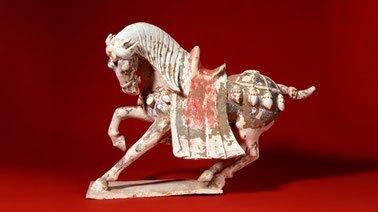
Discover manufacturing and agriculture’s role in the history of China as we explore Chinese culture through artifacts and relics. 本课程以精品文物作引子,将学术界探索中华文明的过程作为线索,介绍古代中国在造船、玉器等诸多领域的杰出成就

Self Paced
Self-Paced
Chinese History From Warring States to the Tang Dynasty | 资治通鉴 (edX) EdX
Tsinghua University,TsinghuaX

Chinese History From Warring States to the Tang Dynasty | 资治通鉴 (edX)

Guides you through the Chinese masterpiece _Zizhi Tongjian, _an unprecedented work of governance and philosophical thinking spanning from the Warring States Period to the Tang Dynasty. Through the teacher's guided reading, students can go deep into the interior of this classic text, gain an overview of thousands of years of history, and improve their literacy in Chinese studies.

Self Paced
Self-Paced
Literati China: Examinations, Neo-Confucianism, and Later Imperial China (edX) EdX
HarvardX,Harvard University

Literati China: Examinations, Neo-Confucianism, and Later Imperial China (edX)

Explore China’s imperial period, with a focus on the Song dynasty and the role of the exam system in government. Fundamental changes in government, the economy, and broader society took place between the 8th and 11th centuries in China. The state aristocracy gave way to new literati elite: educated men who sought to enter government through competitive examinations. A new kind of Confucianism also took shape, which prized the moral autonomy of individuals. With this, the later imperial period of China’s history begins.

Self Paced
Self-Paced
Tangible Things: Discovering History Through Artworks, Artifacts, Scientific Specimens, and the Stuff Around You (edX) EdX
HarvardX,Harvard University

Tangible Things: Discovering History Through Artworks, Artifacts, Scientific Specimens, and the Stuff Around You (edX)

Gain an understanding of history, museum studies, and curation by looking at, organizing, and interpreting art, artifacts, scientific curiosities, and the stuff of everyday life. Have you ever wondered about how museum, library, and other kinds of historical or scientific collections all come together? Or how and why curators, historians, archivists, and preservationists do what they do?

Self Paced
Self-Paced
Contemporary China: The People's Republic, Taiwan, and Hong Kong (edX) EdX
HarvardX,Harvard University

Contemporary China: The People's Republic, Taiwan, and Hong Kong (edX)

Use the case study method to study China from the rise of Deng Xiaoping to the present. Using case studies from the Harvard Business School, this course will cover the contemporary Chinese scene by focusing on five main themes in China’s development: agriculture, entrepreneurship, education, environment, and literature.

Self Paced
Self-Paced
Creating Modern China: The Republican Period to the Present (edX) EdX
HarvardX,Harvard University

Creating Modern China: The Republican Period to the Present (edX)

Explore the birth of modern China with a focus on the time between the fall of the Qing and the end of World War II. What does it mean to be modern? What constitutes modern politics, modern institutions, a modern military, and modern infrastructure? In this period of great excitement and experimentation, the country is asking itself: How do you become modern and remain true to the Chinese national identity?

Self Paced
Self-Paced