EdX

Nano-Device for Energy Harvesting and Sensing (edX)

Offered by Purdue University, PurdueX,
Nano-Device for Energy Harvesting and Sensing (edX)

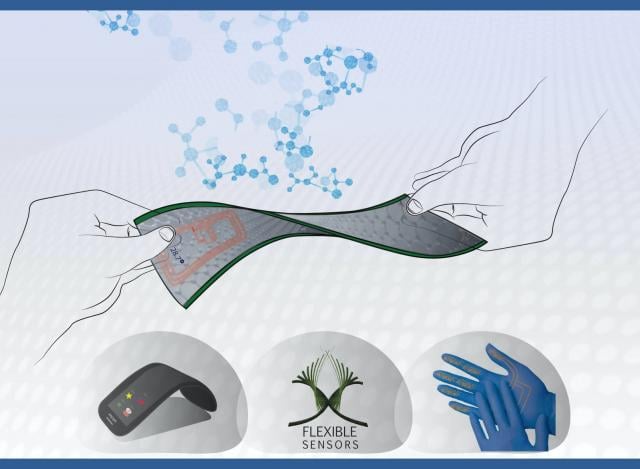
Learn about the field of nanotechnology with a special emphasis on nanomaterials synthesis, characterizations and their applications in civil and environmental engineering. This course will introduce students to the field of nanotechnology with a special emphasis on nanomaterials synthesis, characterizations and their applications in civil and environmental engineering.

Class Deals by MOOC List - Click here and see EdX's Active Discounts, Deals, and Promo Codes.

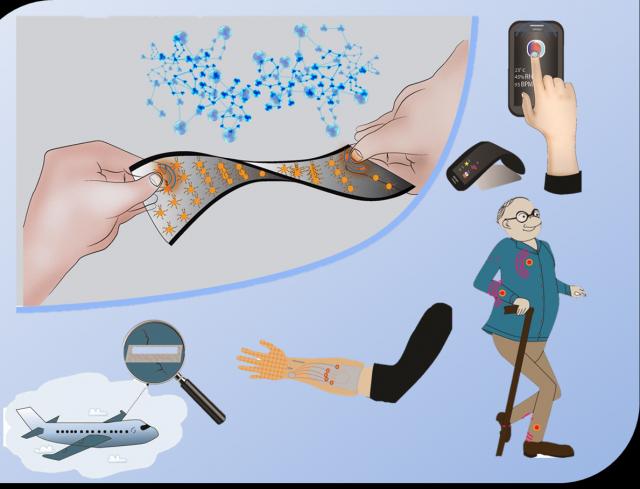
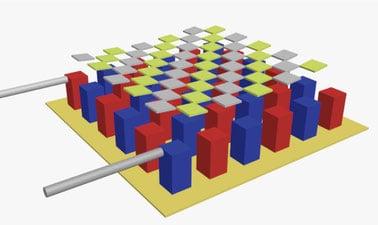
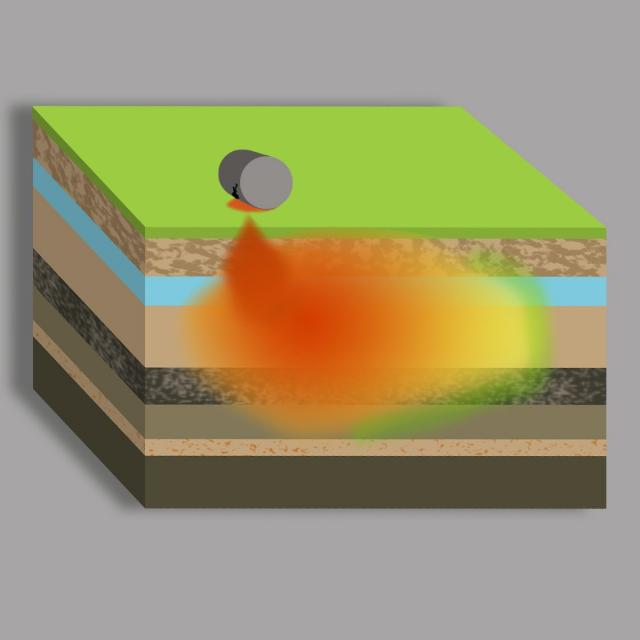
The specific applications will include, but not limited to, tailoring mechanical property, durability, self-cleaning, self-sealing, self-sensing, energy harvesting and other multi-functionality. It integrates the fields of materials science, civil engineering and electrical engineering. The basic concepts will be discussed including nano-scale effect, process-structure-property relationship, nano- and micro-structure property characterizations, multi-functional materials, nano-device fabrication and their applications for energy harvesting, water infiltrations and environmental sensing. lab will be provided to students enrolled in the course to learn nano and micro-structure characterizations skills.

What you'll learn

  • Basic concepts of nanomaterials and nanostructures
  • Nanomaterials fabrication methods
  • Nano-device for civil and environmental
  • Nano-Device for Energy Harvesting and Sensing applications
Go to Class
MOOC List is learner-supported. When you buy through links on our site, we may earn an affiliate commission.

Related Courses

Structure of matter: atoms, molecules, nanomaterials. Part 2 (Coursera) Coursera
Saint Petersburg State University

Structure of matter: atoms, molecules, nanomaterials. Part 2 (Coursera)

A two-part course lays down an understanding of the fundamental foundations of the structure of atoms and molecules, chemical bonds, intermolecular interactions. The course systematically reveals the relationship between the electronic structure of atoms and molecules, the periodic law of D.I. Mendeleev and the properties of substances and materials in various states of aggregation, modern achievements in the creation of various functional materials with desired properties, the foundations of the digital economy in the field of chemical sciences are considered.

Jul 25th 2022
5-12 Weeks
Fundamentals of Current Flow (edX) EdX
Purdue University,PurdueX

Fundamentals of Current Flow (edX)

Gain a new perspective on electron flow in solids with this insightful introduction. Very different from what is taught in standard courses, "Fundamentals of Current Flow" provides a unified conceptual framework for ballistic and diffusive transport of both electrons and phonons - essential information for understanding nanoelectronic devices.

Jan 8th 2024
5-12 Weeks
Water and Wastewater Treatment Engineering: Physicochemical Technology (edX) EdX
Tsinghua University,TsinghuaX

Water and Wastewater Treatment Engineering: Physicochemical Technology (edX)

Learn the basic principles and characteristics of physicochemical technology in water and wastewater treatment engineering. This course mainly talks about the basic principles, process composition, operation characteristics, process calculation methods and some engineering examples of the main physicochemical treatment methods in water and wastewater treatment.

Self Paced
Self-Paced
Intelligent Machining (Coursera) Coursera
University at Buffalo,The State University of New York

Intelligent Machining (Coursera)

Manufacturers are increasingly utilizing machine tools that are self-aware – they perceive their own states and the state of the surrounding environment – and are able to make decisions related to machine activity processes. This is called intelligent machining, and through this course students will receive a primer on its background, tools and related terminology.

Jun 15th 2026
4 Weeks
Citizen Science: Sensing the World (FutureLearn) FutureLearn
University of Dundee,Grow Observatory

Citizen Science: Sensing the World (FutureLearn)

Learn about sensing, including how to use a soil sensor and how to monitor the changing climate, by joining the GROW Observatory. Improve your soil and monitor the changing climate as a citizen scientist. Did you know satellites are constantly monitoring soil moisture, even in your garden? Monitoring the moisture in soil can help predict floods, fires and droughts. On this course, you will learn about the ESA’s Sentinel-1 Missions, and how citizens can validate satellite data locally with sensors.

No sessions available
2 Weeks
Nanotechnology for Health: Innovative Designs for Medical Diagnosis (FutureLearn) FutureLearn
University of Twente

Nanotechnology for Health: Innovative Designs for Medical Diagnosis (FutureLearn)

Discover how types of nanotechnology can be used for exciting new opportunities in healthcare. Explore the use and implications of nanotechnology in medicine. Nanotechnology is used to control and manipulate nanometer-sized matter with nanometer precision. This can be atoms, molecules, or larger biological structures such as DNA or living cells. On this course, you’ll explore the potential of nanotechnology products in medical applications, to create new devices that can be used to diagnose a disease or monitor a medical treatment.

Available now
4 Weeks
RF Design: Passive and Active Components (edX) EdX
Purdue University,PurdueX

RF Design: Passive and Active Components (edX)

Learn the necessary techniques and tools for designing high-performance passive and active RF components. Following the ‘Primer on RF Design’ course, this class focuses on passive and active components. We use the techniques learnt in the previous course, to design advanced RF devices including couplers, filters and amplifiers. Current research topics are discussed as appropriate.

Nov 1st 2021
5-12 Weeks
Nanotechnology and Nanosensors, Part 2 (Coursera) Coursera
Technion - Israel Institute of Technology

Nanotechnology and Nanosensors, Part 2 (Coursera)

Learn about novel sensing tools that make use of nanotechnology to screen, detect and monitor various events in personal or professional life. Together, we will lay the groundwork for infinite innovative applications, starting from diagnosis and treatments of diseases, continuing with quality control of goods and environmental aspects, and ending with monitoring security issues.

Jun 15th 2026
5-12 Weeks
English for Science, Technology, Engineering, and Mathematics (Coursera) Coursera
University of Pennsylvania

English for Science, Technology, Engineering, and Mathematics (Coursera)

Welcome to English for Science, Technology, Engineering, and Mathematics, a course created by the University of Pennsylvania, and funded by the U.S. Department of State Bureau of Educational and Cultural Affairs, Office of English Language Programs. This course is designed for non-native English speakers who are interested in improving their English skills in the sciences. In this course, you will explore some of the most innovative areas of scientific study, while expanding your vocabulary and the language skills needed to share scientific information within your community.

Jun 15th 2026
5-12 Weeks
Fundamentals of Transistors (edX) EdX
Purdue University,PurdueX

Fundamentals of Transistors (edX)

This course develops a simple framework for understanding the essential physics of transistors, including modern nanoscale transistors. Important technology considerations and circuit applications are also discussed. The transistor has been called the greatest invention of the 20th century - it enabled the electronics systems that have shaped the world we live in. Today's nanotransistors are a high volume, high impact success of the nanotechnology revolution.

Feb 13th 2023
5-12 Weeks