EdX

Mobile Application Experiences (edX)

Offered by MIT, MITx,
Mobile Application Experiences (edX)

Learn to create a novel mobile application in this MIT course - from research to design, usability, implementation and field evaluation. How do you design a mobile app that truly changes people's lives? How can you understand how a new service is being used, both quantitatively and qualitatively? How can you use all of the rich sensing and I/O capabilities of mobile devices to create experiences that go far beyond what's possible on a traditional computer?

Class Deals by MOOC List - Click here and see EdX's Active Discounts, Deals, and Promo Codes.

Mobile devices are changing the ways that we interact with each other and information in the world. This course will take you from a domain of interest, through generative research, design, usability, implementation and field evaluation of a novel mobile experience. You'll finish the course with a working, field-tested application suitable for release in the app store as well as a deep understanding of human interaction with mobile devices and services.

Based on a popular MIT class that has been taught since 2006 by Frank Bentley of Yahoo Labs and Ed Barrett, a Senior Lecturer at MIT, this course will explore what makes mobile devices unique. A primary focus will be on studying existing behavior and using key findings for design. While writing the code for an app is a part of the class, the majority of the topics will cover designing and evaluating a unique mobile experience. Along the way, you will have opportunities to share your work with other students from around the world! Java experience (or Objective C for iOS users) and a smartphone are required.
All required readings are available within the courseware, courtesy of The MIT Press. A print version of the course textbook, Building Mobile Experiences, is also available for purchase. The MIT Press is offering enrolled students a special 30% discount on books ordered directly through the publisher’s website. To take advantage of this offer, please use promotion code BME30 at The MIT Press site.

What you'll learn:

  • To understand the entire HCI design process, as applied to mobile applications
  • To construct a novel mobile application and assess its use in daily life for two weeks
  • To prepare and evaluate three different types of HCI research studies (generative, usability, and field studies), related to the topic of your application
  • To identify and discuss papers from the CHI research community and design and compose your own CHI-style paper

Go to Class
MOOC List is learner-supported. When you buy through links on our site, we may earn an affiliate commission.

Related Courses

Probability and Statistics in Data Science using Python (edX) EdX
University of California, San Diego,UC San DiegoX

Probability and Statistics in Data Science using Python (edX)

Using Python, learn statistical and probabilistic approaches to understand and gain insights from data. The job of a data scientist is to glean knowledge from complex and noisy datasets. Reasoning about uncertainty is inherent in the analysis of noisy data. Probability and Statistics provide the mathematical foundation for such reasoning.

Self Paced
Self-Paced
Human-Computer Interaction II: Cognition, Context & Culture (edX) EdX
Georgia Institute of Technology,GTx

Human-Computer Interaction II: Cognition, Context & Culture (edX)

Get into the user’s mind and understand the role of mental models and representations, then investigate how to design interfaces that integrate with and influence the world around us. This course takes you through lessons 9 through 13 of CS6750: Human-Computer Interaction as taught in the Georgia Tech Online Master of Science in Computer Science program.

Self Paced
Self-Paced
Introduction to Object-Oriented Programming with Java III: Exceptions, Data Structures, Recursion, and GUIs (edX) EdX
Georgia Institute of Technology,GTx

Introduction to Object-Oriented Programming with Java III: Exceptions, Data Structures, Recursion, and GUIs (edX)

Learn how to create and use exceptions, data structures, recursion, and graphical user-interfaces (GUIs). This course provides students with the knowledge to handle and even create exceptions to achieve graceful error handling in programs. They will also create and utilize data structures, including lists and files. Students will also learn about recursion and how it can be a useful approach to repetition in a program. Finally, students will learn how to develop basic graphical user interfaces (GUIs) using JavaFX.

Self Paced
Self-Paced
Introduction to Object-Oriented Programming with Java I: Foundations and Syntax Basics (edX) EdX
Georgia Institute of Technology,GTx

Introduction to Object-Oriented Programming with Java I: Foundations and Syntax Basics (edX)

Learn the foundational basics of the Java programming language. This course provides an introduction to the Java programming language. It gives students a foundational overview and history of Java, and students will learn about the language’s basic syntax. At the end, they will be able to develop interactive console programs with basic data processing and formatting capabilities.

Self Paced
Self-Paced
HTML5 Apps and Games (edX) EdX
World Wide Web Consortium - W3C,W3Cx

HTML5 Apps and Games (edX)

Today, developers are increasingly moving from native to HTML5-based apps. Increase your ability to design and deliver innovative services on the Web! Want to learn advanced HTML5 tips and techniques? This is the course for you! Find out more about the powerful Web features that will help you create great content and apps.

Self Paced
Self-Paced
CS50's Introduction to Computer Science (edX) EdX
HarvardX,Harvard University

CS50's Introduction to Computer Science (edX)

An introduction to the intellectual enterprises of computer science and the art of programming. This is CS50, Harvard University's introduction to the intellectual enterprises of computer science and the art of programming for majors and non-majors alike, with or without prior programming experience. An entry-level course taught by David J. Malan, CS50 teaches students how to think algorithmically and solve problems efficiently.

Self Paced
Self-Paced
How to Code: Complex Data (edX) EdX
The University of British Columbia,UBCx

How to Code: Complex Data (edX)

Learn how to design more complex programs, using new data structures, abstraction, and generative recursion. As your program requirements get more complex, you will find that simple additions to the design method make it easy to write well-structured and well-tested code that is easy to maintain. By learning how to capture common data and control structures using abstraction, your programs will get shorter and better tested.

Self Paced
Self-Paced
Deploying TinyML (edX) EdX
HarvardX,Harvard University

Deploying TinyML (edX)

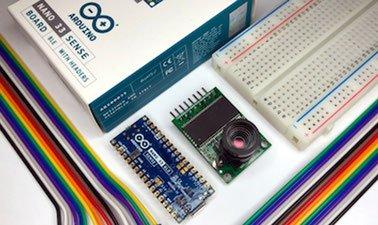
Learn to program in TensorFlow Lite for microcontrollers so that you can write the code, and deploy your model to your very own tiny microcontroller. Before you know it, you’ll be implementing an entire TinyML application. Have you wanted to build a TinyML device? In Deploying TinyML, you will learn the software, write the code, and deploy the model to your own tiny microcontroller-based device. Before you know it, you’ll be implementing an entire TinyML application.

Self Paced
Self-Paced
Introducción a la programación en C: Instrucciones de control y ficheros de texto (edX) EdX
Universidad Autonoma de Madrid

Introducción a la programación en C: Instrucciones de control y ficheros de texto (edX)

En este curso aprenderás sobre condicionales, bucles y ficheros de texto en el lenguaje de programación C, uno de los más utilizados. Este curso en línea te permitirá continuar aprendiendo sobre conceptos para desarrollar habilidades de programación en el lenguaje C. Ahora los programas comienzan a cobrar vida y a volverse más interesantes.

Self Paced
Self-Paced
How to Code: Simple Data (edX) EdX
The University of British Columbia,UBCx

How to Code: Simple Data (edX)

Learn systematic program design - how to write programs that tell a clear story about what they do, are well-tested, and easy to improve. This programming course takes a unique approach, as it focuses on learning a systematic programming method rather than a programming language. This practical approach will help you channel your creativity so that you can program well in any language.

Self Paced
Self-Paced