Migrações Forçadas e Refugiados: Perspetivas Teóricas e Aplicadas das Ciências Sociais (UAb)

Offered by Universidade Aberta,
Migrações Forçadas e Refugiados: Perspetivas Teóricas e Aplicadas das Ciências Sociais (UAb)

Este curso permite-lhe adquirir conhecimentos sobre as migrações forçadas e refugiados no mundo atual, numa perspetiva académica e aplicada. Que abordagens podemos fazer a estas problemáticas, a partir das Ciências Sociais?

Atualmente estima-se que haja mais de 65 milhões de migrantes forçados, entre os mais de 21 milhões são refugiados. Em 2015, cerca de um milhão de refugiados dirigiu-se para a Europa - situação que ficou conhecida como a maior crise humanitária, depois da II Grande Guerra.
O domínio destas matérias permitirá um conhecimento mais reflexivo e uma atuação mais informada sobre a situação das migrações forçadas e refugiados no mundo. Paralelamente, serão debatidas algumas problemáticas que atravessam a complexa e paradoxal realidade das migrações forçadas e refugiados – procurando desconstruir representações estereotipadas.
Pretende-se que esta formação permita aos seus participantes adquirir competências teóricas mas, também, debater políticas, significados, valores, condutas e práticas sociais contemporâneas, através da abordagem das Ciências Sociais.
O curso destina-se a tod@s que, por motivos profissionais ou académicos, desejam saber mais sobre o tema e, em particular, aprofundar o contributo que cada área das ciências sociais pode dar, nos planos teórico e aplicado.
A frequência deste curso vai permitir-lhe:

  • Diferenciar os conceitos de migrações forçadas e refugiados;
  • Identificar a realidade contemporânea das migrações forçadas e refugiados, no mundo, na Europa e em Portugal;
  • Reconhecer o papel de diferentes áreas das ciências sociais na análise e atuação perante as migrações forçadas e refugiados (Direito e Relações Internacionais; Psicologia; Serviço Social; Sociologia; Relações Interculturais);
  • Debater os desafios das migrações forçadas e refugiados em dinâmicas interculturais contemporâneas.
Go to Class
MOOC List is learner-supported. When you buy through links on our site, we may earn an affiliate commission.

Related Courses

Droits humains: Les droits des réfugiés (edX) EdX
Amnesty International,AmnestyInternationalX

Droits humains: Les droits des réfugiés (edX)

Agissez pour les droits humains. Ce cours vous permettra d’acquérir des connaissances sur les droits humains des personnes réfugiées et vous donnera les moyens de défendre ces droits. Aux quatre coins du globe, des barrières se dressent. Chaque jour, des personnes fuyant la guerre et les persécutions voient les portes se fermer devant eux.

No sessions available
3 Weeks
Russian Invasion of Ukraine Teach-Out (Coursera) Coursera
University of Michigan

Russian Invasion of Ukraine Teach-Out (Coursera)

The armed conflict in Ukraine first started in the beginning of 2014, when Russia invaded and annexed the Ukrainian region of Crimea. Over the past eight years, there has been ongoing conflict between Ukraine and Russia, with regular shelling and skirmishes occurring along Russian and Ukrainian borders in the eastern part of the country. On February 24, 2022, Russia launched a full-scale military invasion of Ukraine, plunging the entire country into war and sending shockwaves across the world.

Jul 25th 2022
1 Week
Microeconomics: The Power of Markets (Coursera) Coursera
University of Pennsylvania

Microeconomics: The Power of Markets (Coursera)

We make economics decisions every day: what to buy, whether to work or play, what to study. We respond to markets all the time: prices influence our decisions, markets signal where to put effort, they direct firms to produce certain goods over others. Economics is all around us. This course is an introduction to the microeconomic theory of markets: why we have them, how they work, what they accomplish.

Oct 26th 2026
5-12 Weeks
Interpreting for Refugees: Contexts, Practices and Ethics (FutureLearn) FutureLearn
University of Glasgow

Interpreting for Refugees: Contexts, Practices and Ethics (FutureLearn)

Learn skills to meet the challenges of interpreting for refugees and share your experiences with other interpreters in the sector. Learn about humanitarian interpreting and the role of the interpreter. On this course, you’ll discover the role of the interpreter and explore the specific challenges of interpreting for refugees. You’ll cover topics like cultural awareness, ethics and emotional reflexivity when working in situations that require cross-cultural communication.

Self Paced
3 Weeks
Remote food security monitoring (mVAM) Other Providers
Leiden University,mVAM

Remote food security monitoring (mVAM)

Collecting primary data on food security in can be challenging, time consuming and costly ‒ particularly in areas with limited humanitarian access. Remote data collection is a flexible and efficient way to collect food security information and it allows for frequent food security monitoring in unstable areas without putting the enumerators at risk.

Self Paced
Self-Paced
Climate change and migration: predictions, politics and policy (Climate Outreach) Other Providers
The Climate and Migration Coalition

Climate change and migration: predictions, politics and policy (Climate Outreach)

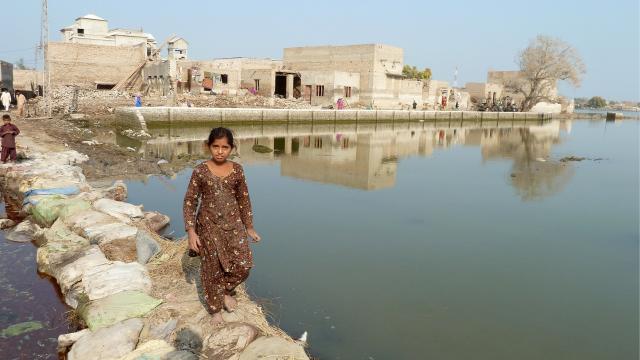
How will climate change reshape migration? And what are governments planning to do about it? This online course examines these questions in depth. Over the space of 10 months, this course examines the major issues around climate-linked migration and displacement. Climate change is set to play a key role in patterns of human settlement and migration in the future. Altered patterns of drought, storms and sea level rise are already creating new patterns of migration.

Self Paced
Self-Paced
International migrations :a global issue (FUN) FUN
Sciences Po

International migrations :a global issue (FUN)

The world is moving, but not all opinions and governments are willing to accept this poorly understood reality. The issue affects both states and the planet, in a process of globalization and of regionalization of migrations, and raises new questions for international relations, now including the South. This course aims at improving knowledge of the subject, addressing the key issues raised by international migration, and assessing the trends of tomorrow.

No sessions available
5-12 Weeks