Medicines Adherence: Understanding and Changing Patient Behaviour (FutureLearn)

Offered by King's College London,
Medicines Adherence: Understanding and Changing Patient Behaviour (FutureLearn)

Initiate and support behaviour change in patients with medicines adherence problems – not taking their medicines as prescribed. This course has been designed by psychologists and clinicians at King’s College London for people interested in medicines adherence. Using evidenced-and theory-based techniques, you will deepen your awareness and understanding of current practical and theoretical issues around medicines adherence.

Class Deals by MOOC List - Click here and see FutureLearn's Active Discounts, Deals, and Promo Codes.

You will become familiar with the COM-B framework and see examples of behaviour change techniques to promote adherence. Learners from around the world will share best practices and discuss the practical examples shown through simulated clinical consultations.

What topics will you cover?

  • Application of the COM-B Model to identify the wide range of factors driving medicines non-adherence
  • Behaviour change techniques to initiate and support medicine-taking behaviour
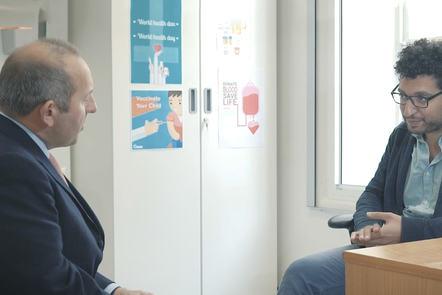
  • Simulated patient-practitioner consultations to illustrate the concepts, tools and techniques covered in this course

What will you achieve?

  • Apply a framework to better understand the drivers of medicines non-adherence
  • Apply techniques to effectively support behavior change in medicines taking behaviour
  • Reflect on how to implement these techniques in clinical practice
Go to Class
MOOC List is learner-supported. When you buy through links on our site, we may earn an affiliate commission.
Related Courses

A Journey Through Transfer Medicine (FutureLearn) FutureLearn
University College London

A Journey Through Transfer Medicine (FutureLearn)

Understanding the complexity and diversity of transfer medicine for critically ill patients across a global landscape. Discover how to keep critically ill patients safe during transfer. Across the world, thousands of critically ill patients are transferred within hospitals and between locations, yet there is little formal training available.

Self Paced
4 Weeks
Precision Medicine (Coursera) Coursera
University of Geneva

Precision Medicine (Coursera)

This course will provide you with the key knowledge and tools to understand the fundamentals and practical implications of precision medicine, its opportunities and challenges. It will address precision-medicine era diagnostics, treatment selection, genetic counseling, public health interventions, and biomedical research. It will also deal with data science and ethical issues. From genomic analysis and genetic counseling to cancer biomarkers, from risk assessment of chronic diseases to the understanding of gene-environment interactions, from pharmacogenomics to multi-omics data integration, experts will walk you through the many aspects of precision medicine, from the bench to the bedside and to population health.

Sep 21st 2026
5-12 Weeks
Space Medicine (Coursera) Coursera
Duke University

Space Medicine (Coursera)

Have you ever wondered what it would take for humans to travel beyond the comforts of our home planet, Earth? Duke students and alumni are invited to participate in Space Medicine, a new non-credit, online learning experience in which you will learn about and engage in the most pressing medical challenges facing NASA and others advancing the future of space exploration.

Sep 21st 2026
5-12 Weeks
Nanotechnology for Health: Innovative Designs for Medical Diagnosis (FutureLearn) FutureLearn
University of Twente

Nanotechnology for Health: Innovative Designs for Medical Diagnosis (FutureLearn)

Discover how types of nanotechnology can be used for exciting new opportunities in healthcare. Explore the use and implications of nanotechnology in medicine. Nanotechnology is used to control and manipulate nanometer-sized matter with nanometer precision. This can be atoms, molecules, or larger biological structures such as DNA or living cells. On this course, you’ll explore the potential of nanotechnology products in medical applications, to create new devices that can be used to diagnose a disease or monitor a medical treatment.

Available now
4 Weeks
Cancer in the 21st Century - the Genomic Revolution (FutureLearn) FutureLearn
University of Glasgow

Cancer in the 21st Century - the Genomic Revolution (FutureLearn)

Discover how modern genetics has revolutionised approaches to the detection and treatment of cancer. Cancer Research UK estimates that 1 in 2 people in the UK will be diagnosed with cancer during their lifetime. It is a disease that impacts on most people’s lives at some stage. So understanding cancer, and the development of new treatments, is of intrinsic interest to us all.

No sessions available
5-12 Weeks
Using Personalized Medicine and Pharmacogenetics (FutureLearn) FutureLearn
University of East Anglia

Using Personalized Medicine and Pharmacogenetics (FutureLearn)

Get to grips with pharmacogenetics and personalized medicine, so you can make informed treatment decisions. Personalized medicine and pharmacogenetics both promise exciting new developments in healthcare. On this course you will explore their potential, taking a close look at the human genome, genome and exome sequencing, pharamcogenetics tests, a review of current best evidence and the use of personalized medicine in cancer therapy.

No sessions available
3 Weeks
Liver Disease: Looking After Your Liver (FutureLearn) FutureLearn
University of Birmingham

Liver Disease: Looking After Your Liver (FutureLearn)

Learn about how your liver works, ways to look after it and how liver damage is caused, studied and treated around the world. We are currently experiencing an international explosion of liver disease that continues to have enormous impact upon healthcare systems and global health. In the UK we have seen a 20% increase in deaths related to liver disease since 2000 and this pattern reflects the global situation.

Self Paced
3 Weeks
Dysphagia: Swallowing Difficulties and Medicines (FutureLearn) FutureLearn
University of East Anglia

Dysphagia: Swallowing Difficulties and Medicines (FutureLearn)

This course will enhance the knowledge of any person involved in the administration of medicines to patients with dysphagia. The course offers an opportunity to network with other learners and with the creators of the course through discussions, graphs and social networking features and to share knowledge with other learners and professionals.

Self Paced
5-12 Weeks
Understanding Patient Perspectives on Medications (Coursera) Coursera
University of Copenhagen

Understanding Patient Perspectives on Medications (Coursera)

Inappropriate use of medicines harms patients’ health and increases healthcare costs. When healthcare professionals and patients engage together, healthcare can be based on the patient perspective, so the use of medicines is better tailored to each patients’ needs and preferences. The result is a better relationship between patients and healthcare professionals, more appropriate medicines use, improved patients’ outcomes, and reduced healthcare costs. In this course you will learn about the patient perspective on medicines use, and how to explore and apply it in healthcare and health policy.

Sep 21st 2026
4 Weeks
Myths and Realities of Personalised Medicine: the Genetic Revolution (FutureLearn) FutureLearn
UNSW Sydney - University of New South Wales

Myths and Realities of Personalised Medicine: the Genetic Revolution (FutureLearn)

Learn about personalised medicine and the impact that our enhanced understanding of genetics has on modern medicine and society. Personalised medicine. Precision medicine. Individualised medicine. Customised medicine. Targeted medicine. All buzzwords of recent years that excite, confuse and infuriate the public, researchers and healthcare professionals. Broadly speaking, these terms all refer to the idea of tailoring treatment to individual patients based on their genetic code.

No sessions available
5-12 Weeks