Integrative Pain Management - Chinese Medicine and Western Medicine (FutureLearn)

Integrative Pain Management - Chinese Medicine and Western Medicine (FutureLearn)

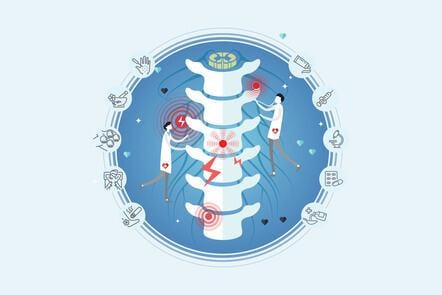
Improve your pain diagnosis and treatment as you learn how to combine Chinese and Western medicine for effective pain management. Develop your understanding of pain management. Pain, though common, is often extremely complex to treat and diagnose. Health professionals must navigate through the many different causes and influential factors to provide effective treatment for their patients.

Class Deals by MOOC List - Click here and see FutureLearn's Active Discounts, Deals, and Promo Codes.

On this four-week course, you’ll learn how to use an integrative clinical approach to improve pain diagnosis and treatment. You’ll discover the different pain management approaches in both Chinese and Western medicine before learning how to combine the two for effective results.
By the end, you’ll have professional pain management knowledge to take into your workplace.

Explore the pain pathway and causes of pain
Furthering your knowledge of pain and its symptoms, you’ll explore pain pathway, threshold, and types of pain.
This knowledge will help you understand pain and its burden, and how to address it timely and properly by using a comprehensive assessment.

Delve into Western medicine and traditional Chinese medicine
You’ll unpack the different treatment approaches in Western medicine before exploring traditional Chinese medicine and how it treats both symptoms and root causes.
You’ll be given an overview of Chinese medicine and how its two key notions – holism and pattern identification – can be applied in pain management.
Next, you’ll investigate the existing situation between Chinese and Western medicine before analysing the upcoming collaboration between the two approaches to help enhance pain treatment.

Learn from the experts at HKU SPACE
Throughout the course, you’ll be guided by the experts at HKU School of Professional and Continuing Education (HKU SPACE) and to help you explore and understand a variety of pain management strategies.
With this knowledge, you’ll be equipped to improve your pain diagnosis and treatment in your workplace.

Syllabus

Week 1: Understanding on Pain - the Western Medicine Perspective
Week 2: Severity of Painful Symptoms & Need to Properly Address the Issue
Week 3: Application of Chinese Medicine in the Diagnosis and Treatment of Pain
Week 4: Pain Management: Role of Combined Chinese/Western Medicine Approaches

What will you achieve?
By the end of the course, you‘ll be able to...

  • Explain what pain is from the perspective of Chinese and Western medicines
  • Explain the basic knowledge of the pain diagnosis and treatment
  • Evaluate the significance of integrative pain management with Chinese and Western medicines

Who is the course for?
This course is designed for Western medical professionals such as pain medicine specialists, general practitioners, physiotherapists, psychologists, and nurses.
It may also be useful for Chinese medicine practitioners who are interested in integrative pain management.

Go to Class
MOOC List is learner-supported. When you buy through links on our site, we may earn an affiliate commission.

Related Courses

Using Infection Control to Combat Antimicrobial Resistance (FutureLearn) FutureLearn
University of East Anglia

Using Infection Control to Combat Antimicrobial Resistance (FutureLearn)

Find out how effective infection control in health and social care can tackle the global risk of antimicrobial resistance. Get practical guidance on infection control in health and social care settings. This online course will explore the growing problem of antimicrobial-resistant infections in health and social care settings. You’ll find out how infectious diseases are acquired and spread, and how this contributes to the global risk of antimicrobial resistance.

Self Paced
3 Weeks
Nutrition and Disease Prevention (FutureLearn) FutureLearn
Taipei Medical University

Nutrition and Disease Prevention (FutureLearn)

Learn about the relationship between diet and disease and discover the role a nutrient-rich diet can play in disease prevention. Understand how good nutrition can prevent disease. Diet-related diseases and obesity levels are rising. On this course you will explore the relationship between diet and disease and the role diet plays in weight management. You will examine the latest research studies to consider how poor nutrition can lead to ill health, and whether what we eat can help to prevent the onset of common diseases, such as cancer.

Self Paced
4 Weeks
OPAT: Outpatient Parenteral Antimicrobial Therapy (FutureLearn) FutureLearn
British Society for Antimicrobial Chemotherapy - BSAC

OPAT: Outpatient Parenteral Antimicrobial Therapy (FutureLearn)

Learn how patients with a serious infection can be managed in outpatient settings with the help of an OPAT service. Discover the function, role and limitations of an OPAT service. OPAT is a clinical service which enables patients with serious infection to be managed in an outpatient setting. The service aims to facilitate admission avoidance or early hospital discharge. On this course, you will be introduced to the concept of OPAT. You’ll start by looking at the roles and responsibilities within the multi-disciplinary OPAT team.

Self Paced
2 Weeks
Quality Improvement in Healthcare: the Case for Change (FutureLearn) FutureLearn
University of Bath

Quality Improvement in Healthcare: the Case for Change (FutureLearn)

Explore new and better ways of organising health and social care services, to improve quality, with this free online course. Why is quality improvement in health and social care systems so difficult? Why is it so challenging to bring in new and better ways of organising health and social care services? Many reasons have been put forward: lack of money; lack of knowledge about either the actual quality of care delivered, or resistance to making changes to long-established ways of working; excessive and sometimes misunderstood regulations; and professional opinions and interests that are hard to influence when systems are working at or beyond capacity.

Self Paced
5-12 Weeks
The Role of Antifungal Stewardship (FutureLearn) FutureLearn
British Society for Antimicrobial Chemotherapy - BSAC

The Role of Antifungal Stewardship (FutureLearn)

Explore the role and benefits of antifungal stewardship on this online course for healthcare professionals. Learn how fungi can cause disease and explore effective forms of treatment. Fungal diseases affect millions of people worldwide each year. Antifungal stewardship helps ensure antifungal agents are prescribed correctly to achieve the best patient outcome.

Self Paced
3 Weeks
AI for Healthcare: Equipping the Workforce for Digital Transformation (FutureLearn) FutureLearn
University of Manchester,Health Education England

AI for Healthcare: Equipping the Workforce for Digital Transformation (FutureLearn)

Learn how artificial intelligence is transforming healthcare and how it can be used to support change in the healthcare workforce. Build your digital understanding and become a champion for AI in healthcare. AI is transforming healthcare in a variety of beneficial ways, from streamlining workflow processes to making more precise patient diagnoses. However, this is not without its challenges.

Self Paced
5-12 Weeks
Improving Healthcare Through Clinical Research (FutureLearn) FutureLearn
University of Leeds

Improving Healthcare Through Clinical Research (FutureLearn)

On this free online course, find out how medical treatments are discovered, tested and evaluated to improve healthcare for all. Everything we do in healthcare has to be discovered and thoroughly tested before it can be put into practice. In this course you will explore clinical research – its challenges and its huge benefits to modern healthcare.

Self Paced
4 Weeks
Perioperative Medicine in Action (FutureLearn) FutureLearn
University College London

Perioperative Medicine in Action (FutureLearn)

Explore perioperative medicine and how you can improve care for the high risk surgical patient. Join this RCoA endorsed course. Too many patients die or suffer prolonged complications following surgery. Perioperative medicine is an emerging, multi-disciplinary approach, which tackles this issue, by optimising the care of high-risk surgical patients. It encompasses disciplines including anaesthetics, surgery, nursing, care of the elderly, physiotherapy and healthcare management.

Self Paced
4 Weeks
Clinical Supervision with Confidence (FutureLearn) FutureLearn
University of East Anglia

Clinical Supervision with Confidence (FutureLearn)

Supervise undergraduate and postgraduate learners effectively with this online course for clinical and educational supervisors. This online course will help you become a more effective clinical supervisor or educator. It is mapped to competences within the Academy of Medical Educators’ framework for professional development, as used by the General Medical Council and Health Education England.

Self Paced
2 Weeks
MedTech: Digital Health and Wearable Technology (FutureLearn) FutureLearn
University of Leeds

MedTech: Digital Health and Wearable Technology (FutureLearn)

Discover digital health and learn how wearable technology is transforming healthcare with this online MedTech course. Explore the opportunities and challenges of using digital devices in healthcare. Digital devices are revolutionising healthcare as we know it. On this course, you will explore the impact of these new technologies on healthcare professionals and their patients. Learn how digital devices in healthcare are designed and regulated, and explore if clinical supervision in MedTech is always important.

Self Paced
2 Weeks