EdX

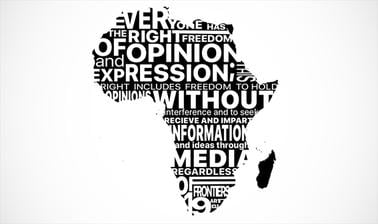
Media Freedom and Freedom of Expression in Africa (edX)

Offered by Wits University, WitsX,
Media Freedom and Freedom of Expression in Africa (edX)

Learn how to cultivate media freedom in Africa through advocating for improved policy and practice. This free course aims to empower activists, students, regulators, journalists, lawyers, and everyone interested in ensuring a free, pluralistic and independent African media.

Class Deals by MOOC List - Click here and see EdX's Active Discounts, Deals, and Promo Codes.

As highlighted in times of COVID-19, the media play a critical role in democratic societies by informing citizens, facilitating and building freedom of expression, and fostering access to information.
This course will help you to identify the principles and components of democratic media policy and practice, and to identify strategies for effective engagement with these matters in African settings.
Drawing from a network of experts and recent case studies from across the continent, we will explore what freedom of expression is and why it is important for democracy.
We will discuss the components and actors of democratic media policy and practice for print, broadcast and online media.
Together, we'll take a look at media pluralism and diversity; media regulation in a democratic media environment; and issues concerning the Internet.
The course is dedicated to and seeks to deepen the work of the late Southern African activist, Jeanette Minnie, who was devoted to robust civil society engagement with African media policy.

What you'll learn

  • Core elements of the principles of freedom of expression, media freedom, and access to information
  • Policy and practical components necessary to democratic media ecosystems
  • Regulatory and other measures that build media pluralism and diversity
  • Mechanisms of self-regulation, co-regulation, statutory regulation and regulatory independence in democratic media ecosystems
  • The practical and policy dimensions introduced by online media, online expression, and online information access
  • Strategies for effective civil society engagement with policy and practice in support of democratic - - Africa media ecosystems
  • The impact of the Covid-19 Pandemic on journalists and on the media.
Go to Class
MOOC List is learner-supported. When you buy through links on our site, we may earn an affiliate commission.

Related Courses

Protect the Protest: Using Our Rights to Freedom of Assembly and Expression (FutureLearn) FutureLearn
Amnesty International

Protect the Protest: Using Our Rights to Freedom of Assembly and Expression (FutureLearn)

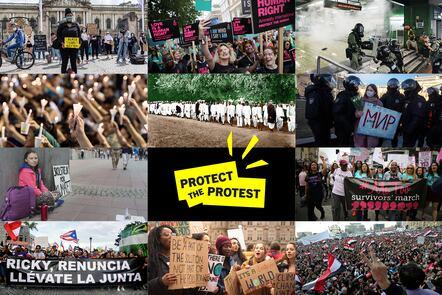
Investigate the concept of protesting as a tool for social change, as well as how the freedom to protest is under threat. Examine the power of protest and its part in protecting human rights. Protesting is a powerful tool for promoting and defending human rights, used throughout history to change mindsets and agendas. On this three-week course from Amnesty International, you’ll investigate the power of protest as a force for change and explore current challenges to the right to protest.

Jul 25th 2022
3 Weeks
Constitutional Struggles in the Muslim World (Coursera) Coursera
University of Copenhagen

Constitutional Struggles in the Muslim World (Coursera)

Learn what motivates the restive Muslim youth from Tunis to Tehran, what political positions Islamists from Mali to Chechnya are fighting for, where the seeming obsession with Islamic law comes from, where the secularists have vanished to, and whether it makes sense to speak of an Islamic state. This course is a survey of the constitutional ideas and institutions that have developed since the mid 19th century throughout predominantly Muslim countries, but its focus will lie on the actors that have dominated this discourse and shaped its outcomes. We will look at the large body of classical writings on the Islamic state only in so far as it is necessary to understand the contemporary debate, but concentrate on the legal and political developments of the 20th and 21st centuries.

Aug 17th 2026
5-12 Weeks
Antimicrobial Stewardship for Africa (FutureLearn) FutureLearn
British Society for Antimicrobial Chemotherapy - BSAC,ICAN - Infection Control Africa Network,College of Medicine, University of Lagos

Antimicrobial Stewardship for Africa (FutureLearn)

Improve your knowledge of the spread of antimicrobial resistance in Africa and how to reduce it. Learn how to tackle antimicrobial resistance in Africa. Communicable diseases remain to be a leading cause of death in African countries (WHO). This course will look at the threat of antimicrobial resistance in Africa and how best to tackle it.

Self Paced
3 Weeks
Industrial Policy in the 21st Century: The Challenge for Africa (edX) EdX
SDGAcademyX,SDG Academy

Industrial Policy in the 21st Century: The Challenge for Africa (edX)

Why is there so little industry in Africa? Does it matter? What can we do about it? Hear from economist John Page about the continent’s options for industrialization and the future of economic growth in Africa. In this course from the United Nations University World Institute for Development Economics Research (UNU-WIDER), brought to you by the SDG Academy, you will hear from researcher John Page and other leading voices in development economics about the range of activities known “industries without smokestacks,” and learn how industrial policy that promotes the growth of these industries presents a win-win scenario for economic development in Africa.

Self Paced
Self-Paced
Climate Adaptation in Africa (Coursera) Coursera
University of Cape Town

Climate Adaptation in Africa (Coursera)

This course explores why climate change adaptation is important in the African context. Africa is considered one to be one of the most vulnerable regions to climate change. Historically, climate-related hazards such as drought, flooding, pest and disease outbreaks, coastal storms and heat waves have had devastating impacts on people and the environment in which they live.

Aug 3rd 2026
5-12 Weeks
Ressources naturelles et développement des territoires en Afrique (FUN) FUN
Université Paris 1 Panthéon-Sorbonne

Ressources naturelles et développement des territoires en Afrique (FUN)

Depuis le début des années 2000, le contexte africain du développement est marqué par une augmentation de la pression sur les ressources naturelles, du fait de la croissance démographique de l'Afrique et de la demande mondiale. Il en résulte notamment des destructions environnementales, des tensions foncières et des conflits. La régulation de l’exploitation des ressources naturelles est donc plus que jamais un enjeu central du développement. L’approche territoriale proposée permet d’éclairer les interactions entre acteurs dont les stratégies se déploient à différents niveaux, et souvent entre local et global. L'objectif de ce cours est de vous permettre de comprendre les enjeux liés aux ressources naturelles et de renforcer vos capacités d'analyse et d'action (gestion, négociation, plaidoyer) dans ce domaine.

No sessions available
5-12 Weeks
Changement climatique et santé en contexte africain (FUN) FUN
Université Sorbonne Paris Cité

Changement climatique et santé en contexte africain (FUN)

Le MOOC «Changement climatique et santé dans le contexte africain» ne se contente pas de fournir des explications sur la réalité du changement climatique et de ses impacts sanitaires en Afrique, il constitue un véritable espace de réflexion en commun sur la meilleure façon de se préparer, s'adapter et prévenir au mieux les risques sur la santé.

No sessions available
5-12 Weeks
Modern Africa (saylor.org) Saylor Academy
Saylor.org

Modern Africa (saylor.org)

This course will introduce you to the major events and dynamics of three distinct periods in African history, namely (1) the colonial period, (2) the era of decolonization, and (3) the post-colonial period.

Legacy Course
Self-Paced
Understanding Korean Politics (Coursera) Coursera
Yonsei University

Understanding Korean Politics (Coursera)

This course will select six most outstanding issues in contemporary Korean politics and will engage in an in-depth, interactive inquiry of those issue. They include Korean politics in history, institutional setting of Korean politics, and dynamics of political culture in Korea, profiles of political leadership, myth and reality of the developmental state and the Korean economic miracle, and debates on Korean unification. The course will expose students to contending theories and empirical reality at first hand.

Aug 3rd 2026
5-12 Weeks