EdX

Mechanical Behavior of Materials, Part 1: Linear Elastic Behavior (edX)

Offered by MIT, MITx,
Mechanical Behavior of Materials, Part 1: Linear Elastic Behavior (edX)

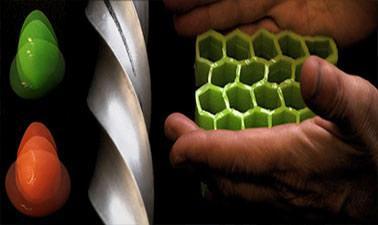
Explore materials from the atomic to the continuum level, and apply your learning to mechanics and engineering problems. All around us, engineers are creating materials whose properties are exactly tailored to their purpose. This course is the first of three in a series of mechanics courses from the Department of Materials Science and Engineering at MIT. Taken together, these courses provide similar content to the MIT subject 3.032: Mechanical Behavior of Materials.

Class Deals by MOOC List - Click here and see EdX's Active Discounts, Deals, and Promo Codes.

The 3.032x series provides an introduction to the mechanical behavior of materials, from both the continuum and atomistic points of view. At the continuum level, we learn how forces and displacements translate into stress and strain distributions within the material. At the atomistic level, we learn the mechanisms that control the mechanical properties of materials. Examples are drawn from metals, ceramics, glasses, polymers, biomaterials, composites and cellular materials.

Part 1 covers stress-strain behavior, topics in linear elasticity and the atomic basis for linear elasticity, and composite materials.

Part 2 covers stress transformations, beam bending, column buckling, and cellular materials.

Part 3 covers viscoelasticity (behavior intermediate to that of an elastic solid and that of a viscous fluid), plasticity (permanent deformation), creep in crystalline materials (time dependent behavior), brittle fracture (rapid crack propagation) and fatigue (failure due to repeated loading of a material).

What you'll learn:

  • The behavior of linear elastic materials
  • The atomic basis for linear elasticity
  • How to solve mechanics problems relating to stress, strain, and strain energy

Syllabus

Week 1: Normal and shear stress Normal and shear strain Hooke's law for isotropic materials
Week 2: 3D stress states Stress strain curves for engineering materials Strain energy
Week 3: Anisotropic materials and symmetry Composite materials
Week 4: Bonding between atoms; energetic basis for linear elasticity; Thermal strain; origins of thermal strain Rubber elasticity: entropic basis for non-linear elasticity
Week 5: Final Quiz

Go to Class
MOOC List is learner-supported. When you buy through links on our site, we may earn an affiliate commission.

Related Courses

Microeconomics Principles (Coursera) Coursera
University of Illinois at Urbana-Champaign

Microeconomics Principles (Coursera)

Most people make the incorrect assumption that economics is ONLY the study of money. My primary goal in this course is to shatter this belief. During this course, we will be addressing the above questions as well as many more relating to: the environment; love and marriage; crime; labor markets; education; politics; sports; business. My main goal is to show you the way economists think and how to use this analytical system to answer questions related not only to these and other important human issues but to anything you end up doing with your life after this class. After all, as you will quickly find out, I believe that everything is economics!

Jun 22nd 2026
5-12 Weeks
Principles of Microeconomics: Competitive Markets (edX) EdX
University of Queensland,UQx

Principles of Microeconomics: Competitive Markets (edX)

Become immersed in economic concepts including elasticity of demand, market pricing, explicit and implicit costs and economic profit maximisation. Learn about monopolistic markets and market structure impacts on production and profit. By undertaking this course, you will be immersed in economic concepts including elasticity calculation, elasticity of demand, market pricing, explicit and implicit costs, economic profit and mapping supply. You’ll explore the two distinct functions of market pricing and the concept of marginal cost, which is central to identifying the optimum production levels.

Self Paced
Self-Paced
The Finite Element Method for Problems in Physics (Coursera) Coursera
University of Michigan

The Finite Element Method for Problems in Physics (Coursera)

This course is an introduction to the finite element method as applicable to a range of problems in physics and engineering sciences. The treatment is mathematical, but only for the purpose of clarifying the formulation. The emphasis is on coding up the formulations in a modern, open-source environment that can be expanded to other applications, subsequently.

Jun 15th 2026
13-24 Weeks
Mechanics, Part 2 (edX) EdX
Rice University,RiceX

Mechanics, Part 2 (edX)

Learn the physics of how things move with this calculus-based course in Mechanics. Learn the physics of how things move with this calculus-based course in Mechanics! PHYS101x serves as an introduction to mechanics following a standard first semester university physics course. This course teaches fundamental concepts and mathematical problem solving required for all STEM fields.

Self Paced
Self-Paced
Intelligent Machining (Coursera) Coursera
University at Buffalo,The State University of New York

Intelligent Machining (Coursera)

Manufacturers are increasingly utilizing machine tools that are self-aware – they perceive their own states and the state of the surrounding environment – and are able to make decisions related to machine activity processes. This is called intelligent machining, and through this course students will receive a primer on its background, tools and related terminology.

Jun 15th 2026
4 Weeks
Principles of Economics: Introduction - Getting to Know You (Coursera) Coursera
Rice University

Principles of Economics: Introduction - Getting to Know You (Coursera)

Economics and economic theory is fundamental to decision making in business, policy, and everyday life. If you're interested in a career in business, law, accounting, or investment then studying economics is a great foundation of knowledge. In this first course of a three course Specialization adapted from my ECON 100 course taught at Rice University, we'll cover the introduction to the basic concepts of microeconomics and macroeconomics.

Jun 22nd 2026
5-12 Weeks
Advanced Manufacturing Enterprise (Coursera) Coursera
University at Buffalo,The State University of New York

Advanced Manufacturing Enterprise (Coursera)

Enterprises that seek to become proficient in advanced manufacturing must incorporate manufacturing management tools and integrate data throughout the supply chain to be successful. This course will make students aware of what a digitally connected enterprise is, as they learn about the operational complexity of enterprises, business process optimization and the concept of an integrated product-process-value chain.

Jun 15th 2026
4 Weeks
Machine Design Part I (Coursera) Coursera
Georgia Institute of Technology

Machine Design Part I (Coursera)

“Machine Design Part I” is the first course in an in-depth three course series of “Machine Design.” The “Machine Design” Coursera series covers fundamental mechanical design topics, such as static and fatigue failure theories, the analysis of shafts, fasteners, and gears, and the design of mechanical systems such as gearboxes. Throughout this series of courses we will examine a number of exciting design case studies, including the material selection of a total hip implant, the design and testing of the wing on the 777 aircraft, and the impact of dynamic loads on the design of an bolted pressure vessel. In this first course, you will learn robust analysis techniques to predict and validate design performance and life.

Jun 22nd 2026
5-12 Weeks
Dense Gases, Liquids and Solids (Coursera) Coursera
University of Colorado Boulder

Dense Gases, Liquids and Solids (Coursera)

Course 4 of Statistical Thermodynamics addresses dense gases, liquids, and solids. As the density of a gas is increased, intermolecular forces begin to affect behavior. For small departures from ideal gas behavior, known as the dense gas limit, one can estimate the change in properties using the concept of a configuration integral, a modification to the partition function.

Jun 22nd 2026
4 Weeks
Autonomous Aerospace Systems (Coursera) Coursera
University of Naples Federico II

Autonomous Aerospace Systems (Coursera)

The course aims to provide the knowledge needed to design and develop efficient driving and navigation solutions for autonomous vehicles. Driving can be strategic or tactical while navigation is the function that provides information about the position, speed and orientation of the vehicle. It is made by integrating measurement from different sources, such as sensors and receivers.

Jun 22nd 2026
5-12 Weeks
Industrial Biotechnology (edX) EdX
Delft University of Technology,DelftX

Industrial Biotechnology (edX)

Learn the basics of sustainable processing for biobased products to further understand their impact on global sustainability. As fossil-based fuels and raw materials contribute to climate change, the use of renewable materials and energy as an alternative is increasingly important and common. This transition is not a luxury, but rather a necessity.

Self Paced
Self-Paced