From Excel to Power BI (Coursera)

From Excel to Power BI (Coursera)

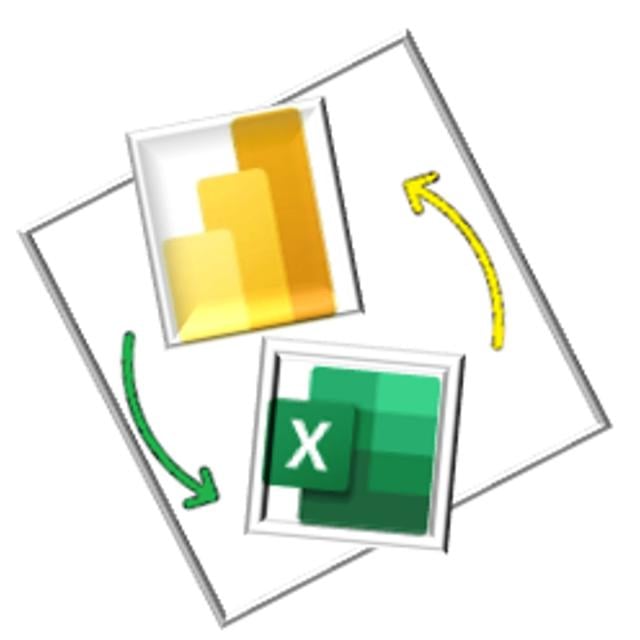
Are you using Excel to manage, analyze, and visualize your data? Would you like to do more? Perhaps you've considered Power BI as an alternative, but have been intimidated by the idea of working in an advanced environment. The fact is, many of the same tools and mechanisms exist across both these Microsoft products. This means Excel users are actually uniquely positioned to transition to data modeling and visualization in Power BI! Using methods that will feel familiar, you can learn to use Power BI to make data-driven business decisions using large volumes of data.

Class Deals by MOOC List - Click here and see Coursera's Active Discounts, Deals, and Promo Codes.

We will help you to build fundamental Power BI knowledge and skills, including:
• Importing data from Excel and other locations into Power BI.
• Understanding the Power BI environment and its three Views.
• Building beginner-to-moderate level skills for navigating the Power BI product.
• Exploring influential relationships within datasets.
• Designing Power BI visuals and reports.
• Building effective dashboards for sharing, presenting, and collaborating with peers in Power BI Service.
For this course you will need:
• A basic understanding of data analysis processes in Excel.
• At least a free Power BI licensed account, including:
• The Power BI desktop application.
• Power BI Online in Microsoft 365.
Course duration is approximately three hours. Learning is divided into five modules, the fifth being a cumulative assessment. The curriculum design includes video lessons, interactive learning using short, how-to video tutorials, and practice opportunities using COMPLIMENTARY DATASETS. Intended audiences include business students, small business owners, administrative assistants, accountants, retail managers, estimators, project managers, business analysts, and anyone who is inclined to make data-driven business decisions. Join us for the journey!

What You Will Learn
Learners will be instructed in how to make use of Excel and Power BI to collect, maintain, share and collaborate, and to make data driven decisions

Syllabus

WEEK 1
From Excel to Power BI
Many of the same data management tools and mechanisms exist across both Microsoft Excel and Power BI. This means Excel users are uniquely positioned to transition to data modeling and visualization in Power BI! Using methods that will feel familiar, you can learn to use Power BI to make data-driven business decisions using large volumes of data. We will help you to build fundamental Power BI knowledge and skills, including: importing data from Excel and other locations into Power BI; understanding the Power BI environment and its three Views; building beginner-to-moderate level skills for navigating the Power BI product; exploring influential relationships within datasets; designing Power BI visuals and reports; and building effective dashboards for sharing, presenting, and collaborating with peers in Power BI Service. Join us for the journey!

Go to Class
MOOC List is learner-supported. When you buy through links on our site, we may earn an affiliate commission.

Related Courses

Text Retrieval and Search Engines (Coursera) Coursera
University of Illinois at Urbana-Champaign

Text Retrieval and Search Engines (Coursera)

Recent years have seen a dramatic growth of natural language text data, including web pages, news articles, scientific literature, emails, enterprise documents, and social media such as blog articles, forum posts, product reviews, and tweets. Text data are unique in that they are usually generated directly by humans rather than a computer system or sensors, and are thus especially valuable for discovering knowledge about people’s opinions and preferences, in addition to many other kinds of knowledge that we encode in text.

Jun 22nd 2026
5-12 Weeks
Introducción a Data Science: Programación Estadística con R (Coursera) Coursera
Universidad Nacional Autónoma de México

Introducción a Data Science: Programación Estadística con R (Coursera)

Este curso te proporcionará las bases del lenguaje de programación estadística R, la lengua franca de la estadística, el cual te permitirá escribir programas que lean, manipulen y analicen datos cuantitativos. Te explicaremos la instalación del lenguaje; también verás una introducción a los sistemas base de gráficos y al paquete para graficar ggplot2, para visualizar estos datos. Además también abordarás la utilización de uno de los IDEs más populares entre la comunidad de usuarios de R, llamado RStudio.

Jun 22nd 2026
4 Weeks
Practical Predictive Analytics: Models and Methods (Coursera) Coursera
University of Washington

Practical Predictive Analytics: Models and Methods (Coursera)

Statistical experiment design and analytics are at the heart of data science. In this course you will design statistical experiments and analyze the results using modern methods. You will also explore the common pitfalls in interpreting statistical arguments, especially those associated with big data. Collectively, this course will help you internalize a core set of practical and effective machine learning methods and concepts, and apply them to solve some real world problems.

Jun 22nd 2026
4 Weeks
Introduction to Spreadsheets and Models (Coursera) Coursera
University of Pennsylvania

Introduction to Spreadsheets and Models (Coursera)

The simple spreadsheet is one of the most powerful data analysis tools that exists, and it’s available to almost anyone. Major corporations and small businesses alike use spreadsheet models to determine where key measures of their success are now, and where they are likely to be in the future. But in order to get the most out of a spreadsheet, you have know how to use it. This course is designed to give you an introduction to basic spreadsheet tools and formulas so that you can begin harness the power of spreadsheets to map the data you have now and to predict the data you may have in the future.

Jun 22nd 2026
4 Weeks
Data Visualization (Coursera) Coursera
University of Illinois at Urbana-Champaign

Data Visualization (Coursera)

Learn the general concepts of data mining along with basic methodologies and applications. Then dive into one subfield in data mining: pattern discovery. Learn in-depth concepts, methods, and applications of pattern discovery in data mining. We will also introduce methods for pattern-based classification and some interesting applications of pattern discovery. This course provides you the opportunity to learn skills and content to practice and engage in scalable pattern discovery methods on massive transactional data, discuss pattern evaluation measures, and study methods for mining diverse kinds of patterns, sequential patterns, and sub-graph patterns.

Jun 22nd 2026
4 Weeks
Bayesian Statistics: From Concept to Data Analysis (Coursera) Coursera
University of California, Santa Cruz

Bayesian Statistics: From Concept to Data Analysis (Coursera)

This course introduces the Bayesian approach to statistics, starting with the concept of probability and moving to the analysis of data. We will learn about the philosophy of the Bayesian approach as well as how to implement it for common types of data. We will compare the Bayesian approach to the more commonly-taught Frequentist approach, and see some of the benefits of the Bayesian approach.

Jun 22nd 2026
4 Weeks
Introduction to Data Science in Python (Coursera) Coursera
University of Michigan

Introduction to Data Science in Python (Coursera)

This course will introduce the learner to the basics of the python programming environment, including fundamental python programming techniques such as lambdas, reading and manipulating csv files, and the numpy library. The course will introduce data manipulation and cleaning techniques using the popular python pandas data science library and introduce the abstraction of the Series and DataFrame as the central data structures for data analysis, along with tutorials on how to use functions such as groupby, merge, and pivot tables effectively. By the end of this course, students will be able to take tabular data, clean it, manipulate it, and run basic inferential statistical analyses.

Jun 22nd 2026
4 Weeks
Big Data Modeling and Management Systems (Coursera) Coursera
University of California, San Diego

Big Data Modeling and Management Systems (Coursera)

Once you’ve identified a big data issue to analyze, how do you collect, store and organize your data using Big Data solutions? In this course, you will experience various data genres and management tools appropriate for each. You will be able to describe the reasons behind the evolving plethora of new big data platforms from the perspective of big data management systems and analytical tools.

Jun 22nd 2026
5-12 Weeks
Pattern Discovery in Data Mining (Coursera) Coursera
University of Illinois at Urbana-Champaign

Pattern Discovery in Data Mining (Coursera)

Learn the general concepts of data mining along with basic methodologies and applications. Then dive into one subfield in data mining: pattern discovery. Learn in-depth concepts, methods, and applications of pattern discovery in data mining. We will also introduce methods for data-driven phrase mining and some interesting applications of pattern discovery. This course provides you the opportunity to learn skills and content to practice and engage in scalable pattern discovery methods on massive transactional data, discuss pattern evaluation measures, and study methods for mining diverse kinds of patterns, sequential patterns, and sub-graph patterns.

Jun 22nd 2026
4 Weeks
Introduction to Recommender Systems: Non-Personalized and Content-Based (Coursera) Coursera
University of Minnesota

Introduction to Recommender Systems: Non-Personalized and Content-Based (Coursera)

This course, which is designed to serve as the first course in the Recommender Systems specialization, introduces the concept of recommender systems, reviews several examples in detail, and leads you through non-personalized recommendation using summary statistics and product associations, basic stereotype-based or demographic recommendations, and content-based filtering recommendations.

Jun 22nd 2026
4 Weeks
Reproducible Research (Coursera) Coursera
Johns Hopkins University

Reproducible Research (Coursera)

This course focuses on the concepts and tools behind reporting modern data analyses in a reproducible manner. Reproducible research is the idea that data analyses, and more generally, scientific claims, are published with their data and software code so that others may verify the findings and build upon them. The need for reproducibility is increasing dramatically as data analyses become more complex, involving larger datasets and more sophisticated computations.

Jun 22nd 2026
4 Weeks