Lectures on Selected Topics in Classical and Fluid Mechanics (Coursera)

Lectures on Selected Topics in Classical and Fluid Mechanics (Coursera)

This course is devoted to selected problems of classical (theoretical) and fluid mechanics which are usually remain outside the standard course of mechanics. Despite the fact that the course is aimed at students with an understanding of the methods and approaches of classical and fluid mechanics, several lectures of the course are devoted to revision of material from the course of classical (theoretical) mechanics. The course is aimed at an audience interested in theoretical physics methods for solving problems of classical and fluid mechanics. The course is designed for an audience that has previously attended general course of classical and fluid mechanics and courses of higher mathematics: mathematical analysis and differential equations theory.

Class Deals by MOOC List - Click here and see Coursera's Active Discounts, Deals, and Promo Codes.

Syllabus

WEEK 1
Introduction
The first week starts with the brief overview of the whole course, and continues with introduction to Lagrangian mechanics. We introduce the notion of constraints and discuss Lagrange equation of the first kind.

WEEK 2
Lagrangian Formalism
The second week is devoted to Lagrange equation of the second kind. We formulate a concept of generalized coordinates, introduce Lagrange function and action function, analyze the role of the least action principle in mechanics and derive Lagrange equation of the second kind from it.

WEEK 3
Lagrangian Formalism: Specific Problems
The third week continuous the study of Lagrangian formalism. We investigate the general features of an open system dynamics by solving Kelly’s problem. We also analyze the connection between the symmetry of Lagrangian function and the conservation lows for the basic physical quantities, and formulate the main issue of dynamics in central force field.

WEEK 4
Scattering
The fourth week is devoted to scattering. We analyze general features of the scattering in the central field, and study the scattering on a solid sphere and Rutherford’s scattering. We also compare the main issues of the scattering for short-range and long-range potentials.

WEEK 5
The theory of Oscillations
In the fifth week we investigate two interesting problems from the aria of oscillation theory: Kapitza pendulum and parametric resonance phenomenon.

WEEK 6
Elements of Solid Mechanics
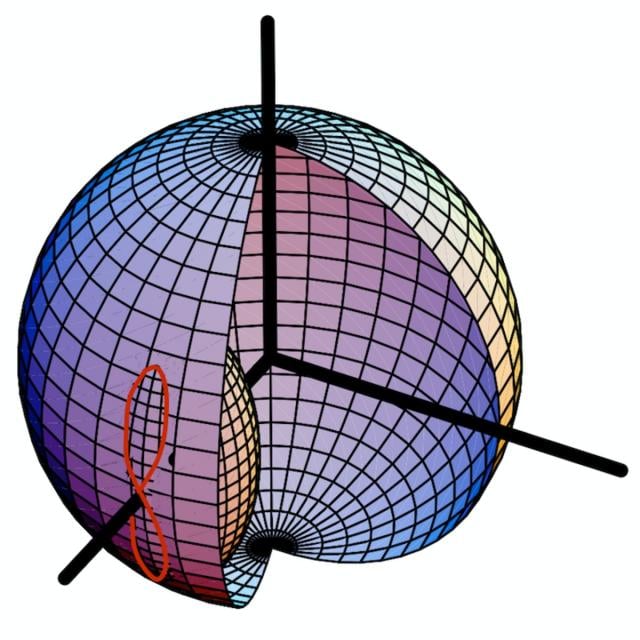
In the sixth week we deal with the dynamics of an asymmetric rigid body and investigate an unusual Dzhanibekov effect (intermediate axis theorem).

WEEK 7
Hamiltonian Formalism and Canonical Transformations
In the seventh week we proceed to the Hamiltonian formalism in classical mechanics. We introduce Hamilton function, form the system of Hamiltonian equations and establish the connection between Lagrangian and Hamiltonian mechanics. We also investigate the issues of canonical transformations.

WEEK 8
Hamilton–Jacobi Equation
In eighth week we introduce Hamilton-Jacobi equation and analyze the role of the action function in the framework of Hamiltonian mechanics. In this week we also summarize our study of the general methods and approaches in classical mechanics.

WEEK 9
Perturbation Theory
In the ninth week we investigate the perturbation theory in classical mechanics, which is based on the canonical transformation theory.

WEEK 10
Elements of Fluid Mechanics
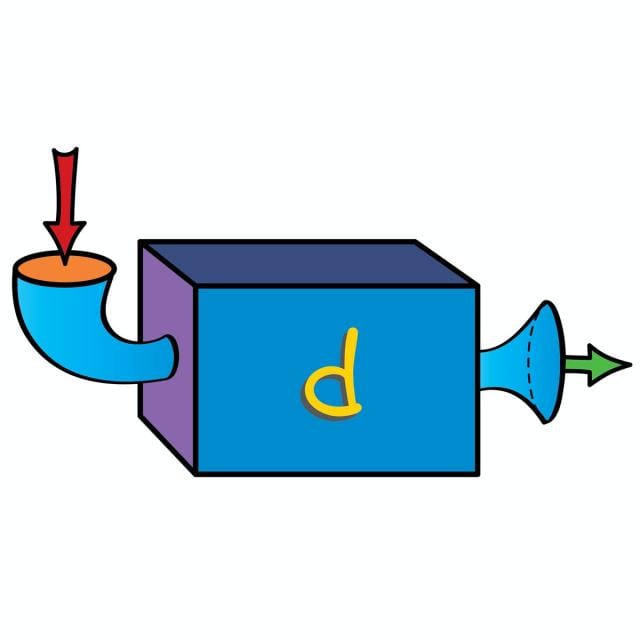
The last tenth week is devoted to selected problems of fluid mechanics, such as shock waves and nozzles.
Go to Class
MOOC List is learner-supported. When you buy through links on our site, we may earn an affiliate commission.

Related Courses

Linear Regression and Modeling (Coursera) Coursera
Duke University

Linear Regression and Modeling (Coursera)

This course introduces simple and multiple linear regression models. These models allow you to assess the relationship between variables in a data set and a continuous response variable. Is there a relationship between the physical attractiveness of a professor and their student evaluation scores? Can we predict the test score for a child based on certain characteristics of his or her mother? In this course, you will learn the fundamental theory behind linear regression and, through data examples, learn to fit, examine, and utilize regression models to examine relationships between multiple variables, using the free statistical software R and RStudio.

Jun 22nd 2026
4 Weeks
Calculus through Data & Modelling: Integration Applications (Coursera) Coursera
Johns Hopkins University

Calculus through Data & Modelling: Integration Applications (Coursera)

This course continues your study of calculus by focusing on the applications of integration. The applications in this section have many common features. First, each is an example of a quantity that is computed by evaluating a definite integral. Second, the formula for that application is derived from Riemann sums. Rather than measure rates of change as we did with differential calculus, the definite integral allows us to measure the accumulation of a quantity over some interval of input values.

Jun 22nd 2026
4 Weeks
MBSE: Model-Based Systems Engineering (Coursera) Coursera
University at Buffalo,The State University of New York

MBSE: Model-Based Systems Engineering (Coursera)

This Model-Based Systems Engineering (MBSE) course and the Digital Thread courses featured earlier in this specialization bring together the concepts from across digital manufacturing and design, forming a vision in which the geometry of a product is just one way of describing it. MBSE is where the model resulting from the evolution of system requirements, design, analysis, verification and validation activities is the focus of design and manufacturing.

Jun 22nd 2026
4 Weeks
Physics 101 - Rotational Motion and Gravitation (Coursera) Coursera
Rice University

Physics 101 - Rotational Motion and Gravitation (Coursera)

This course serves as an introduction to the physics of rotational motion and gravitation. Upon completion, learners will have an understanding of how mathematical laws and conservation principles describe the motions and interactions of objects all around us. They will gain experience in solving physics problems with tools such as graphical analysis, algebra, vector analysis, and calculus.

Jun 22nd 2026
4 Weeks
Matrix Methods (Coursera) Coursera
University of Minnesota

Matrix Methods (Coursera)

Mathematical Matrix Methods lie at the root of most methods of machine learning and data analysis of tabular data. Learn the basics of Matrix Methods, including matrix-matrix multiplication, solving linear equations, orthogonality, and best least squares approximation. Discover the Singular Value Decomposition that plays a fundamental role in dimensionality reduction, Principal Component Analysis, and noise reduction.

Jun 22nd 2026
5-12 Weeks
Physics 102 - Electric Charges and Fields (Coursera) Coursera
Rice University

Physics 102 - Electric Charges and Fields (Coursera)

This course serves as an introduction to the physics of electricity and magnetism. Upon completion, learners will have an understanding of how the forces between electric charges are described by fields, and how these fields are related to electrical circuits. They will gain experience in solving physics problems with tools such as graphical analysis, algebra, vector analysis, and calculus. The course follows the typical progression of topics of a first-semester university physics course: charges, electric forces, electric fields potential, magnetic fields, currents, magnetic moments, electromagnetic induction, and circuits.

Jun 22nd 2026
4 Weeks
Engineering Maintainable Android Apps (Coursera) Coursera
Vanderbilt University

Engineering Maintainable Android Apps (Coursera)

Engineering Maintainable Android Apps, which is a 4 week MOOC that shows by example various methods for engineering maintainable Android apps, including test-driven development methods and how to develop/run unit tests using JUnit and Robotium (or equivalent automated testing frameworks for Android), as well as how to successfully apply common Java/Android software patterns to improve the extensibility and clarity of Android apps.

Jun 22nd 2026
4 Weeks
Constructivism and Mathematics, Science, and Technology Education (Coursera) Coursera
University of Illinois at Urbana-Champaign

Constructivism and Mathematics, Science, and Technology Education (Coursera)

This course is designed to help participants examine the implications of constructivism for learning and teaching in science, mathematics, and technology focused areas. Course readings, discussions, and assignments will examine constructivist views of learning, research on students' ideas and idea-based interactions, research on instructional approaches taking student ideas into account, and challenges in implementing constructivist perspectives in instruction.

Jun 22nd 2026
5-12 Weeks
The Science of the Solar System (Coursera) Coursera
Caltech

The Science of the Solar System (Coursera)

Learn about the science behind the current exploration of the solar system in this free class. Use principles from physics, chemistry, biology, and geology to understand the latest from Mars, comprehend the outer solar system, ponder planets outside our solar system, and search for habitability in our neighborhood and beyond. This course is generally taught at an advanced level assuming a prior knowledge of undergraduate math and physics, but the majority of the concepts and lectures can be understood without these prerequisites.

Jun 22nd 2026
5-12 Weeks
Differential Equations for Engineers (Coursera) Coursera
The Hong Kong University of Science and Technology - HKUST

Differential Equations for Engineers (Coursera)

This course is about differential equations and covers material that all engineers should know. Both basic theory and applications are taught. In the first five weeks we will learn about ordinary differential equations, and in the final week, partial differential equations. The course is composed of 56 short lecture videos, with a few simple problems to solve following each lecture. And after each substantial topic, there is a short practice quiz. Solutions to the problems and practice quizzes can be found in instructor-provided lecture notes. There are a total of six weeks in the course, and at the end of each week there is an assessed quiz.

Jun 22nd 2026
5-12 Weeks