Learning for a Sustainable Future (FutureLearn)

Learning for a Sustainable Future (FutureLearn)

Join a personal and professional global learning journey towards a sustainable future. What on Earth could be more important? Grow your knowledge of sustainability. Climate change, gender equality, health, social equity, and inclusion are issues that affect us all, impacting human well-being and economic stability. How to live a sustainable life affects – and connects - us all.

Class Deals by MOOC List - Click here and see FutureLearn's Active Discounts, Deals, and Promo Codes.

On this five-week course, you’ll develop an informed personal response to these major challenges as you’re supported to take positive actions towards a sustainable future.
You’ll learn more about current global issues and consider how we can all take action, personally or locally.
The course has an additional strand for those working in formal or informal education, who want to bring some of the activities and issues covered in the course into their own teaching.
Take action
You’ll learn practical ways to explore values and empower people to examine the ways in which they could take local action on global-scale problems.
Working in this way, starting from where you are within your own context, and sharing this with others throughout the course helps us all to develop a new and collective way of thinking for a sustainable future.
Discover how to work towards a sustainable future
You’ll build your understanding of and knowledge of sustainability and the global challenges that we face and experience within our lives, as you learn from experts at the University of Edinburgh, Learning for Sustainability Scotland and other participants on the course.
By the end of the course, you’ll be more confident and ready to take steps towards a sustainable future.

What topics will you cover?

  • Disruption and Reorienting our Thoughts.
  • Thinking Deeply: Values, beliefs and local issues.
  • Understanding Broadly: Systems thinking and wider positioning
  • Taking Action: From knowing to doing
  • Futures Thinking: Reflection and planning

Learning on this course
You can take this self-guided course and learn at your own pace. On every step of the course you can meet other learners, share your ideas and join in with active discussions in the comments.

What will you achieve?
By the end of the course, you‘ll be able to...

  • Explore the complex, intersectional and contested nature of sustainability.
  • Discuss the importance of values in shaping personal attitudes and behaviour towards sustainability.
  • Identify and share practical ways to develop opportunities to take local action on global-scale problems.
  • Understand the impacts of society and culture on system-wide transformation.
  • Examine education and learning techniques and share additional creative approaches to support transformative learning in life and work.
  • Reflect on personal engagement and development and create and share plans for future actions.

Who is the course for?
This course is designed for anyone with an interest in sustainability – and that should be all of us, of course!
You may find the course particularly useful if you are involved in education at any level but no formal experience is required.


Go to Class
MOOC List is learner-supported. When you buy through links on our site, we may earn an affiliate commission.

Related Courses

Planet Partners: Tackling the Climate Crisis Together (FutureLearn) FutureLearn
University of Reading

Planet Partners: Tackling the Climate Crisis Together (FutureLearn)

Investigate the impact of climate change, the research being done to tackle it, and what you can do to take meaningful action. Explore the different areas affected by climate change. The impacts of climate change are being felt worldwide and across many areas of life. This includes our food, our physical and mental health, where and how we live, wildlife and environmental systems, and political direction.

Self Paced
2 Weeks
IUCN Red List of Ecosystems: The Global Standard for Assessing Risks to Ecosystems (FutureLearn) FutureLearn
Deakin University

IUCN Red List of Ecosystems: The Global Standard for Assessing Risks to Ecosystems (FutureLearn)

This course introduces the IUCN Red List of Ecosystems and its successful use and policy impact through real-world case studies. Learn how the Red List of Ecosystems is helping to sustain global biodiversity. Nature is under threat around the world. Understanding where ecosystems are at greatest risk allows us to act to sustain species and ecosystems.

Self Paced
2 Weeks
Maqasid Al-Shariah and Sustainable Development (FutureLearn) FutureLearn
University of Malaya

Maqasid Al-Shariah and Sustainable Development (FutureLearn)

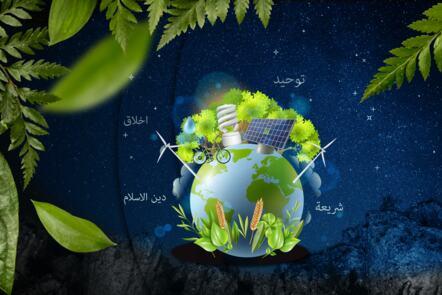
Discover how religion, particularly Islamic teachings, and scientific knowledge can work together towards sustainable solutions. Use a blend of religion and science to explore sustainability. Sustainable Development is one of the most comprehensive worldwide concepts today in the quest to safeguard the environment. This principle of sustainability has been discovered to be intrinsically linked to the concept of Shariah, which emphasises the importance of continuity not just in this world, but also in the afterlife.

Self Paced
3 Weeks
Social Innovation: Global Solutions for a Sustainable Future (FutureLearn) FutureLearn
MINCA,Biji-biji Initiative

Social Innovation: Global Solutions for a Sustainable Future (FutureLearn)

Discover the power of social innovation, and how it can change the world for the better. Explore the importance of social innovation in a changing world. Social innovation is the process by which new ways of doing things are created to respond to society’s needs. This can be technological – embracing open-source or online technology, for example – or it can be social, via encouraging local entrepreneurship.

Self Paced
3 Weeks
Creating Ethical and Sustainable Cities at the Local Level (FutureLearn) FutureLearn
RMIT University,EIT Community

Creating Ethical and Sustainable Cities at the Local Level (FutureLearn)

See how frameworks for ethical and sustainable cities can be localised, fostering resilient cities for the future. Learn how you can contribute to the sustainable cities of tomorrow. It’s widely accepted that, as we look towards the future, we need to actively create cities that are ethical, sustainable, inclusive, and well-governed. To do this, we need to localise frameworks and principles such as the Sustainable Development Goals (SDGs), the European Green Deal and New European Bauhaus to make tangible differences. Knowing how to start this localisation can be daunting, which is why this course from RMIT is so valuable.

Self Paced
2 Weeks
Renewable Energy: Achieving Sustainability through Bioenergy (FutureLearn) FutureLearn
University of Leeds

Renewable Energy: Achieving Sustainability through Bioenergy (FutureLearn)

Understand the principles of bioenergy and learn how to harness this form of renewable energy to achieve sustainability. Learn about the principles and environmental implications of bioenergy. On this two week course, you will explore bioenergy, one of the most diverse and readily available sources of renewable energy. You’ll look into what types of biomass can be used and how sustainable energy solutions can be developed in a wide range of communities.

Self Paced
2 Weeks
Using Systems Thinking to Tackle the Climate and Biodiversity Crisis (FutureLearn) FutureLearn
University of Reading

Using Systems Thinking to Tackle the Climate and Biodiversity Crisis (FutureLearn)

Discover how switching to a systems mindset could help overcome the global environmental challenges we face today. Take a big picture approach to the climate and biodiversity crisis. With crises as vast, complex, and interconnected as climate change and biodiversity loss, focusing on one aspect of the problem will never be enough. Systems thinking offers a new way of seeing and understanding environmental issues, which could radically change how we go about tackling them. On this two-week course from the University of Reading, you’ll learn what systems thinking is and how it could transform your approach to the climate and biodiversity crisis.

Self Paced
2 Weeks
Global Prosperity Beyond GDP (FutureLearn) FutureLearn
University College London

Global Prosperity Beyond GDP (FutureLearn)

How can we think beyond GDP and build a prosperous economy that works better for people and the planet? Find out with this course. Economic growth is no longer the best indicator of broader success. By 2050, the global population will reach 10 billion and we may face environmental crisis. If we are to thrive, and not just survive, into the next century, we will need new tools and new ways of thinking to tackle the challenges of today and ensure a successful and prosperous future for everyone.

Self Paced
4 Weeks
Service Science and Sustainability (FutureLearn) FutureLearn
National Tsing Hua University

Service Science and Sustainability (FutureLearn)

Discover the science behind service systems, and in the process learn how the service sector can become more sustainable. Discover what service science is and how to best provide sustainable services. The service industry is underpinned by the systems that help to provide a service, and the stakeholders in the companies involved.

Self Paced
3 Weeks
Climate Intelligence: Using Climate Data to Improve Business Decision-Making (FutureLearn) FutureLearn
University of Reading

Climate Intelligence: Using Climate Data to Improve Business Decision-Making (FutureLearn)

Build climate resilience in your business as you learn how climate intelligence helps make decisions that mitigate risks. How exposed is your organisation to climate risk? Climate and weather projections hold the data that businesses need both to evaluate the risk climate change poses and to mitigate that risk. However, interpreting this data can be challenging. On this two-week course, you’ll learn how to identify relevant and reliable climate data for your business and explore how that raw data can be converted into information that connects with the particular operational and financial decisions you face.

Self Paced
2 Weeks