EdX

La maladie d’Alzheimer: tout ce que vous avez toujours voulu savoir (edX)

Offered by Sorbonne University,
La maladie d’Alzheimer: tout ce que vous avez toujours voulu savoir (edX)

Ce MOOC présente de façon simple et compréhensible la maladie d’Alzheimer et les maladies apparentées. Il s’adresse à toute personne intéressée par ces maladies et aussi aux professionnels de santé intéressés. Ce cours présente, de façon simple et compréhensible par tous, la maladie d’Alzheimer et les maladies apparentées. Sont abordés les données actuelles sur leur physiopathologie, les signes de ces maladies, la démarche médicale qui conduit à leur diagnostic, ainsi que leur prise en charge. De plus, le retentissement sur la société, l’état de la recherche et les pistes pour la prévention sont aussi abordés.

Class Deals by MOOC List - Click here and see EdX's Active Discounts, Deals, and Promo Codes.

Ce cours s’adresse à toute personne intéressée par ces maladies et aussi aux professionnels de santé intéressés. Il ne concerne pas les spécialistes des maladies de la mémoire ou les experts de ces maladies.
Ce cours est formé de 10 parties comportant chacune un exposé, des interviews d’experts des sujets abordés et un questionnaire d’autoévaluation.

What you'll learn:

  • Comprendre la maladie d’Alzheimer
  • Connaitre les symptômes et les signes
  • Connaitre la prise en charge
  • Connaitre l’impact pour la société et les principales pistes de la recherche

Syllabus

Semaine 1

  • Que se passe-t-il dans le cerveau des personnes atteintes de la maladie d’Alzheimer?
  • L’histoire naturelle de la maladie d’Alzheimer.

Semaine 2

  • Quels sont les symptômes qui peuvent révéler une maladie d’Alzheimer?
  • La démarche médicale qui conduit au diagnostic de la maladie d’Alzheimer.

Semaine 3

  • Faut-il communiquer le diagnostic de maladie d’Alzheimer au patient?
  • Quelles sont les maladies apparentées à la maladie d’Alzheimer et comment les reconnaitre?

Semaine 4

  • La prise en charge de la maladie d’Alzheimer et des maladies apparentées.
  • Maladie d’Alzheimer: les complications et les cas difficiles.

Semaine 5

  • La maladie d’Alzheimer: quel impact pour la société?
  • Les pistes de la recherche sur la maladie d’Alzheimer et la prévention.

Semaine 6
Évaluation et fin du MOOC

Go to Class
MOOC List is learner-supported. When you buy through links on our site, we may earn an affiliate commission.

Related Courses

Essentials of Global Health (Coursera) Coursera
Yale University

Essentials of Global Health (Coursera)

Essentials of Global Health is a comprehensive introduction to global health. It is meant to introduce you to this topic in well-structured, clear and easy to understand ways. Much of the course will focus on five questions: What do people get sick, disabled and die from; Why do they suffer from these conditions? Which people are most affected? Why should we care about such concerns? What can be done to address key health issues, hopefully at least cost, as fast as possible, and in sustainable ways?

May 18th 2026
5-12 Weeks
Understanding Dementia (University of Tasmania) Other Providers
University of Tasmania

Understanding Dementia (University of Tasmania)

The Understanding Dementia MOOC was developed by the Wicking Dementia Research and Education Centre based in the College of Health and Medicine at the University of Tasmania. This world-leading online course is free, easily accessible and available to everyone with an interest in dementia. This course is free and runs twice a year in February and July.

Feb 7th 2023
5-12 Weeks
Case Studies in Personalized Medicine (Coursera) Coursera
Vanderbilt University

Case Studies in Personalized Medicine (Coursera)

Learn how advances in biomedicine hold the potential to revolutionize drug development, drug treatments, and disease prevention: where are we now, and what does the future hold? This course will present short primers in genetics and mechanisms underlying variability in drug responses. A series of case studies will be used to illustrate principles of how genetics are being brought to bear on refining diagnoses and on personalizing treatment in rare and common diseases. The ethical and operational issues around how to implement large scale genomic sequencing in clinical practice will be addressed.

May 25th 2026
5-12 Weeks
Introduction to Biology - The Secret of Life (edX) EdX
MIT,MITx

Introduction to Biology - The Secret of Life (edX)

Explore the secret of life through the basics of biochemistry, genetics, molecular biology, recombinant DNA, genomics and rational medicine. 7.00x is an introductory level biology course hosted by professor Eric Lander, who was one of the leaders of the Human Genome Project. The course content reflects the topics taught in the MIT introductory biology courses and many biology courses across the world.

Mar 12th 2024
13-24 Weeks
Take Your Medicine: Developing New Drug Products (edX) EdX
University of Texas at Austin,UTAustinX

Take Your Medicine: Developing New Drug Products (edX)

Discover how new drugs are developed, tested, approved and marketed. Medicine has eradicated or eased the symptoms of many diseases. This course reveals how new drugs go from research innovation to a medicine that can be prescribed to patients. You’ll learn the process, challenges and issues in developing pharmaceutical products.

No sessions available
4 Weeks
Dementia Care: Staying Connected and Living Well (FutureLearn) FutureLearn
Newcastle University

Dementia Care: Staying Connected and Living Well (FutureLearn)

A course for carers, to help you stay connected to loved ones, manage stress at home and diffuse difficult situations. If you are a carer for a person living with dementia then this is a course for you. When it comes to understanding and supporting a person living with dementia, family carers are very often the most skilled and knowledgeable. Yet, you will know that carers can face a number of really stressful situations that can be difficult to deal with.

No sessions available
3 Weeks
Causes of Human Disease: Understanding Causes of Disease (FutureLearn) FutureLearn
University of Leeds

Causes of Human Disease: Understanding Causes of Disease (FutureLearn)

Learn the epidemiological methods used to understand the causes of diseases and how social factors influence their development. What causes human disease? Why do some people get a disease but others don’t? Through this course, you’ll learn how epidemiologists are helping to find answers to these complex questions and how the health of a population is measured and analysed.

Sep 23rd 2024
2 Weeks
Cancer Biology (saylor.org) Saylor Academy
Saylor.org

Cancer Biology (saylor.org)

Cancer has existed among humans since humans themselves began and has been a subject of urgent interest from very early in our history. What we call “cancer” consists of a number of different diseases with one fundamental similarity: they are all initiated by the unchecked proliferation and growth of cells in which the pathways and systems that normally control cell division and mortality are absent.

Legacy Course
Self-Paced
Tuberculosis (FUN) FUN
Institut Pasteur

Tuberculosis (FUN)

To provide an up-to-date overview of the disease, the Institut Pasteur has created a MOOC dedicated to Tuberculosis. This course will provide a knowledge base that goes from the basics of TB to the current state of knowledge on various aspects of tuberculosis: the clinical picture, epidemiology, pediatric TB, factors affecting susceptibility to the disease, including HIV, diabetes and human genetics, immunology, vaccines, diagnosis, current and future ways to detect drug resistance, and how to treat drug sensitive and multi-drug resistant strains.

Sep 7th 2021
5-12 Weeks
Understanding Multiple Sclerosis (MS) (University of Tasmania) Other Providers
University of Tasmania

Understanding Multiple Sclerosis (MS) (University of Tasmania)

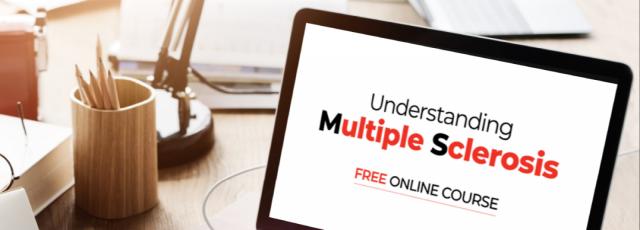
'Understanding Multiple Sclerosis (MS)' is a free online course that aims to improve understanding and awareness of MS. Developed by the Menzies Institute for Research in partnership with Multiple Sclerosis Limited, the content is delivered by 27 experts in the field including neurologists, researchers, clinicians, allied health practitioners, carers and people living with Multiple Sclerosis.

Sep 12th 2022
5-12 Weeks
Le paludisme (FUN) FUN
Aix-Marseille Université

Le paludisme (FUN)

Le but de ce cours est de répondre à toutes les interrogations que soulèvent le paludisme. Il s’agit de faire un véritable état des lieux sur la maladie, le parasite, les moustiques, les traitements existants, les moyens de luttes, les précautions à prendre avant de voyager en zone d’endémie, mais aussi sur les avancées de la recherche et sur les vaccins.

No sessions available
5-12 Weeks
From Disease to Genes and Back (Coursera) Coursera
Novosibirsk State University

From Disease to Genes and Back (Coursera)

Human genetics explores the genetically determined similarities and differences between human beings. This scientific discipline encompasses a variety of related fields such as molecular genetics, genomics, population genetics and medical genetics. Study of human genetics can help to find answers to questions regarding the inheritance and development of different human phenotypes. The field of medical genetics is quickly growing and dynamically developing thanks to the new technologies such as the next-generation sequencing.

Aug 1st 2022
5-12 Weeks