EdX

Jesus in Scripture and Tradition (edX)

Jesus in Scripture and Tradition (edX)

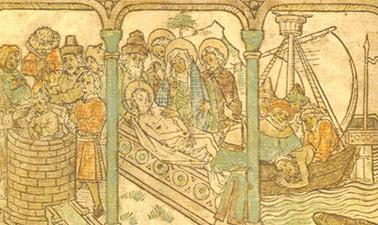
The Bible says that Jesus was identified as God's beloved son at his baptism. The same identification was made about Israel in the Old Testament and the disciples of Christ at their baptism. The striking similarity of these titles establishes a tight interrelationship between the people Israel, the person of Jesus Christ, and the church.

Class Deals by MOOC List - Click here and see EdX's Active Discounts, Deals, and Promo Codes.

In this course, we will explore how a close reading of the book of Genesis, the Gospels, and early Christian writers can shed further light on these relationships and, in so doing, deepen our understanding of the figure of Jesus Christ. Unlike many other treatments, this course does not presume that Jesus’ character can be plumbed solely by an examination of the Gospel stories.

The witness of the Jewish scriptures and the lives of the saints are also important sources for this task.
The course will be eight weeks in length and organized around three topical questions:
Who is Israel? (primary source material: the book of Genesis)
Who is Jesus? (primary source material: the Gospels and the Creeds)
Who is the Church? (primary source material: a selection of post-Biblical Christian writers)
No matter what your background in the study of theology, this course will provide a fresh approach to the identify of Jesus Christ that will reveal how the church has explored the unmeasurable depths of his person.
What you'll learn:

  • Recognize major people, places, and events of the Old and New Testament as related to the narratives of Israel and Jesus
  • Reflect on the mysteries of Christ
  • Examine the Church’s relationship to Christ
  • Explore religious questions through study of themes and selected biblical passages
  • Reflect on ways major biblical themes apply to modern life

Go to Class
MOOC List is learner-supported. When you buy through links on our site, we may earn an affiliate commission.

Related Courses

Deciphering Secrets: Unlocking the Manuscripts of Medieval Burgos (Spain) (edX) EdX
Universidad Carlos III de Madrid - UC3M,UC3Mx

Deciphering Secrets: Unlocking the Manuscripts of Medieval Burgos (Spain) (edX)

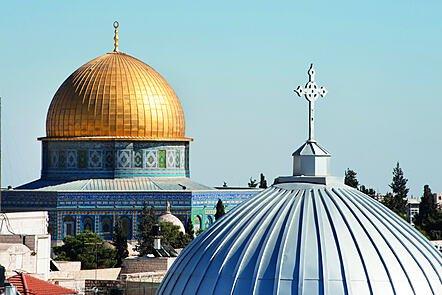
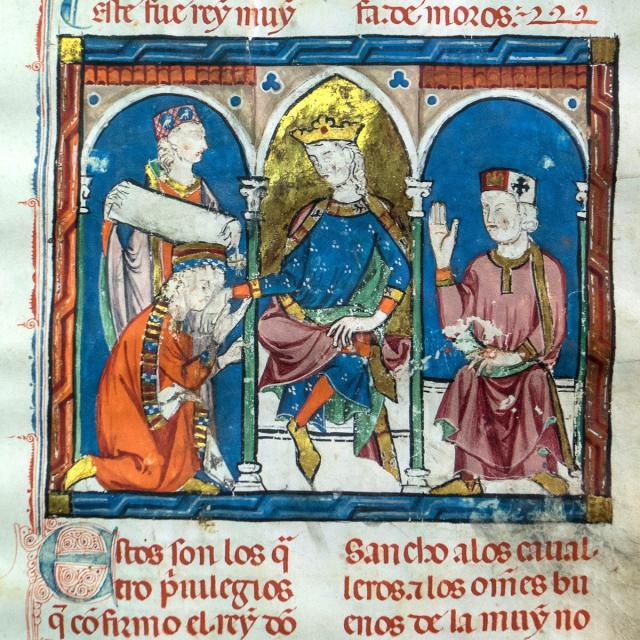
Explore the medieval city of Burgos (Spain) and assess its history of Jewish, Christian, and Muslim religious and cultural coexistence. This history course delves into the medieval history of the city of Burgos, from its inception in 884 c.e. as the homeland of the Spanish Kingdom of Castile and Leon, until the completion of the Spanish Reconquista in 1492.

No sessions available
5-12 Weeks
English Grammar and Style (edX) EdX
University of Queensland,UQx

English Grammar and Style (edX)

Learn key concepts and strategies in grammar and style to help enhance your writing and confidently respond to the demand of high levels of literacy in the 21st century. With the rise of social media and the Internet, many people are writing more today for different mediums than ever before. We’ll present materials that cover grammatical principles, word usage, writing style, sentence and paragraph structure, and punctuation.

Self Paced
Self-Paced
Christian-Muslim Relations (FutureLearn) FutureLearn
University of Edinburgh

Christian-Muslim Relations (FutureLearn)

Uncover important themes in the history of Christian-Muslim relations and understand the politics that continue to shape it. Gain an insight into the academic study of Christian-Muslim Relations. On this innovative four-week course, you’ll be introduced to the academic study of Christian-Muslim Relations with the School of Divinity at the University of Edinburgh.

Oct 3rd 2022
4 Weeks
Toledo: Deciphering Secrets of Medieval Spain (Coursera) Coursera
University of Colorado System

Toledo: Deciphering Secrets of Medieval Spain (Coursera)

This course evaluates the medieval history of Toledo from the era of the Visigoth Kingdom (6th-8th centuries) through its Islamic period (8th to 11th centuries) and into its reintegration into Christian Spain (after 1085 c.e.) In particular, we take note of the cultural and religious transformations that characterized the city with a special effort to understand how many peoples and religions came to settle and live amongst one another.

Jul 1st 2024
5-12 Weeks
Science & Religion 101 (Coursera) Coursera
University of Alberta

Science & Religion 101 (Coursera)

This course examines the nature of both science and religion and attempts to explore the possible relationships between them. The primary purpose is to dispel the popular myth that science and religion are entrenched in a never-ending conflict. As a result, this course argues that if the limits of both science and religion are respected, then their relationship can be complementary.

Nov 23rd 2026
5-12 Weeks
Change of Era: The Origins of Christian Culture through the Lens of Archaeology (FutureLearn) FutureLearn
University of Padova

Change of Era: The Origins of Christian Culture through the Lens of Archaeology (FutureLearn)

Learn about innovative approaches to the study of early Christianity and discover its role in a crucial period of history. Delve into early Christianity. On this four-week course, you’ll gain a better understanding of a crucial period in history – one characterised by deep political, economic, cultural, and environmental transformations in the context of the end of the Western Roman Empire.

Self Paced
4 Weeks
Biblical Archaeology: The archaeology of ancient Israel and Judah (edX) EdX
IsraelX

Biblical Archaeology: The archaeology of ancient Israel and Judah (edX)

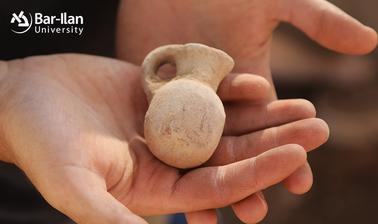
Join me as I share with you my passion for archaeological discovery and learn about the exciting methods of modern archaeology. Explore how archaeology illuminates biblical Israel and Judah, and the archaeological finds relate to the bible. Join me for an introductory course on biblical archaeology of ancient Israel and Judah during the Iron Age (ca. 1200-586 BCE).

Nov 1st 2022
5-12 Weeks
The Einstein Revolution (edX) EdX
HarvardX,Harvard University

The Einstein Revolution (edX)

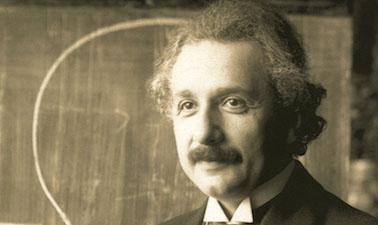
Traces Albert Einstein’s engagement with relativity, quantum mechanics, Nazism, nuclear weapons, philosophy, the arts, and technology. Albert Einstein has become the icon of modern science. Following his scientific, cultural, philosophical, and political trajectory, this course aims to track the changing role of physics in the 20th and 21st centuries.

Self Paced
Self-Paced
Tangible Things: Discovering History Through Artworks, Artifacts, Scientific Specimens, and the Stuff Around You (edX) EdX
HarvardX,Harvard University

Tangible Things: Discovering History Through Artworks, Artifacts, Scientific Specimens, and the Stuff Around You (edX)

Gain an understanding of history, museum studies, and curation by looking at, organizing, and interpreting art, artifacts, scientific curiosities, and the stuff of everyday life. Have you ever wondered about how museum, library, and other kinds of historical or scientific collections all come together? Or how and why curators, historians, archivists, and preservationists do what they do?

Self Paced
Self-Paced
Visualizing Postwar Tokyo, Part 1 (edX) EdX
The University of Tokyo,UTokyoX

Visualizing Postwar Tokyo, Part 1 (edX)

Analyze the history of change and development in postwar Tokyo from different perspectives using archived photographs, films, and TV programs. Tokyo emerged out of the ruins of war to become a large city of 10 million people in only a quarter of a century. During this process of change, the capital of a military empire that once invaded East Asia experienced occupation by the U.S. armed forces, hosted the Olympic Games, and transformed into a consumer hub where young people could enjoy economic “wealth.”

Self Paced
Self-Paced
English for Doing Business in Asia - Speaking (edX) EdX
The Hong Kong University of Science and Technology - HKUST,HKUSTx

English for Doing Business in Asia - Speaking (edX)

Introducing strategies for developing your spoken English communication skills in the context of doing business in Asia. The use of English for doing business in multinational settings is a fact of life for many business people. As Asian economies expand and become more involved in the global economy, a lingua franca – a language used to communicate among groups of people who do not share a mother tongue – is needed to exchange information.

Self Paced
Self-Paced