Introduction à la programmation orientée objet (en C++) (Coursera)

Introduction à la programmation orientée objet (en C++) (Coursera)

Ce cours introduit la programmation orientée objet (encapsulation, abstration, héritage, polymorphisme) en l'illustrant en langage C++. Il présuppose connues les bases de la programmation (variables, types, boucles, fonctions, ...). Il est conçu comme la suite du cours « Initiation à la programmation (en C++) ».

Class Deals by MOOC List - Click here and see Coursera's Active Discounts, Deals, and Promo Codes.

Comme son prédécesseur, ce cours s'appuie sur de nombreux éléments pédagogiques : vidéos sous-titrées, quizz dans et hors vidéos, exercices, devoirs notés automatiquement, notes de cours.

Syllabus

WEEK 1
Introduction à la Programmation Orientée Objet
Cette semaine vous accueille dans le cours et vous présente les premiers concepts de base de la programmation dite « orientée objet ».

WEEK 2
Constructeurs et destructeurs
Cette semaine aborde l'initialisation des objets (via ce qu'on appelle des « constructeurs »), ainsi que ce qui se passe « en fin de vie » des objets.

WEEK 3
Surcharge des opérateurs
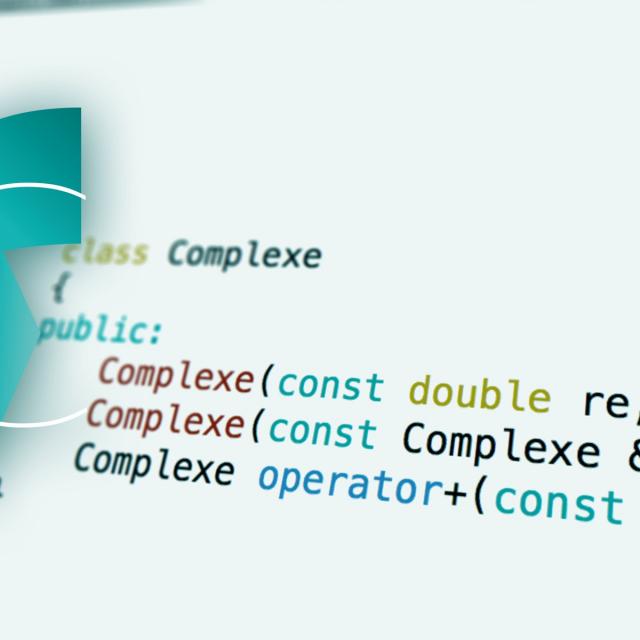
Cette semaine nous étudions comment étendre les opérateurs du langage C++ à nos propres classes.

WEEK 4
Héritage
Cette semaine nous abordons la troisième notion fondamentale de la programmation orienté objet : l'héritage.

WEEK 5
Polymorphisme
Cette semaine nous abordons la quatrième et dernière notion fondamentale de la programmation orienté objet : le polymorphisme.

WEEK 6
Héritage multiple
Cette semaine présente comment une classe peut hériter de plusieurs classes et discute les problèmes que cela peut engendrer.

WEEK 7
Etude de cas
Nous terminons notre cours par une étude de cas détaillée qui met en lumière les différents concepts rencontrés.
Go to Class
MOOC List is learner-supported. When you buy through links on our site, we may earn an affiliate commission.

Related Courses

Recovering the Humankind's Past and Saving the Universal Heritage (Coursera) Coursera
Sapienza University of Rome

Recovering the Humankind's Past and Saving the Universal Heritage (Coursera)

Archaeology has as its objective the recovery and revival of humankind past, and as its aim the rescue and preservation of cultural heritage. Archaeology is, among human sciences, the discipline with the strongest importance for the rediscovery, but also for the preservation and protection of cultural heritage, as Humankind’s universal patrimony. You will be introduced to the way we ourselves reflect on and are engaged with the study of human past: from the practical and material recovery of ancient traces in the field to the study and interpretation. On the other hand, the discovery of human past implies the correct conservation and presentation for both experts and general public: the study and protection of the past we share every day prevent from any possible destruction, misuse, abuse and thus cancellation of human memory.

Nov 16th 2026
5-12 Weeks
CS50's Introduction to Computer Science (edX) EdX
HarvardX,Harvard University

CS50's Introduction to Computer Science (edX)

An introduction to the intellectual enterprises of computer science and the art of programming. This is CS50, Harvard University's introduction to the intellectual enterprises of computer science and the art of programming for majors and non-majors alike, with or without prior programming experience. An entry-level course taught by David J. Malan, CS50 teaches students how to think algorithmically and solve problems efficiently.

Self Paced
Self-Paced
C++ Class Development (Coursera) Coursera
University of Colorado System

C++ Class Development (Coursera)

This course is the third course in the specialization about learning how to develop video games using the C++ programming language and the Unreal game engine on Windows or Mac. This course assumes you have the prerequisite knowledge from the previous two courses in the specialization. You should make sure you have that knowledge, either by taking those previous courses or from personal experience, before tackling this course.

Nov 2nd 2026
4 Weeks
Identifying Security Vulnerabilities in C/C++Programming (Coursera) Coursera
University of California, Davis

Identifying Security Vulnerabilities in C/C++Programming (Coursera)

This course builds upon the skills and coding practices learned in both Principles of Secure Coding and Identifying Security Vulnerabilities, courses one and two, in this specialization. This course uses the focusing technique that asks you to think about: “what to watch out for” and “where to look” to evaluate and ultimately remediate fragile C++ library code.

Oct 26th 2026
4 Weeks
Heritage under Threat (Coursera) Coursera
Leiden University,Centre for Global Heritage and Development

Heritage under Threat (Coursera)

In this course you will learn to articulate your own concepts about (threatened) heritage and that of others. What is your heritage? Who defines heritage? Why is heritage under threat? How can we protect heritage? This course, sponsored by the LDE Centre for Global Heritage and Development and the Honours Academy of Leiden University, and the Netherlands Commission for UNESCO gave its support to one of the sections of the MOOC, will explore these issues. We wish to engage global communities and widen the perspective on threatened heritage. You can help us with this.

Sep 11th 2023
5-12 Weeks
Cloud Computing Concepts, Part 1 (Coursera) Coursera
University of Illinois at Urbana-Champaign

Cloud Computing Concepts, Part 1 (Coursera)

Cloud computing systems today, whether open-source or used inside companies, are built using a common set of core techniques, algorithms, and design philosophies—all centered around distributed systems. Learn about such fundamental distributed computing "concepts" for cloud computing. Some of these concepts include: clouds, MapReduce, key-value/NoSQL stores, classical distributed algorithms, widely-used distributed algorithms, scalability, trending areas, and much, much more!

Oct 26th 2026
5-12 Weeks
C++ Basics: Selection and Iteration (Coursera) Coursera
Codio

C++ Basics: Selection and Iteration (Coursera)

Code and run your first C++ program in minutes without installing anything! This course is designed for learners with no coding experience, providing a solid foundation of not just C++, but core Computer Science topics that can be transferred to other languages. The modules in this course cover printing, operators, iteration (i.e., loops), and selection (i.e., conditionals).

Nov 2nd 2026
4 Weeks
More C++ Programming and Unreal (Coursera) Coursera
University of Colorado System

More C++ Programming and Unreal (Coursera)

This course is the second course in the specialization about learning how to develop video games using the C++ programming language and the Unreal game engine on Windows or Mac. This course assumes you have the prerequisite knowledge from the previous course in the specialization. You should make sure you have that knowledge, either by taking that previous course or from personal experience, before tackling this course.

Nov 2nd 2026
4 Weeks
Use C++ to build a crypto trading platform III: functions (Coursera) Coursera
University of London,Goldsmiths, University of London

Use C++ to build a crypto trading platform III: functions (Coursera)

This course is the third of five courses aiming to help you to become confident working in the object-oriented paradigm in the C++ language. This specialisation is for individuals who want to learn about objected oriented programming. It's an all-in-one package that will take you from the very fundamentals of C++, all the way to building a crypto-currency exchange platform.

Jun 29th 2026
2 Weeks
C++ Object Basics: Functions, Recursion, and Objects (Coursera) Coursera
Codio

C++ Object Basics: Functions, Recursion, and Objects (Coursera)

Code and run your first C++ program in minutes without installing anything! This course is designed for learners with limited coding experience, providing a solid foundation of not just C++, but core Computer Science topics that can be transferred to other languages. The modules in this course cover functions, recursion, objects, and mutability. Completion of the prior 2 courses in this specialization are recommended.

Nov 2nd 2026
4 Weeks