
ERPO: A Civil Approach to Gun Violence Prevention Teach-Out (Coursera)

ERPO: A Civil Approach to Gun Violence Prevention Teach-Out (Coursera)

Evidence shows that 1 life is saved for every 10-20 Extreme Risk Protection Orders (ERPOs) issued. ERPOs are legally issued civil orders that allow people on the front lines to ask a court to prevent a person at imminent risk of harm to themselves or others from purchasing or possessing firearms during a critical period of risk. As of October 2020, ERPO laws have been enacted by nineteen states and the District of Columbia and while some aspects differ by state, the general process for applying and issuing ERPOs are quite similar.

Class Deals by MOOC List - Click here and see Coursera's Active Discounts, Deals, and Promo Codes.

In this Teach-Out, a team of public health, policy, and medical experts will each provide a unique perspective to:

  1. Define what ERPO laws are and how they work;
  2. Share scientific evidence supporting ERPO laws as a public health approach to preventing gun violence and suicide;
  3. Describe specific considerations for those eligible to petition for (aka those who ask the court to issue) ERPOs on behalf of an individual—including law enforcement, health professionals, and personal family members;
  4. Discuss the legal process for passing, implementing, and enforcing ERPO laws;
  5. Recommend specific call to action activities for learners designed to encourage policy makers to implement ERPO laws in states without them and strengthen existing ERPO laws in states that already have them; and
  6. Provide opportunities for learners to engage in civil discourse and collective action to increase awareness about ERPOs and empower learners to advocate for ERPO laws to reduce and prevent gun violence in our communities.

Syllabus

WEEK 1
ERPO 101: Introduction to Extreme Risk Protection Order Laws
Clinicians as Petitioners for ERPO
Law Enforcement as Petitioners for ERPO
Family/Partners as Petitioners for ERPO

WEEK 2
Advocating for ERPOs
Upcoming Events: Live Webinar Discussion & ERPO Recommendations Report Release

Go to Class
MOOC List is learner-supported. When you buy through links on our site, we may earn an affiliate commission.

Related Courses

International Law in Action: A Guide to the International Courts and Tribunals in The Hague (Coursera) Coursera
Leiden University

International Law in Action: A Guide to the International Courts and Tribunals in The Hague (Coursera)

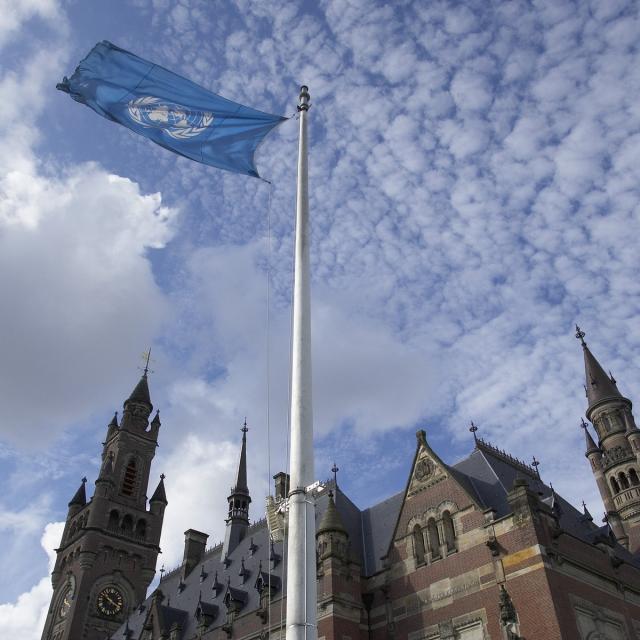
International Law in Action explains the functions of each international court and tribunal present in The Hague, and it looks at how these institutions address contemporary problems. On the basis of selected cases, and through interviews with judges and lawyers, you will explore the role of these courts and tribunals and their potential to contribute to global justice. The first module of the course will investigate how judicial settlement is different from other more political forms of dispute settlement, such as negotiation and mediation. It offers a brief historical overview and introduces the judicial and arbitral bodies based in The Hague.

Nov 2nd 2026
5-12 Weeks
The Politics of Skepticism (Coursera) Coursera
Erasmus University Rotterdam

The Politics of Skepticism (Coursera)

This is a course about the history of Skepticism from the ancient Greeks to today, with special attention to the political ramifications of questioning man's ability to know the world and himself with any certainty. We will discuss the debates raging between Plato and the Sophists, the rise of Christianity in the Roman world, and the so-called 'Skeptical Crisis' of the Renaissance as well as Pierre Bayle's Skepticism and David Hume's.

Oct 26th 2026
5-12 Weeks
Doping : Sports, Organizations and Sciences (Coursera) Coursera
University of Lausanne

Doping : Sports, Organizations and Sciences (Coursera)

The objective of this course is to encourage a critical understanding of doping. To achieve this goal, this course will rely on a multidisciplinary approach that allow you to see how different disciplines get into a single object, in different perspectives and in often complementary ways. This approach will also allow us to appreciate the complexity of a subject like doping. Doping in sports is a complex practice whose definition and identification is the result of socially and historically constructed norms. This course offers to shed light on the processes that led to the use and prohibition of doping substances.

Oct 26th 2026
4 Weeks
Reducing Gun Violence in America: Evidence for Change (Coursera) Coursera
Johns Hopkins University

Reducing Gun Violence in America: Evidence for Change (Coursera)

Reducing Gun Violence in America: Evidence for Change is designed to provide learners with the best available science and insights from top scholars across the country as well as the skills to understand which interventions are the most effective to offer a path forward for reducing gun violence in our homes, schools, and communities.

Oct 19th 2026
5-12 Weeks
International Humanitarian Law in Theory and Practice (Coursera) Coursera
Leiden University,Kalshoven-Gieskes Forum

International Humanitarian Law in Theory and Practice (Coursera)

“International Humanitarian Law in Theory and Practice” is the first MOOC of the Kalshoven-Gieskes Forum on International Humanitarian Law, which is the platform within the Grotius Centre for International Legal Studies of Leiden University for the research, teaching and dissemination of international humanitarian law (IHL).

Nov 2nd 2026
5-12 Weeks
刑法学总论 Criminal Law (Coursera) Coursera
Peking University

刑法学总论 Criminal Law (Coursera)

刑法是规定犯罪与刑罚的法律。刑法学是研究刑法的科学,主要研究犯罪的成立条件以及刑罚的种类与适用刑法的制度等问题。本课程的主要目的是简明完整地说明现代刑法学总论的基本概念、基本理论与基本方法,包括的主要内容有刑法与刑法学的基本概念,刑罚的正当性,罪刑法定原则,刑法解释,刑法的适用范围,犯罪与犯罪构成的概念,犯罪构成的主要内容,排除犯罪的根据,犯罪的未完成状态,共同犯罪,刑罚的概念与体系,量刑制度,数罪并罚,缓刑、减刑与假释。本课程通过理论说明与案例分析对有关问题进行讲解,鼓励同学们通过刑法发展来认识刑法的生命,通过刑法比较来认识刑法的国际标准,通过确立刑法理想来追求社会的公平正义。

Oct 19th 2026
13-24 Weeks
Employment Law: The Gig Economy (Coursera) Coursera
University of Pennsylvania

Employment Law: The Gig Economy (Coursera)

Gig work, a type of work that is done on a short-term or freelance basis, has exploded in popularity in recent years. The term gig work is commonly used to discuss work for businesses that facilitate peer-to-peer transactions. People usually think of ridesharing apps such as Uber and Lyft, but the categories of gig work have expanded rapidly. Although people are quick to identify gig work, the newness of the concept has left many gaps in the legal definitions of what gig work is and how gig workers should be protected. This course seeks to clear up misconceptions about gig workers through an examination of various legal cases, examining grey areas of the law and also providing possible alternatives.

Nov 2nd 2026
4 Weeks
Internet Giants: The Law and Economics of Media Platforms (Coursera) Coursera
University of Chicago

Internet Giants: The Law and Economics of Media Platforms (Coursera)

Law

This seven-week course will explore the relationship between law and technology with a strong focus on the law of the United States with some comparisons to laws around the world, especially in Europe. Tech progress is an important source of economic growth and raises broader questions about the human condition, including how culture evolves and who controls that evolution. Technology also matters in countless other ways as it often establishes the framework in which governments interact with their citizens, both in allowing speech and blocking it and in establishing exactly what the boundaries are between private life and the government. And technology itself is powerfully shaped by the laws that apply in areas as diverse as copyright, antitrust, patents, privacy, speech law and the regulation of networks.

Oct 26th 2026
5-12 Weeks
Citizenship and the Rule of Law (Coursera) Coursera
University of London

Citizenship and the Rule of Law (Coursera)

"Be you so high, the law is above you." This principle, part of the Rule of Law, has come to represent the powerful idea that even politicians and monarchs are bound by the law. However in an age of powerful corporations, international cyber-crime and popular support for authoritarian leaders, the Rule of Law is under threat worldwide.

Nov 2nd 2026
5-12 Weeks
Foundations of Public Health Practice: The Public Health Approach (Coursera) Coursera
Imperial College London

Foundations of Public Health Practice: The Public Health Approach (Coursera)

The Public Health Approach course is the first instalment of the wider Foundations of Public Health Practice specialisation from Imperial College London's Global Master of Public Health (MPH). The scope and content of this course has been developed from the ground up by a combined team of academics and practitioners drawing on decades of real-world public health experience as well as deep academic knowledge. Through short video lectures, practitioner interviews and a wide range of interactive activities, learners will be immersed in the world of public health practice.

Oct 19th 2026
4 Weeks
Taiwan Law in Focus: Economy, Society and Democracy (Coursera) Coursera
National Taiwan University

Taiwan Law in Focus: Economy, Society and Democracy (Coursera)

“Taiwan Law in Focus” is the first online course provided by the College of Law, National Taiwan University. This course will give you an introduction to the legal system in Taiwan, which includes the topics of Constitution, administration law, criminal law, civil law, corporative law, and some related issues. You will learn about the brief history of Taiwan’s legal system and its transition in recent decades.

Nov 2nd 2026
5-12 Weeks